
Ghana, the world’s second-largest cocoa producer, remains a paradox in global agricultural policy. Despite its vast cocoa farms and proud reputation, ordinary citizens can’t legally buy cocoa beans, and local processors are routinely starved of supply.
According to Bright Simons, Vice President of IMANI Africa, this deep-rooted dysfunction stems from decades of state monopoly and regulatory control that continues to choke local industry and innovation.
“You can go to jail for buying fresh cocoa or the beans. In fact, you won’t find cocoa fruit or beans sold in virtually any markets. The delicious and highly nutritious crop is off the menu”
Bright Simons, Vice President Of IMANI Africa
Simons highlighted a bizarre but enforceable regulation that bars individuals from trading cocoa without a government-issued license.
All cocoa exports are monopolised by the state-owned Ghana Cocoa Board (Cocobod), leaving even local processors in a constant state of uncertainty over access.
Since independence, Ghanaian governments have repeatedly vowed to “shift from exporting raw beans” to processing cocoa locally. The aim, inherited from colonial thinking, was to “extract more value” from the crop domestically.
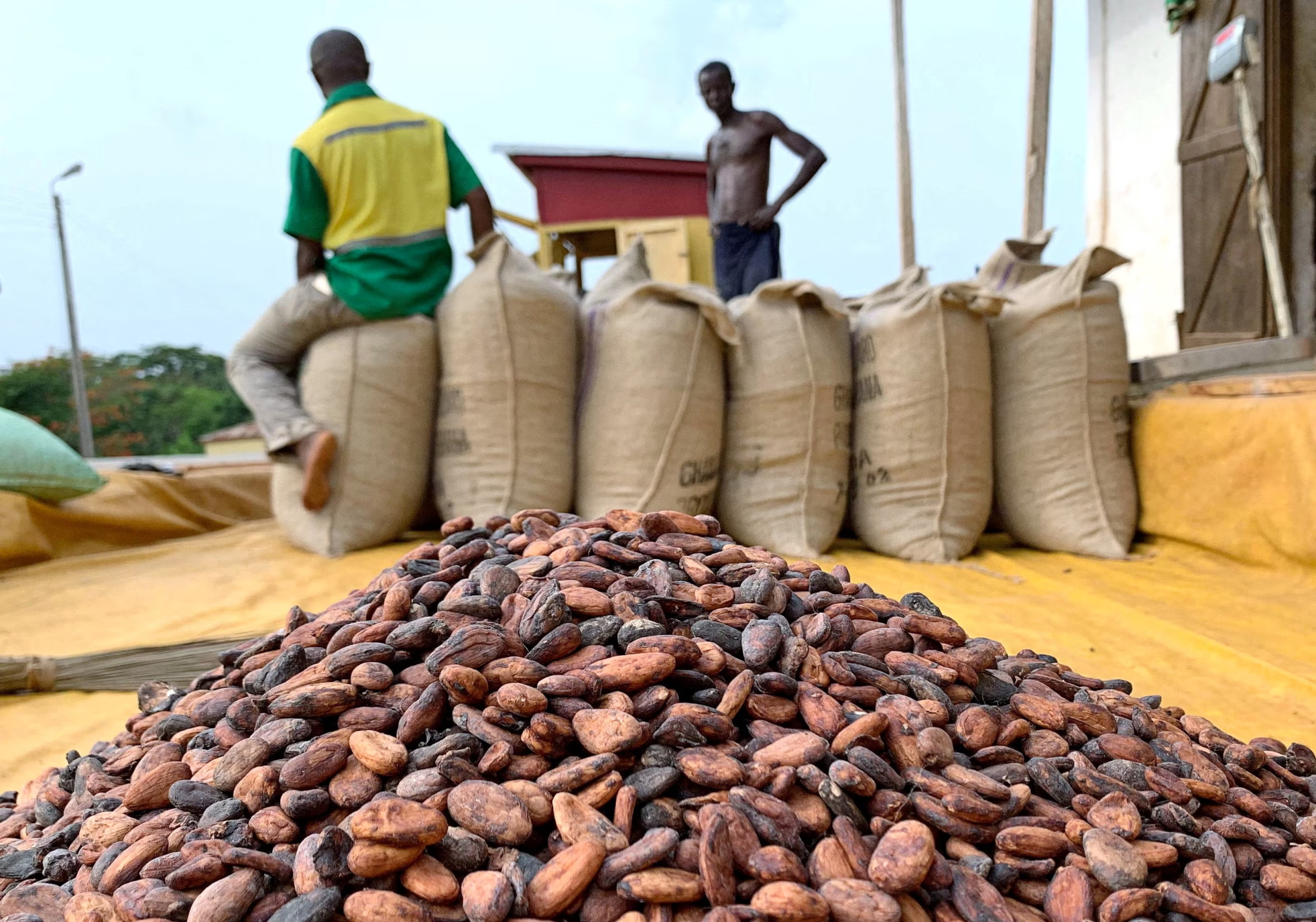
However, implementation has consistently fallen short. In the 1940s, a British firm was given a mandate to establish a cocoa processing plant. That facility, eventually taken over through a joint venture with a German company, was renamed the West African Mills Company (WAMCO).
In 2010, WAMCO dragged the Ghanaian government before the International Centre for Settlement of Investment Disputes (ICSID) in London. Although it lost the case, the grievances it raised reflected systemic failures in Ghana’s cocoa supply chain.
“WAMCO said even though the government owned 40% of its shares and has made all manner of promises to supply beans, it constantly fails”
Bright Simons, Vice President Of IMANI Africa
The chronic underperformance continued. WAMCO eventually went bankrupt in 2016. In 2019, it was revived amid renewed assurances of consistent bean supply, but those promises quickly crumbled. At one point, the plant was operating at just 10 percent capacity.
Processors Import Cocoa
WAMCO’s story is not isolated. Ghana has nine other major cocoa processors with enough installed capacity to handle the nation’s entire annual production of around 500,000 metric tons. Yet, together, they manage to process only 40 percent of national output.
The reasons, according to Simons, include broken allocation systems, lack of access to premium bean grades, and policy contradictions.
“Last year, many plants had to shut for extended periods, as the promised allocation of the light crop and grade I & II cocoa they depend on just wasn’t flowing”
Bright Simons, Vice President Of IMANI Africa
To survive, some processors have resorted to importing cocoa beans into Ghana – a surreal twist for a country so renowned for its production. Meanwhile, Ghana’s own cocoa output has dropped drastically.
Since 2020, total production has halved, putting further strain on the domestic supply chain. The government’s “forward-sale approach” to cocoa, primarily to secure dollar-denominated loans from international lenders, often prioritises exports over local use.
As a result, even during harvest peaks, processors and entrepreneurs in Ghana face critical shortages. According to Simons, this “dollar-driven export bias” is at the root of the country’s cocoa dysfunction.
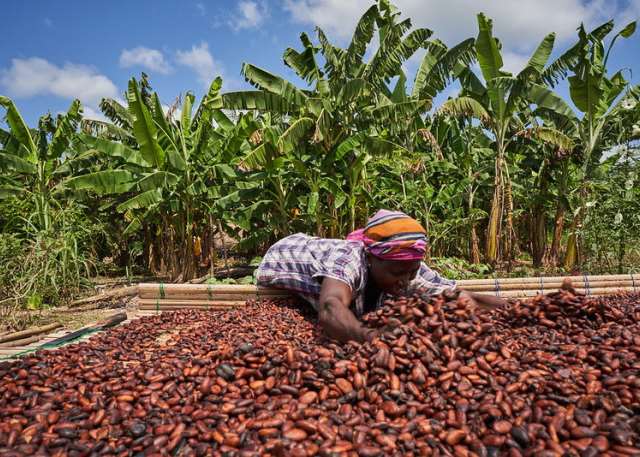
To address mounting frustration, the government has proposed allowing the Cocoa Marketing Company (CMC) – a state-run cocoa trader – to sell beans in cedis to small-scale domestic users.
However, access is restricted to buyers who can commit to a minimum annual volume of 50 tons, a threshold that excludes most local entrepreneurs, Simons pointed out.
“If you want to make non-gourmet chocolate, then you can buy cocoa butter & powder from processors. If you’re lucky,” he said. However, even that comes with caveats, as most processors depend on free zone privileges which require exporting at least 70 percent of output to remain viable.
Losing Out On Growth
The policy quagmire has discouraged even the most determined investors. Simons shared a telling example: Ghana’s only major private chocolate company, once bullish on local production, abandoned plans for a new factory in Ghana.

Instead, it chose Wisconsin, USA, after it failed to meet a supply deal with African Cocoa Products (ACP) and got sued in the United States.
“People that want to build a chocolate brand quickly find that getting cocoa in the world’s 2nd largest producing country is a nightmare”
Bright Simons, Vice President of IMANI Africa
As Ghana continues to export its raw beans while choking its domestic processors, its ambition of becoming a chocolate-producing powerhouse remains elusive. The system, Simons says, is a “twisted mass” that continues to sabotage one of the country’s most promising sectors.
READ MORE: GoldBod’s New Aggregation System Targets Smuggling, Boosts Exports