
The BRICS group of emerging economies has issued a pointed call to the world’s wealthiest nations, urging them to take financial responsibility for helping developing countries transition to clean energy.
In a joint statement during a high-level gathering in Brazil, BRICS emphasized that “accessible, timely and affordable” climate finance is essential to achieving equitable energy transitions.
“We emphasize that ensuring accessible, timely and affordable climate finance for developing countries is critical for enabling just transitions pathways that combine climate action with sustainable development.”
BRICS
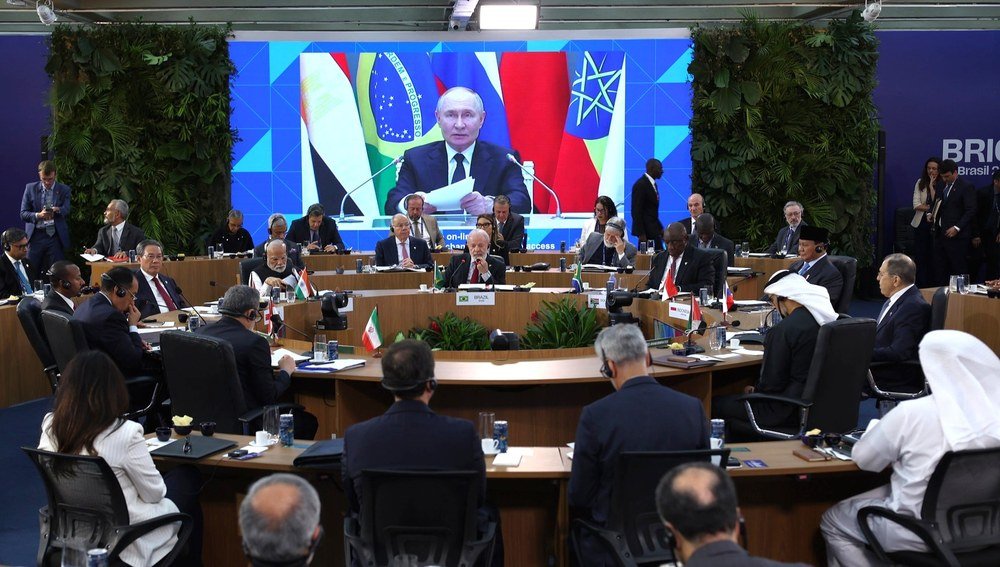
The statement, released after a multilateral roundtable that included Brazil, Russia, India, China, South Africa, and newly admitted members such as Egypt and the United Arab Emirates, underscored a recurring demand from the Global South: that the countries most responsible for historic carbon emissions should take the lead in funding the world’s low-carbon future.
The group reaffirmed a foundational principle of global climate negotiations, “common but differentiated responsibilities and respective capabilities” enshrined in the United Nations Framework Convention on Climate Change (UNFCCC) and the Paris Agreement.
This principle acknowledges that while all countries must act on climate change, developed nations must bear a greater financial burden due to their historical contributions to global emissions.
Fossil Fuels Still Part of the Equation

While advocating for aggressive climate action, BRICS also took a pragmatic stance on the role of fossil fuels, particularly in emerging economies.
The joint statement acknowledged that oil and gas will remain crucial in the near future, especially for countries still in the early stages of industrial development.
“We acknowledge fossil fuels will still play an important role in the world’s energy mix,” the group said, adding that this is especially true “for emerging markets and developing economies.”
Rather than demanding an abrupt phase-out of fossil fuels, BRICS called for “just, orderly, equitable and inclusive energy transitions” that consider the unique circumstances of each country.
The statement cited SDG7, the UN’s goal for affordable and clean energy as a benchmark and stressed “technological neutrality” in achieving climate goals, indicating that each country should choose its path without external coercion.
The BRICS position reflects an entrenched view in the Global South that while wealthy nations like the U.S. and those in the European Union have built their economies on fossil fuel consumption, they are now pushing for rapid decarbonization without providing sufficient financial or technical support to poorer nations.
So far, pledges from developed nations have fallen short of the $100 billion annual climate finance goal set in the Paris Agreement.
Disbursement has also been criticized for lacking transparency and being disproportionately directed toward mitigation, rather than adaptation or loss and damage.
A Balancing Act Ahead of COP30
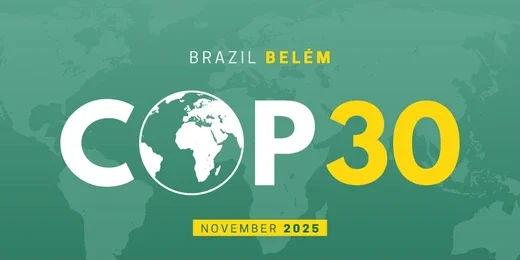
As the world heads toward COP30 in Belém, Brazil, the BRICS statement is likely to shape negotiations.
It places pressure on the U.S., EU, and other wealthy nations to increase their climate finance commitments while also reinforcing the Global South’s demand for a development-centered energy transition.
For BRICS, the energy transition is as much about economic sovereignty and industrial transformation as it is about climate goals.
Countries such as India and South Africa are ramping up solar and wind investments but insist that fossil fuels remain necessary to stabilize grids and power industrial growth.
“Energy transitions must not be imposed,” said Brazil’s Minister for Mines and Energy, during the summit. “They must be inclusive, respect national circumstances, and come with adequate financial support.”
The BRICS declaration reiterates a longstanding fault line in global climate diplomacy, between responsibility and capability, ambition and fairness.
While developed nations push for accelerated action, emerging economies are demanding that ambition be matched with resources.
As the world enters a decisive decade for climate action, the challenge will be balancing emissions reductions with economic justice.
The BRICS position is a clear reminder that for any global transition to succeed, it must be inclusive, just, and adequately funded.
READ ALSO: IMF Names Seasoned Economist Dr. Adrian Alter as New Country Representative in Ghana