Prof. Godfred Bokpin, a renowned economist and lecturer at the University of Ghana, has asserted that Ghana has historically failed to secure optimal economic returns from its rich natural resource endowment.
This stark assessment is rooted in the country’s heavily criticized fiscal frameworks, which have consistently positioned Ghana among the lowest-earning nations relative to the overall scale and value of its resource-intensive industries.
According to the academic, the structural design of these extractive agreements has systematically favored foreign entities, depriving the state and its citizens of the transformative wealth typically generated by robust mining sectors globally.
“We know how some countries have managed their natural resources. The kind of fiscal regime they’ve put in place, how that has saved their country, their citizens, and all of that. There is also no doubt that Ghana has not benefited optimally from its natural resources.”
Prof. Godfred Bokpin
Expanding on this economic disparity, Prof. Bokpin pointed out that the unfavorable narrative surrounding the country’s lack of optimal benefits is primarily tied to the restrictive lease arrangements and binding legal contracts signed with multinational corporations in the past.
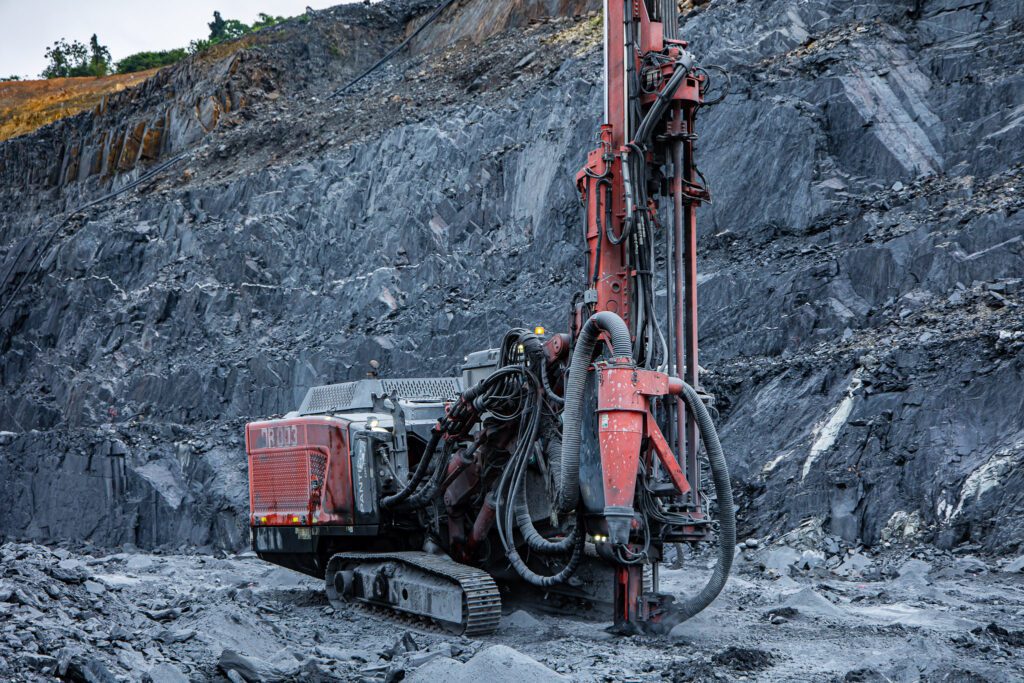
These long-term agreements, often heavily protected by stabilization clauses and excessive tax incentives, have legally locked the state into a passive role, limited mostly to collecting cost-insensitive royalties while multinational mining firms repatriate the bulk of the profits.
However, with several of these major mining leases currently nearing their expiration dates, the economist believes Ghana has reached a critical strategic juncture.
He noted that the state now possesses a rare window of opportunity to fundamentally reject the status quo, re-evaluate its resource management strategy, and enter future negotiations with significantly improved terms that prioritize national development.
The Burden of Existing Fiscal Regimes and Devastated Mining Communities
The structural failures of the current fiscal regime extend far beyond national balance sheets, manifesting as a severe socioeconomic crisis within the immediate enclaves of mineral extraction.
Prof. Bokpin lamented the visible irony and harrowing poverty characterizing Ghana’s gold-bearing regions, explaining that a visit to these mining communities reveals an environment so severely degraded and impoverished that “it’s as though God made a mistake by depositing this” mineral wealth in those locations.
The traditional “royalty-tax model” operated by the country has faced fierce criticism for treating minerals as mere commodities for immediate export rather than catalysts for domestic industrialization.
The IEA Proposal as a Blueprint for Natural Resource Salvation
The IEA has consistently mounted a policy campaign calling for a total overhaul of Ghana’s mining fiscal framework, which the think tank characterizes as an outdated “colonial relic.”

Central to the IEA proposal is the total abolition of overly generous tax holidays, stability agreements, and capital concessions that heavily skew the benefit structure in favor of external investors.
Furthermore, the IEA proposal urges Ghana to move away from being a passive collector of gross production royalties and instead transition toward a model anchored on state equity, aggressive local ownership, and mandatory domestic value addition.
A key focal point of this strategy is the explicit rejection of unconditional lease renewals for multinational firms whose agreements are expiring such as the upcoming Gold Fields Tarkwa mine lease expiration.
Instead of rubber-stamping renewals, the IEA advises the state to leverage its improved bargaining position to either nationalize strategic mining assets, maximize free-carried interest, or form structured public-private partnerships with capable indigenous consortia.
Leveraging Expiring Contracts for Future Economic Transformation
Transitioning to a highly rewarding extractive framework requires a calculated, gradual departure from raw material exportation toward domestic refining and processing.
Policy analysts note that while the Ghana Chamber of Mines often defends the current regime by citing a cumulative effective tax rate close to 60 percent under high commodity prices, this model still fails to trigger broad-based industrial growth.

The IEA’s proposal addresses this gap by advocating for the integration of the extractive sector into the local economy, ensuring that mineral wealth is utilized to fund critical infrastructure and build national financial reserves, similar to successful resource management regimes in other jurisdictions.
Ultimately, Prof. Bokpin emphasizes that the country must approach this transition with strategic sobriety rather than emotional resource nationalism, which has historically derailed similar state-led initiatives.
The path forward lies in utilizing the expiration of legacy contracts to systematically rewrite mining legislation, eliminate cost-insensitive concessions, and mandate that a fixed percentage of minerals be refined locally.
By integrating the IEA’s structured proposals into a unified national development agenda, Ghana can finally correct its historical policy errors, restore its degraded mining communities, and ensure that its vast mineral wealth optimally benefits the citizens to whom the resources rightfully belong.
READ ALSO: Legal Education Act to Anchor Ghana School Of Law – Majority Whip