• About
  • Advertise
  • Privacy Policy
  • Contact
Thursday, September 17, 2026
  • Login
The Vaultz News
  • Top Stories
  • News
    • General News
    • Education
    • Health
    • Opinions
  • Economics
    • Economy
    • Finance
      • Banking
      • Insurance
      • Pension
    • Securities/Markets
  • Business
    • Agribusiness
    • Vaultz Business
    • Extractives/Energy
    • Real Estate
  • World
    • Africa
    • America
    • Europe
    • UK
    • USA
    • Asia
    • Around the Globe
  • Innovation
    • Technology
    • Wheels
  • Entertainment
  • 20MOBPL2DNew
  • Jobs & Scholarships
    • Job Vacancies
    • Scholarships
No Result
View All Result
The Vaultz News
  • Top Stories
  • News
    • General News
    • Education
    • Health
    • Opinions
  • Economics
    • Economy
    • Finance
      • Banking
      • Insurance
      • Pension
    • Securities/Markets
  • Business
    • Agribusiness
    • Vaultz Business
    • Extractives/Energy
    • Real Estate
  • World
    • Africa
    • America
    • Europe
    • UK
    • USA
    • Asia
    • Around the Globe
  • Innovation
    • Technology
    • Wheels
  • Entertainment
  • 20MOBPL2DNew
  • Jobs & Scholarships
    • Job Vacancies
    • Scholarships
No Result
View All Result
The Vaultz News
No Result
View All Result
in General News

Ghana’s Climate Commitments Questioned Amid Firewood Use in Schools

Silas Kafui Assemby Silas Kafui Assem
August 25, 2025
Reading Time: 4 mins read
Add as Preferred on Google
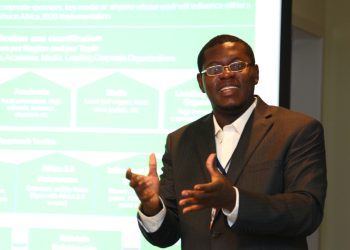
Bright Simons, Vice President of IMANI Africa

Bright Simons, Vice President of IMANI Africa

Bright Simons, Vice President of IMANI Africa, has raised serious concerns about Ghana’s climate change commitments, pointing to contradictions between government pledges under international agreements and the reality on the ground.

His remarks spotlighted the continued reliance on firewood by some of the country’s leading secondary schools despite official commitments to promote clean and sustainable energy alternatives.

Speaking on Ghana’s standing in global environmental agreements, Simons observed that the country has long displayed enthusiasm for joining international accords and producing reports to demonstrate compliance and is often supported by international partners such as the World Bank.

“Ghana likes international agreements. The country signs many of them readily, and enthusiastically generates the paperwork to comply with the standards and protocols in these agreements. The World Bank and other international collaborators top up with many reports of their own”

Bright Simons, Vice President of IMANI Africa

Ghana is a signatory to the Paris Agreement, which aims to drive the global transition toward a greener, low-carbon future. As part of this commitment, the country has submitted its “nationally determined contributions” detailing the actions it plans to undertake in order to reduce carbon emissions and mitigate climate change.

ADVERTISEMENT
Bright Simons
Bright Simons, Vice President of IMANI Africa

According to Simons, Ghana has pledged to prioritise cleaner technologies as part of these commitments. He explained that at the top of Ghana’s list is the switch from traditional biomass, such as firewood, to clean cookstoves powered by fuels like ethanol.

He further highlighted that interim policies emphasise the promotion of liquefied petroleum gas (LPG) as a cleaner alternative to firewood until more advanced technologies are widely accessible.

“The Paris Agreement’s Article 6 ‘inherited’ the provisions of the Clean Development Mechanism of the earlier Kyoto Protocol. Ghana has identified top technologies for it to switch away from dirty fuels to clean energy. It reports regularly to the UN about its progress”

Bright Simons, Vice President of IMANI Africa

World Bank Support and Policy Alignment

The World Bank has publicly expressed support for Ghana’s commitment to reducing reliance on firewood. 

“The World Bank tells us that it seriously loves Ghana’s love for fighting climate change using clean cookstoves and has made $250 million available to help,” Simons stated, revealing that the institution has pledged significant financial resources to accelerate progress in this area.

Bright Simons
Bright Simons, Vice President of IMANI Africa

A central focus of these commitments has been on schools, particularly at the secondary level, where policies have identified the transition from firewood to LPG as an “urgent priority.” By targeting educational institutions, policymakers hoped to make the transition widespread and sustainable.

ADVERTISEMENT

However, Simons cautioned that the picture on the ground diverges starkly from the reports.

He revealed that surprisingly, one of the most elite secondary schools right in the capital of Accra has not only continued to use firewood but has actually expanded its reliance on open-fire stoves. “The firewood does not come from sustainable forest woodlots and there are no clean stoves in sight,” Simons said.

According to him, the school’s decision to revert to firewood was motivated by economic factors. LPG had become too costly, and declining government subsidies under the Free Secondary Education policy have reportedly pushed administrators to seek cheaper alternatives.

ADVERTISEMENT

Policy Gaps and Broader Implications

Simons argued that the situation is symptomatic of broader systemic weaknesses in policy execution.

He categorised these challenges under what he described as “katanomics,” “fossilisation,” and “climate realpolitik.” Each concept points to shortcomings such as weak accountability, ineffective donor-backed programs, and the triumph of economic realities over climate ideals.

Bright Simons 3
Bright Simons, Vice President of IMANI Africa

He further called for deeper scrutiny into how policies are implemented, stressing that glossy reports submitted to international bodies fail to reveal the real challenges. Instead, he advocated for what he termed “forensic ethnography,” urging civil society actors to directly investigate how policies unfold on the ground.

“Paper reports don’t pierce through. Let’s have independent civil society actors go to the ground and LOOK,” Simons concluded – his revelations underscoring a growing tension between Ghana’s international climate commitments and domestic policy realities.

As global stakeholders continue to applaud Ghana’s pledges, evidence from its schools suggests that the country’s climate ambitions remain vulnerable to the everyday economics of implementation.

READ ALSO: Timely Coupon Settlements Key to Ghana’s Return to Global Capital Markets- Prof. Bokpin

ADVERTISEMENT

Sign Up to Our Newsletter

Fresh updates, Straight to your inbox

Tags: Bright SimonsClimate ChangeFirewood UseFirewood Use in SchoolsGhana’s climate change commitmentsglobal environmental agreementslow-carbon futureLPGopen-fire stovesParis AgreementVice President Of IMANI AfricaWorld Bank
Please login to join discussion
Previous Post

Ghana’s Opioid Crisis Demands Urgent National Action

Next Post

State Enterprises in Tax Trouble: Graphic, GIHOC, TOR Owe Millions to GRA

Related Posts

Honourable Kofi Amankwa-Manu
General News

Drug Fight Needs Action, Not Publicised Security Meetings — Atwima Kwanwoma MP

September 17, 2026
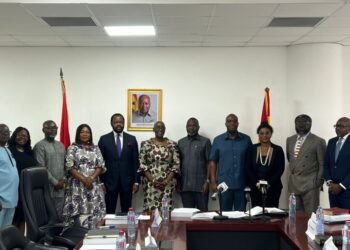
Members of the newly inaugurated Constitution Review Implementation Committee pose at the Ministry of Justice, chaired by Marietta Brew Appiah-Oppong, following their swearing-in.
General News

Constitutional Review Implementation Committee Began Work On Day One, Targets November Timeline

September 17, 2026
Deputy Minister for Health, Prof. Dr. Grace Ayensu-Danquah
Health

 Deputy Health Minister Urges Nurses to Turn Research into Action

September 17, 2026
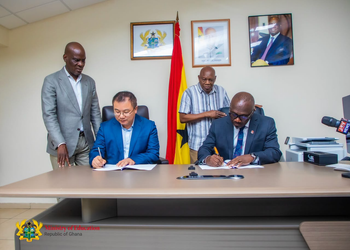
Minister for Education, Hon. Haruna Iddrisu, and Some delegates From UCC and GSC Property Investment Limited at the signing of MoU
General News

UCC Secures US$500 Million Deal For 28,000-Bed Student Housing

September 17, 2026
ADVERTISEMENT

Sign Up to Our Newsletter

Fresh updates, Straight to your inbox

ADVERTISEMENT

Recent News

IMG 7410

M.anifest Drops New Single ‘On Ten’ with O’Kenneth and Wavypae

September 17, 2026
Dr. Ransford Abbey, CEO of COCOBOD, in a Handshake with Mr. Korse Godzi, CEO of Standard Chartered Bank , After a Working Visit to the Cocoa House to Strengthen Partnership on Cocoa Financing

Standard Chartered Bank Pledges Partnership on New Crop Financing Model to COCOBOD

September 17, 2026
Honourable Kofi Amankwa-Manu

Drug Fight Needs Action, Not Publicised Security Meetings — Atwima Kwanwoma MP

September 17, 2026
Power Distribution System and the Electricity Company of Ghana

PDS Dispute Raises Fresh Questions Over ECG’s Finances

September 17, 2026
MTN Leads GSE Trading as Market Indexes Retreat

MTN Leads GSE Trading as Market Indexes Retreat

September 17, 2026
ADVERTISEMENT
Next Post
State Enterprises in Tax Trouble: Graphic, GIHOC, TOR Owe Millions to GRA

State Enterprises in Tax Trouble: Graphic, GIHOC, TOR Owe Millions to GRA

The Vaultz News

Copyright © 2025 The Vaultz News. All rights reserved.

Navigate Site

  • About
  • Advertise
  • Privacy Policy
  • Contact

Follow Us

Welcome Back!

Login to your account below

Forgotten Password?

Retrieve your password

Please enter your username or email address to reset your password.

Log In
No Result
View All Result
  • Top Stories
  • News
    • General News
    • Education
    • Health
    • Opinions
  • Economics
    • Economy
    • Finance
      • Banking
      • Insurance
      • Pension
    • Securities/Markets
  • Business
    • Agribusiness
    • Vaultz Business
    • Extractives/Energy
    • Real Estate
  • World
    • Africa
    • America
    • Europe
    • UK
    • USA
    • Asia
    • Around the Globe
  • Innovation
    • Technology
    • Wheels
  • Entertainment
  • 20MOBPL2D
  • Jobs & Scholarships
    • Job Vacancies
    • Scholarships

Copyright © 2025 The Vaultz News. All rights reserved.

This website uses cookies. By continuing to use this website you are giving consent to cookies being used. Visit our Privacy and Cookie Policy.