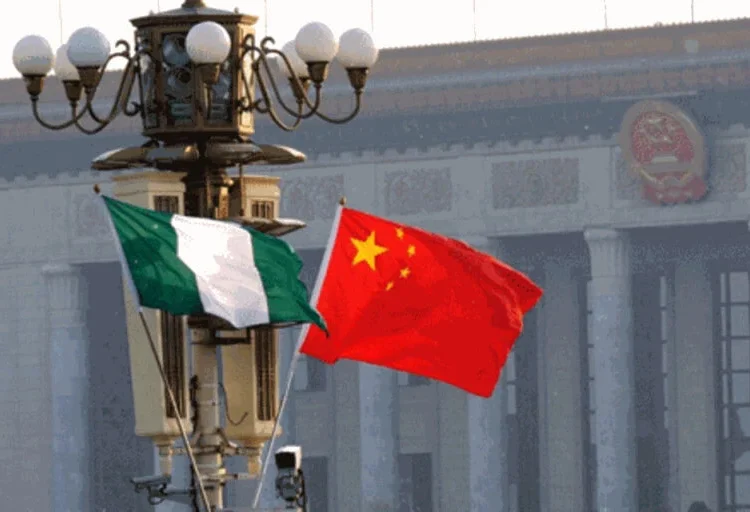
The Federal Government of Nigeria has formally declared its support for China’s recently unveiled Global Governance Initiative (GGI), describing the framework as a “timely and thoughtful contribution” to efforts aimed at strengthening the international system.
In a statement issued on Thursday by Kimiebi Ebienfa, spokesperson for the Ministry of Foreign Affairs, the government expressed gratitude to the People’s Republic of China for launching the initiative during the Shanghai Cooperation Organization Plus meeting in Tianjin on September 1, 2025. “The Global Governance Initiative represents a timely and thoughtful contribution to ongoing efforts aimed at strengthening the international system,” the statement read.
The GGI builds on earlier Chinese-led international efforts, including the Global Development Initiative, the Global Security Initiative, and the Global Civilization Initiative. Introduced ahead of the 80th anniversary of the United Nations, it seeks to address pressing global issues such as expanding representation, ensuring adherence to international law, and developing effective strategies for climate change, digital inequality, and emerging technologies.
The Federal Government said it welcomed the initiative’s emphasis on five guiding principles: sovereign equality, rule of law, multilateralism, people-centred governance, and results-oriented action.

Nigeria Aligns Support With National Development Goals
As one of Africa’s largest economies, Nigeria sees the initiative as a platform for advancing shared priorities. These include reform of the United Nations, promoting inclusive governance in emerging areas such as artificial intelligence, cyberspace, and outer space, as well as ensuring more equitable global development.
The government emphasized that the GGI aligns closely with Nigeria’s national development agenda, the principle of strategic autonomy, and the African Union’s Agenda 2063.
“Nigeria remains committed to working collaboratively with partners across the Global South to foster consensus, strengthen regional cooperation, and contribute meaningfully to a sustainable and equitable global order,” the ministry added.
Backing the GGI, Nigeria reaffirmed its “enduring commitment to a more just, inclusive, and effective international order, one that reflects the aspirations of all peoples and upholds the principles of shared responsibility and mutual respect.”
The endorsement also reinforces Nigeria’s role as a strong advocate of multilateral diplomacy and highlights its willingness to engage on global governance reforms that shape the future of international cooperation.
China-Nigeria Relations Enter Deeper Strategic Phase
Nigeria’s support for the initiative reflects the growing depth of its ties with China, a relationship that has flourished over the past two decades. Bilateral trade has consistently reached new highs, while Chinese loans and investments remain evident across Nigeria’s infrastructure—from railways and roads to energy projects. These ventures align with Nigeria’s long-term ambitions to modernize its economy and diversify away from dependence on oil.
The partnership is not limited to economics. On a geopolitical level, Nigeria regards China as a vital ally amid shifting global alignments and economic pressures from Western partners. At the same time, China views Nigeria as a strategic gateway to West Africa, expanding its regional footprint under the Belt and Road Initiative.
Yet, the growing proximity has not escaped scrutiny. Critics continue to raise concerns about debt sustainability, labor practices, and the broader local impact of Chinese projects, noting that Chinese firms and labor are often prioritized over Nigerian businesses and workers.
Nevertheless, policymakers in Abuja remain appreciative of China’s no-strings-attached approach to investment, contrasting it with conditional Western aid models. As Nigeria pushes forward with industrialization and seeks meaningful technology transfer, balancing the benefits of Chinese engagement while protecting national interests remains a priority.
For both nations, the evolving relationship represents more than just economics. It underscores the complexities of development in an increasingly multipolar world, where partnerships like the GGI could help redefine the balance of global power and influence.
READ ALSO: Ghana Stresses Climate-Resilient Infrastructure as Key to Africa’s Sustainable Future