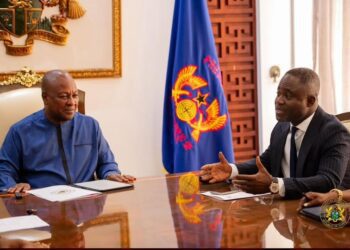
The repeal of Legislative Instrument 2462, which vested presidential powers in the approval of mining licenses within forest reserves, has been widely welcomed as a progressive move in Ghana’s fight against illegal mining.
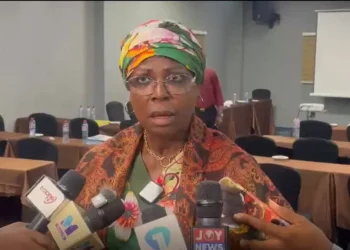
But while some have hailed it as a victory for the environment and civil society, policy think tank IMANI Center for Policy and Education says it may be too early for celebration.
According to IMANI’s Critical Analysis of Governance Issues (CAGI), the reversal of L.I. 2462 represents only a symbolic triumph in a long and exhausting war against galamsey – one that continues to corrode Ghana’s environment, governance systems, and national conscience. The think tank cautioned that despite its initial promise, the repeal does not address the underlying structures that enable illegal mining to flourish.
“At first glance, this legislative reversal appears to signal progress – a symbolic triumph for civil society coalitions, environmental advocates, and all who have raised their voices against the plunder of Ghana’s green belts. Yet, to pause and reflect is to recognize that this repeal, while significant, is far from the decisive breakthrough it is being celebrated as”
IMANI Africa
IMANI argued that the country risks mistaking “a skirmish for the war itself” if it equates the repeal to victory.

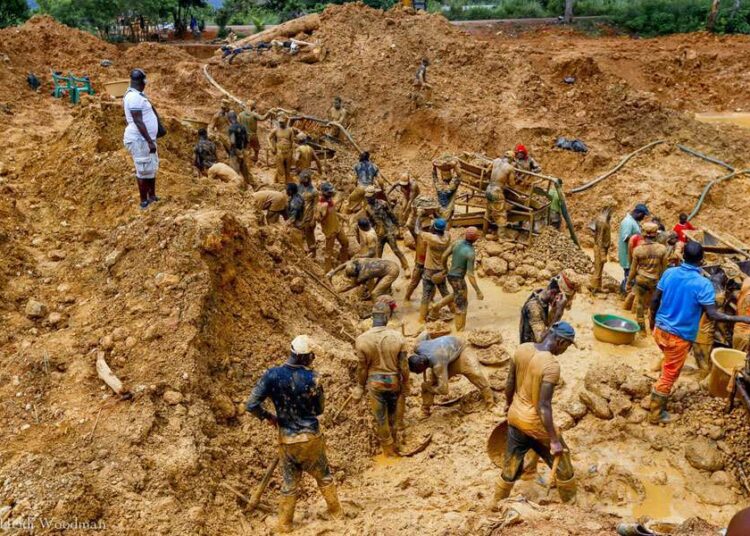
It maintained that the galamsey menace extends far beyond deforestation or encroachment on reserves – as it is a crisis about “poisoned rivers that millions depend upon for drinking water, diverted waterways that disrupt ecosystems and livelihoods, and arsenic-laden soils that leave behind a legacy of chronic health conditions.”
Banking on this, the think tank reiterated that the fight against galamsey cannot be reduced to a single legislative action. Rather, it requires confronting a deeply entrenched system of corruption, rent-seeking, and institutional complicity that has allowed the illegal trade to persist for decades.
Testing Political Will
IMANI emphasized that repealing the law does not automatically cleanse the system of over 2,000 mining licenses already granted within forest reserves, noting that the true test of political will lies in whether the government can resolve these obstacles.
“The next frontier must be bolder. Ghana must confront the reality of thousands of mining licenses already granted within forest reserves. Revoking these concessions and purging the remnants of miners who have burrowed deep into the forests is the true test”
IMANI Africa
The think tank questioned whether state agencies such as the National Anti-Illegal Mining Operations Secretariat (NAIMOS) and the Blue Water Guards are adequately equipped to enforce the new direction. Without strong institutional backing and insulation from political interference, IMANI warned, the repeal risks becoming “a hollow gesture.”
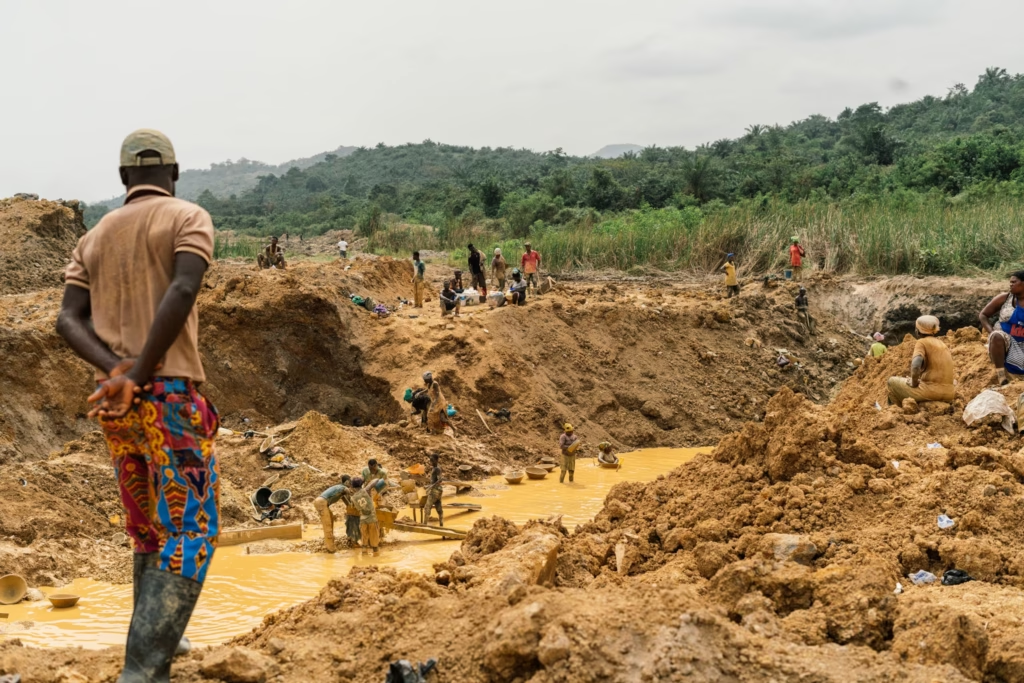
IMANI also drew attention to the country’s broader legislative environment. The parent law – the Minerals and Mining Act (Act 703) of 2006 – still permits mining in forest reserves if classified as “sustainable.” According to the organization, this clause undermines environmental protection efforts by allowing mining companies to justify operations in ecologically sensitive areas.
“The repeal of L.I. 2462 does nothing to address these entrenched operations. Amending Act 703 to explicitly prohibit mining in forest reserves, regardless of scale or sustainability claims, is the next herculean task if Ghana is to safeguard its natural heritage”
IMANI Africa
The think tank stressed that the battle against galamsey must go beyond enforcement and include legal reform that closes loopholes, clarifies responsibility, and ensures transparency in the licensing process.
Accountability and the Path Forward
With the repeal stripping the President of direct approval powers, IMANI questioned where ultimate accountability will now lie – whether with the Minister of Lands and Natural Resources, the Environmental Protection Agency, or the Forestry Commission.
“Whatever replaces L.I. 2462 must provide clarity, transparency, and accountability in the licensing process,” IMANI stated. It warned that without clear oversight, the same discretionary power that allowed corruption to thrive may simply shift from one office to another, “perpetuating the same cycles of opacity and rent-seeking.”

The think tank concluded that while the repeal is a step in the right direction, it should not be mistaken for a final victory. The organization called for stronger laws, bolder enforcement, and a national resolve to reclaim Ghana’s rivers, forests, and natural heritage from the grip of illegal mining.
“The real victory will come only when Ghana decisively revokes destructive concessions, strengthens its institutions, closes legislative loopholes, and mobilizes the full arsenal of state and civic power to reclaim its future. Until then, the war against galamsey rages on”
IMANI Africa
READ ALSO: Takaichi Seeks Summit With North Korea On Return Of Abducted Japanese Nationals