In a high-stakes field engagement at the Sakpare irrigation dam in Zebilla, Dr. Peter Boamah Otokunor, Director of the Presidential Initiative on Agriculture and Agribusiness (PIAA), has moved beyond policy blueprints to frontline pathology, deploying a prescription-first strategy to save the region’s most critical irrigation hub.
With over 4,000 acres of prime tomato-producing land under siege by an aggressive upsurge of bacterial wilt and nematode infestations, the agricultural sector of the Upper East Region is currently a battlefield where the tomato production in Sakpare faces a biological insurgency. The PIAA’s intervention is to prevent a total collapse of the tomato value chain in the North.
According to its Director, the goal is to ensure that the White Volta’s waters continue to fuel economic prosperity rather than serve as a conduit for crop failure.
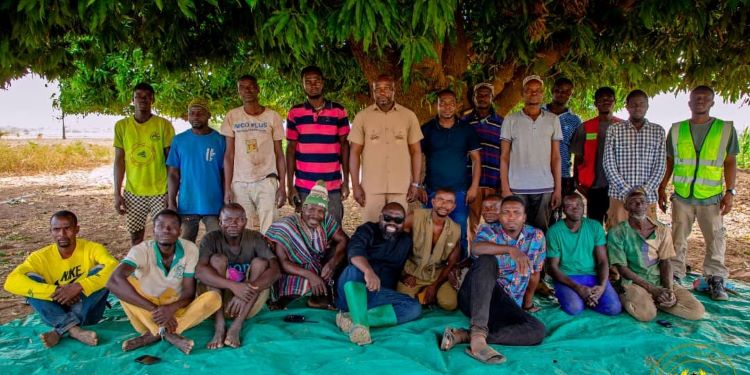
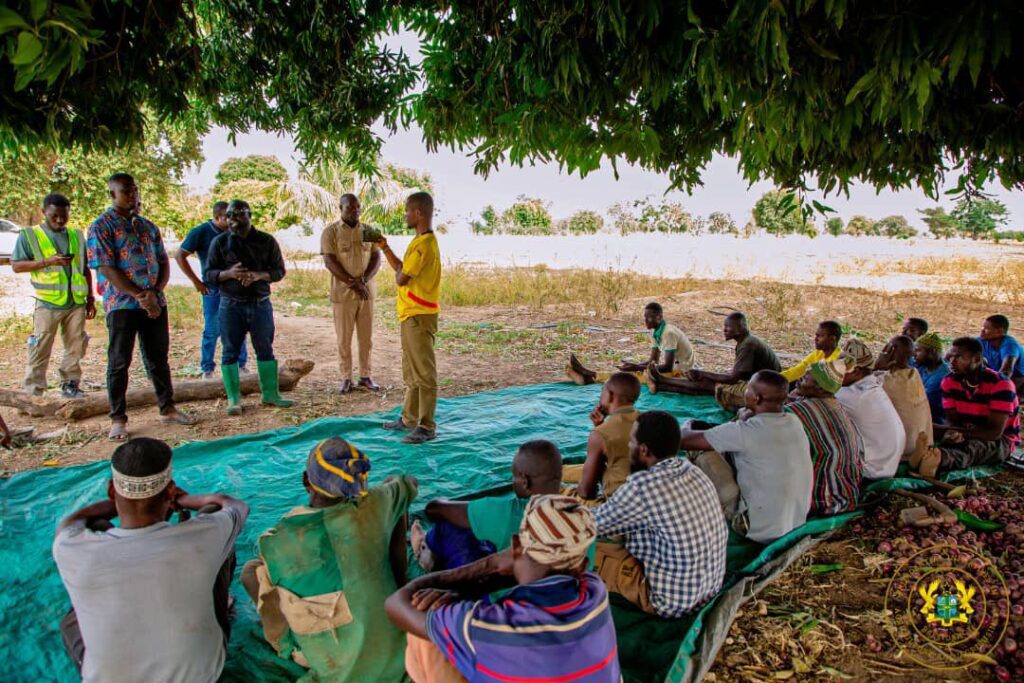
“In the Upper East Region, I was joined by the DCE for Bawku West, Hon. James Ayaweogo and District Agric Officers to engage some farmer groups at Sakpare irrigation dam in Zebilla. At Sakpare various farmer groups depend on the White Volta to irrigate over 4000 acres of land”
Peter Boamah Otokunor, Director of the Presidential Initiative on Agriculture and Agribusiness
The Sakpare dam represents the engine of the Bawku West district. Drawing from the White Volta, thousands of smallholder farmers have transformed this arid landscape into one of the nation’s most productive tomato clusters.
However, the recent outbreak of Ralstonia solanacearum – the pathogen behind bacterial wilt – threatens to turn these green fields into a graveyard of stunted productivity. Dr. Otokunor’s arrival, alongside Hon. James Ayaweogo, the DCE for Bawku West, marked the administration’s renewed focus on this localized crisis as a national food security priority.
Bacterial wilt is the silent killer of the nightshade family, and in Zebilla, it has found a perfect victim. The disease enters the plant through the roots, often facilitated by the microscopic wounds caused by nematode attacks, and rapidly clogs the vascular system, leading to sudden and irreversible wilting.
For the farmers in Sakpare, this isn’t just a problem; it is an economic death sentence. During his engagement with the various farmer groups, Dr. Otokunor did not offer platitudes. Instead, he delivered a masterclass in modern crop pathology, sharing a suite of “agronomic and pathologic solutions to mitigate the spread.”
The approach underscored the PIAA’s operational philosophy. Through providing direct scientific guidance – such as soil solarization, crop rotation strategies, and the use of resistant varieties – Dr. Otokunor is attempting to build biological resilience at the grassroots level.
This technical leadership is essential because, in the absence of specialized knowledge, many farmers inadvertently spread the wilt through contaminated water and tools. The PIAA is effectively turning the Sakpare irrigation hub into a living laboratory for disease management.
Weaponizing Feed Ghana
While the immediate focus in Zebilla was biological defense, the broader strategy is rooted in the Feed Ghana Programme – the flagship initiative designed to dismantle the high-cost barriers that have historically stifled smallholder productivity.
Dr. Otokunor noted that in the paradigm of agro-industrialization, production is only half the battle; the real victory lies in the economic survival of the farmer, as he utilized the Zebilla engagement to detail how the PIAA is cutting production costs through subsidized inputs and smarter technology deployment.
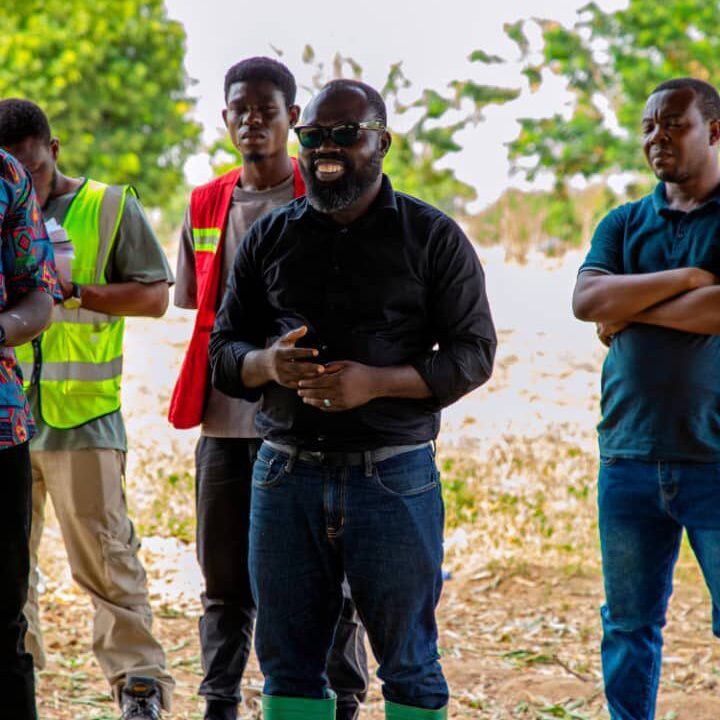
In this case, the Feed Ghana framework was presented as a logistical overhaul that will target the cost of production at the source to ensure that farmers in the Upper East remain competitive against cheap imports.
This is a critical component of the import substitution drive, particularly for tomatoes, a commodity that has long seen Ghana lose millions in foreign exchange to neighboring countries. In Sakpare, Feed Ghana is the economic shield that complements the pathologic defense provided by the PIAA.
The recurring tragedy of Ghanaian tomato farming has never been a lack of effort, but a lack of access. The “glut and rot” cycle – where farmers produce in abundance only to see their crops perish for lack of buyers – is the primary target of Dr. Otokunor’s market linkage strategy.
The PIAA will work to create hard linkages between the 4,000-acre hub at Sakpare and the nation’s burgeoning agro-processing industry. This involves not only physical infrastructure but the institutionalization of off-take agreements that guarantee a price and a destination for every tomato harvested in Zebilla.
Integrating the Sakpare hub into a national supply chain will move it away from the subsistence trap. When a farmer has a guaranteed market, they are more likely to invest in the expensive agronomic solutions required to fight bacterial wilt, creating a cycle where increased productivity leads to higher investment, which in turn leads to better disease resistance and greater yields.
The White Volta is the lifeblood of this system, and the PIAA is ensuring that its potential is fully captured by the Ghanaian economy.
The engagement in Zebilla underscores a fundamental truth about the current administration’s agricultural policy: it is driven by data and science, not just ideology. Dr. Peter Boamah Otokunor’s presence in the fields of the Upper East highlighted the PIAA’s vanguard-like operation, ready to troubleshoot the granular problems that threaten macro-policy goals.
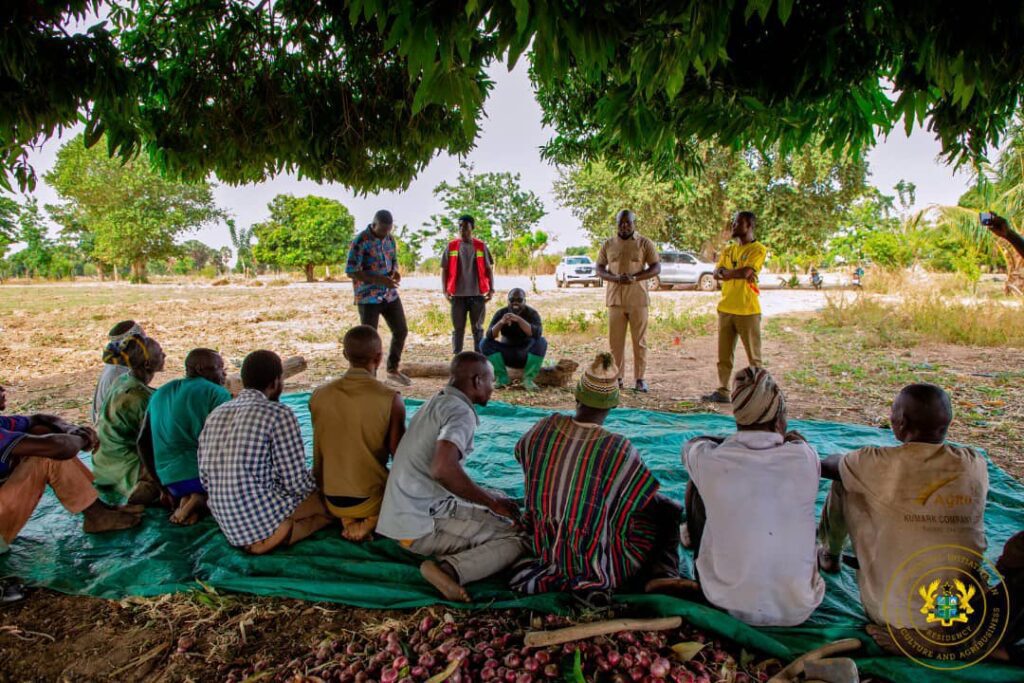
The synergy between the PIAA, the local DCE, and the District Agric Officers provided the farmers of Sakpare with the state’s scientific intervention plan. With the combined weight of the Feed Ghana Programme and the PIAA’s technical expertise, tomato production in Zebilla has a fighting chance.
READ ALSO: Ghana Deepens Diplomatic Engagement on Reparative Justice Agenda