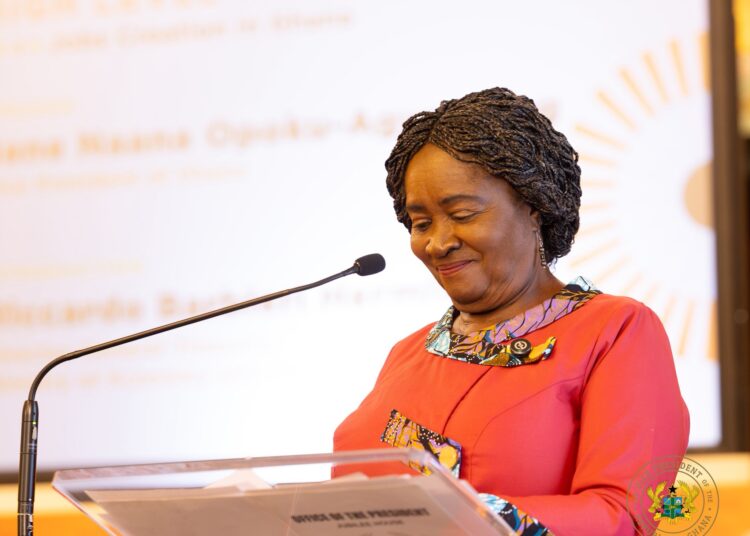
Ghana’s Vice President, Professor Naana Jane Opoku-Agyemang, has outlined a bold vision for harnessing the creativity and enterprise of Ghana’s young people to drive national transformation.
Speaking at the Africa Growth and Opportunity–Research in Action (AGORA) Conference in Palermo, Italy, she said the country’s digital and green economy is fast becoming a catalyst for sustainable job creation and inclusive growth.
Addressing the conference on the theme “Digital, Green, and Youth-Driven Jobs,” Professor Opoku-Agyemang emphasized that Ghana’s development strategy places young people at the centre of innovation, productivity, and transformation.
“Our young people are looking for work, but not only that; they are creating it,” she said, noting that Ghana’s digital start-ups and creative industries now employ tens of thousands of youth across various sectors.
According to her, Ghana’s new wave of youth entrepreneurship is being accelerated through initiatives like Go24, a flagship digital trade and innovation program under President Mahama’s 24-Hour Economy policy
“Through Go24, we are connecting these innovators to Africa’s continental market under the African Continental Free Trade Area Agreement, which is headquartered in our capital, Accra”
Ghana’s Vice President, Professor Naana Jane Opoku-Agyemang
This effort, she explained, enables Ghanaian start-ups to leverage continental integration and reach wider markets, positioning the country as a hub for digital enterprise in Africa.
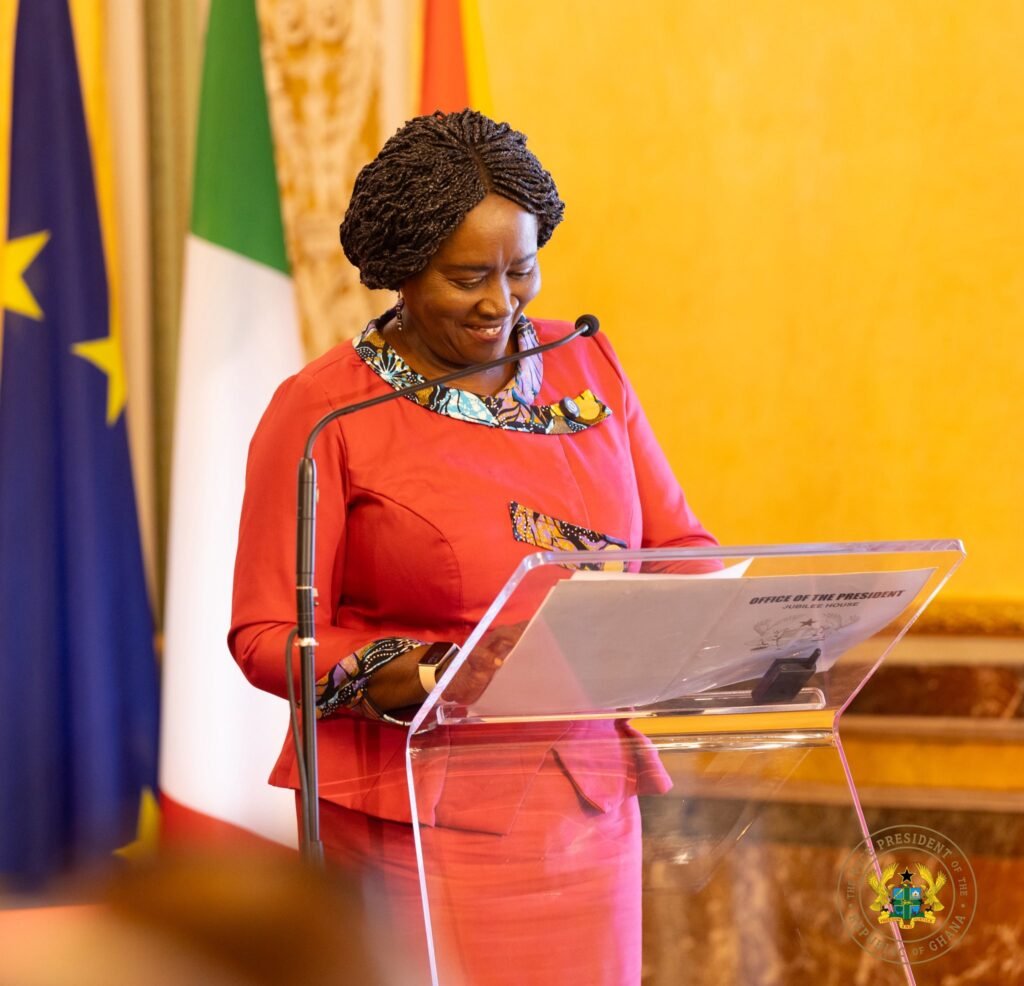
One Million Coders and Adwumawura Programs
The Vice President also highlighted the One Million Coders Program, which aims to equip young Ghanaians with the skills required for the emerging digital economy.
“Our One Million Coders Program seeks to equip young Ghanaians with skills in coding, data analytics, and software development”.
Ghana’s Vice President, Professor Naana Jane Opoku-Agyemang
The program, she said, is designed not only to create a pool of skilled professionals but also to ensure that Ghanaian youth are globally competitive in the digital job market.
Complementing this is the Adwumawura Entrepreneurship and Skills Program, a comprehensive initiative designed to empower skilled personnel, small business owners, and young professionals to start and scale sustainable ventures.
Professor Opoku-Agyemang disclosed that the program targets entrepreneurs aged 18 to 35 and aims to create 40,000 new youth-led businesses over a four-year period.
“Adwumawura includes training, mentorship, and catalytic finance, backed by an initial allocation of GH₵100 million in the 2025 budget to support Ghana’s next generation of business leaders”.
Ghana’s Vice President, Professor Naana Jane Opoku-Agyemang
Participants, she added, receive practical training in business planning, financial management, digital skills, customer service, and sustainability strategies. The program also provides mentorship, start-up kits, and access to markets and networks, ensuring that the support system remains strong throughout each stage of business development.
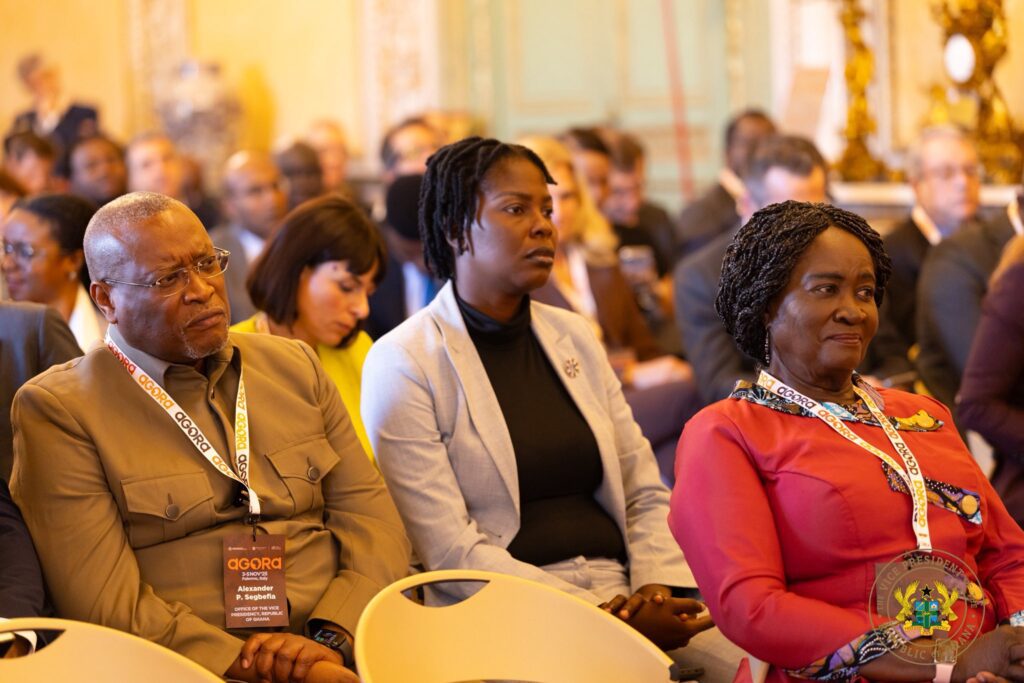
Describing the initiative as a direct expression of Ghana’s conviction that the true wealth of our country lies, beyond our natural resources, in the creativity, energy, and determination of the Ghanaian people, Professor Opoku-Agyemang said the response from young Ghanaians has been overwhelming.
“The secretariat received an impressive response to its call. More than 120,000 applications came in from across the country. This reflects creativity and innovation, but also carries a sense of urgency”.
Ghana’s Vice President, Professor Naana Jane Opoku-Agyemang
From that pool, 10,000 young men and women were selected for the 2025 cohort following a rigorous selection process. The Vice President explained that the selection committee included representatives from government, academia, the private sector, and development partners who worked diligently to identify individuals with promising business plans.
“The first cohort underwent an onboarding and orientation program a few weeks ago. This is an encouraging beginning to a budding national movement”.
Ghana’s Vice President, Professor Naana Jane Opoku-Agyemang

Green Jobs
Beyond the digital sphere, Professor Opoku-Agyemang also spotlighted Ghana’s growing focus on green jobs as part of its broader sustainable development agenda.
“At the same time, green jobs are on the rise. Under Make24 and Build24, renewable energy technicians, waste-to-energy engineers, and electric mobility designers are emerging in encouraging numbers”.
Ghana’s Vice President, Professor Naana Jane Opoku-Agyemang
She further announced plans for a National Youth Innovation Corps, which will pair university graduates with practical industry placements. “The most sustainable employment policy,” she said, “is one that turns curiosity into competence, and harnesses that competence into concrete results.”
By integrating education, technology, and industrial exposure, the government seeks to create a generation of problem-solvers capable of driving Ghana’s transition toward a green and digital economy. Professor Opoku-Agyemang linked these efforts to a broader African renaissance driven by resilience, innovation, and continental cooperation.
“These efforts form part of a larger continental story — a rising Africa built on resilience and innovation and taking advantage of opportunities,” she said, emphasizing Ghana’s commitment to shaping that story through youth empowerment and transformative policies.
Throughout her remarks, the Vice President reaffirmed her belief that the country’s future lies in the hands of its young people. For her, investing in their skills, creativity, and entrepreneurial capacity is not only an economic imperative but a moral and generational responsibility.

“It was launched with a clear mission: that is, for Ghana’s youth to lead the charge in innovation, job creation, and national transformation,” she said of the Adwumawura Program, underscoring its vision of inclusive prosperity built on opportunity and hard work.
Professor Naana Jane Opoku-Agyemang’s message in Palermo captured the growing confidence in Ghana’s youth-driven development model—one that sees innovation, green growth, and digital enterprise as the keys to national progress.
By turning ambition into action and creativity into employment, Ghana is charting a course toward a future where every young person can build, create, and lead.
READ ALSO: Petroleum Commission Boss Urges Bold Action to Revive Upstream Sector