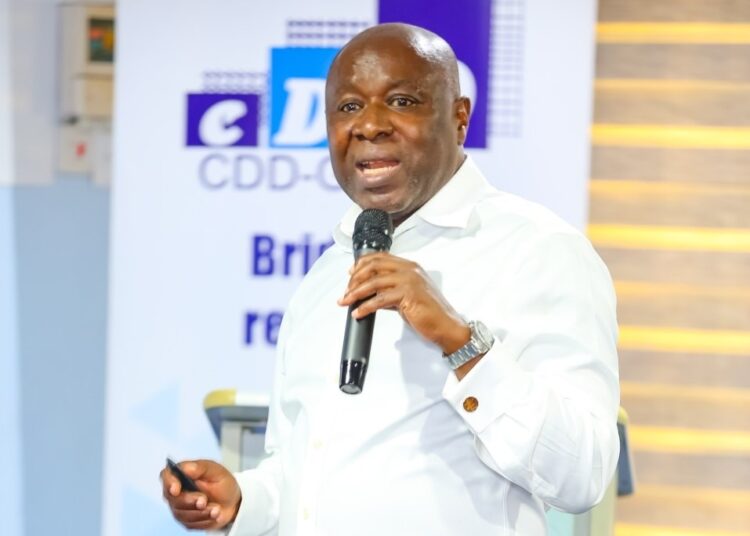
A Fellow at the Ghana Centre for Democratic Development (CDD-Ghana), Dr. Ohene Aku Kwapong, has issued a sweeping and incisive call for Ghana to confront what he described as the country’s most fundamental development challenge: the collapse of social order.
According to the MIT–Columbia-trained governance expert, Ghana’s struggle is not simply about corruption, weak policies, or political failures, but a far deeper problem of disorganization rooted in the absence of basic standards, coherent institutions, and functional systems.
While economists politely describe this as “institutional weakness,” he said the reality is more stark: a systemic failure of order. In his assessment, Ghanaians have been forced to rely on family networks, political sponsors, and informal patronage not because they lack morals, but because formal structures consistently fail them.
“When a Ghanaian looks for a job, they call a relative. When a business needs a contract, it finds a political sponsor. These are not moral failings; they are rational responses to a society where formal systems don’t work.”
Dr. Ohene Aku Kwapong
Dr. Kwapong warned that when personal connections become the primary organizing principle of national life, the result is a society that “rewards loyalty over ability — and punishes excellence.”
This dysfunction, he noted, is evident in the collapse of succession in Ghanaian businesses. Across Sub-Saharan Africa, only 20–25 percent of family firms survive into the second generation, compared with 40 percent in East Asia and 50 percent in developed economies. “The difference isn’t about intelligence; it’s about organization,” he asserted.

To reverse this trajectory, Dr. Kwapong laid out what he calls the three foundational laws of national organization: standards, decentralization, and strategic alignment, which he argues must anchor Ghana’s next phase of development.
The First Law: Restore Standards
For him, the primary building block of a functional society is a shared understanding of standards: unwritten codes that guide behaviour, signal excellence, and govern what is acceptable.
Standards, he asserted, are the invisible architecture that allows millions to move in harmony without micromanagement. Yet, in his view, Ghana has witnessed the erosion of this essential foundation. “In Ghana, standards have collapsed,” he declared.
He pointed to Parliament as the most visible casualty — an institution that should symbolize national discipline but instead has become “a theatre of self-indulgence.”
Members’ extravagant displays of kente, agbada, and kaftan, he argued, have morphed into declarations of exception rather than unity. “Each outfit says: I am not bound by the rules; I am the rule,” he said.
This culture of exceptionalism, he warned, runs through every level of society — from convoys flouting traffic laws to public officials treating state coffers as personal accounts, to contractors executing meaningless projects.
“It’s all one phenomenon. When everyone behaves by exception, the system collapses under the weight of its own improvisation.”
Dr. Ohene Aku Kwapong
Standards, he insisted, are not aesthetic preferences but a public good — as essential to development as clean air or public safety. Without them, cooperation becomes difficult, every transaction becomes a negotiation, and every institution becomes a hazard.

The Second Law: Decentralize and Connect the Market
The next pillar of reform, according to Dr. Kwapong, is a bold and deliberate decentralization agenda. The problem, he argued, is that Ghana’s economic geography is distorted by hyper-centralization; all meaningful authority, regulation, and financing are locked in Accra, leaving local economies starved of administrative capacity.
“Entrepreneurship does not happen in the abstract; it happens in proximity to markets, infrastructure, and public services”.
Dr. Ohene Aku Kwapong
Yet across the country, he observed, local entrepreneurs operate in environments with weak administration, unreliable infrastructure, and little or no authority to address local challenges. He framed decentralization not as a political conversation but an economic necessity — “economic geometry,” as he called it.
Villages, towns, and cities need real administrative power with councils or managers capable of issuing licenses, enforcing standards, and providing reliable public services. Only then, he argued, will citizens begin to “act as social beings, not disconnected survivalists.”
Dr. Kwapong criticized successive governments for prioritizing grand monuments — such as cathedrals, stadiums, and interchanges — over the invisible but critical infrastructure that enables commerce and community life.
“No society ever developed by building cathedrals while neglecting the roads that connect its villages to its markets”.
Dr. Ohene Aku Kwapong
For him, the true foundation of entrepreneurship lies not in slogans but in horizontal connectivity — roads, digital systems, and local institutions that fuel bottom-up economic growth.

The Third Law: Align the State with Productive Capitalism
Dr. Kwapong’s final prescription challenges both the political class and the public: aligning the state with domestic capitalism. He acknowledged the deep mistrust Ghanaians have for politicians but argued that this mistrust is the product of a broken system in which personal gain trumps collective purpose.
“The politician we mistrust is merely doing what we would do in his place: exploiting a broken system”.
Dr. Ohene Aku Kwapong
To fix this, he called for a new “strategic alignment” in which the state identifies national challenges — in agriculture, technology, logistics, manufacturing, and health — and designs transparent incentives for domestic firms willing to tackle them at scale.
He recommended a national “thinking center” – a technocratic institution capable of mapping strategic opportunities and coordinating policy to support companies investing in solving national problems. But he insisted that any state support must be transparent, conditional, and competitive:
“State support should not be handouts. They should be extended only to companies, not individuals, that are investing their own capital to solve pre-identified national problems.”
Dr. Ohene Aku Kwapong
Trust, he argued, must be mutual, adding that the more firms risk their own resources, the more predictable government support should be, and the more transparent the state becomes, the more citizens will accept that “capitalism can, in fact, be patriotic.”
A Nation Lost in a Parking Lot
Dr. Kwapong distilled Ghana’s challenge into a vivid metaphor — the chaotic parking lot. “Every driver insists on their own rule, every car blocks another, and everyone blames everyone else. When fire breaks out, the whole lot burns,” he said.
The solution, he argued, is deceptively simple: “Paint the lines. Set standards. Devolve authority. Align the state with productive capitalism. Stop glorifying chaos as culture.”
Development, he insisted, is not magic — “it’s a form of discipline.” Nations rise not because their people are inherently better but because they build systems where good behaviour is rational and bad behaviour is costly.
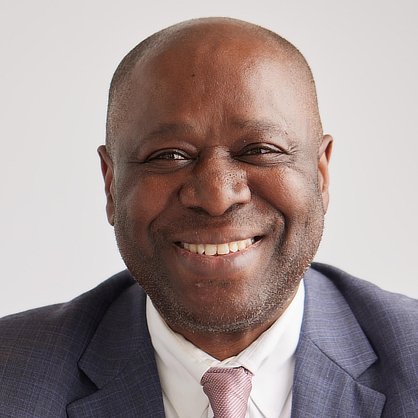
For Dr. Kwapong, Ghana stands at a crossroads. If the nation can rebuild standards, decentralize power, and form a transparent partnership with productive domestic enterprise, it can finally create firms that outlive their founders, sustain meaningful jobs, and generate lasting prosperity.
“The day Ghana learns to park its cars in orderly rows will be the day it learns to organize its future,” he concluded. Overall, Dr. Ohene Aku Kwapong argued that Ghana’s core challenge is chronic disorganization, not merely corruption.
He called for restored national standards, real decentralization, and strategic state–business alignment to build social order, strengthen institutions, and create an environment where enterprise and development can genuinely thrive.
READ ALSO: Ghana’s Gold Reserves Surge to 38.04 Tonnes in October 2025