
The Chief Executive Officer of the Africa Agribusiness Consortium, Dr. Mrs. Adelaide Siaw Agyepong, has stated that Africa’s quest for success in the agriculture and agribusiness sector is hinged on bridging the gap between academic research and industry practices.
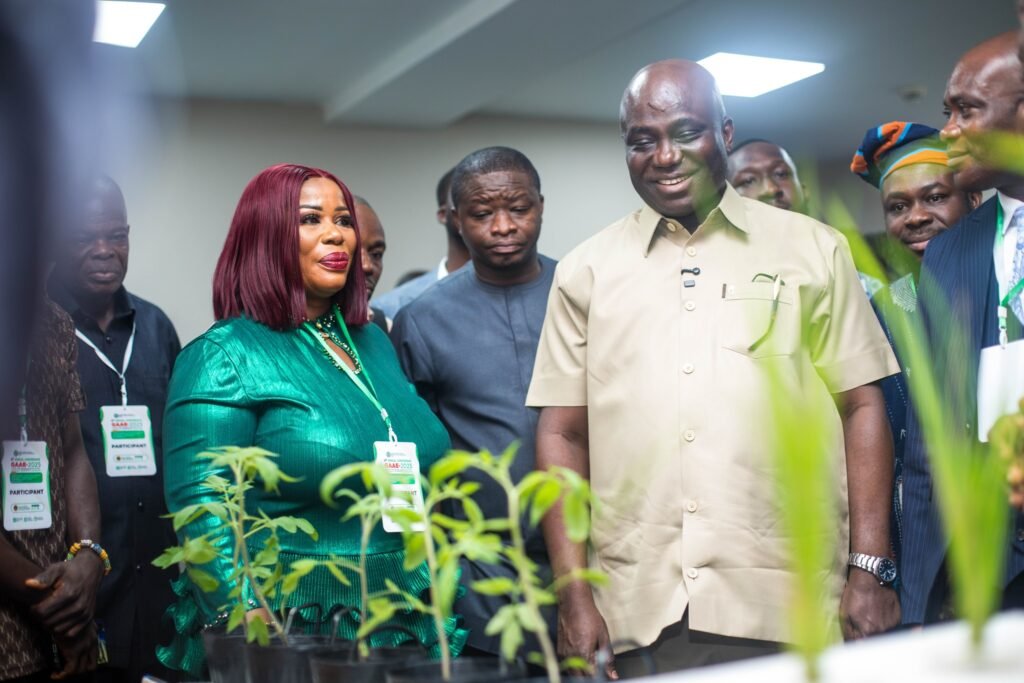
As a guest speaker at the ongoing 8th Annual Conference of the Ghana Association of Agricultural Economists (GAAE-2025) on the theme “Transforming Agri-Food Systems in Developing Economies Through Sustainable Agribusiness Development,” Mrs. Siaw Agyepong emphasized how pivotal agriculture is for the African continent.
She noted that while in other parts of the world, agriculture may only be considered for its contribution to economic resilience and human survival, for Africa, agriculture goes beyond that; it encapsulates history, heritage, and future.
“Around the world, conversations of food systems are changing; issues of climate change, global disruptions, nutrition, and youth employment have made agriculture a defining frontier for both economic resilience and human survival. And yet, for Africa, agriculture is not just an economic sector. It is our identity, our heritage, and our future.”
Dr. Mrs. Adelaide Siaw Agyepong, Chief Executive Officer, Africa Agribusiness Consortium
Mrs. Siaw Agyepong stated that the theme for the conference, “Transforming Agri-Food Systems in Developing Economies Through Sustainable Agribusiness Development,” prompted a reflection on the real issues that serve as bottlenecks to sustainable agribusiness development in the African continent.

Given her wealth of experience as a major player in the sector, Mrs. Siaw Agyepong emphasized that one of the major challenges in the sector has always been the gap between research and practice.
She emphasized that players in the agriculture and agribusiness sector must confront the question of how to make academic research guide real practice in order to ensure real transformation and sustained development.
“The question we must all continue to confront is how to make research matter, how to turn the wealth of ideas, data, and innovation around us into meaningful outcomes for farmers, enterprises, and economies, connect knowledge with enterprise, and strengthen the bridge between academic insight and practical transformation.
“It is the most common and most accepted diagnosis of agriculture challenges, and indeed, that gap exists. There are excellent studies, test technologies, and strong recommendations that never quite make it into large-scale practice.”
Dr. Mrs. Adelaide Siaw Agyepong, Chief Executive Officer, Africa Agribusiness Consortium
Structural Continuity
Mrs. Siaw Agyepong also stated that in addition to bridging the gap between research and practice, the other major issue has to do with the lack of structural continuity within the agricultural and agribusiness sector in many parts of the continent.

She noted that in their feasibility study for the Africa Agribusiness Consortium, their studies in countries like Argentina, Brazil, Thailand, Russia, Japan, and many countries, including African countries, showed how those nations had succeeded in building resilient agriculture economies, which was due to “advanced technologies, best practices, large agricultural machinery, various sustainable farming systems, and even fully automated farms.”
“What we discovered was that none of these successes came solely from the process itself. They succeeded because they developed strong, well-funded systems that linked research, industry, and policy in a continuous cycle.
“Their scientists were properly funded. The approaches were coordinated, and their policies remained stable across political changes. In other words, they created the conditions that allowed research to become practice.”
Dr. Mrs. Adelaide Siaw Agyepong, Chief Executive Officer, Africa Agribusiness Consortium
While other countries have succeeded as a result of structural continuity in terms of consistent policy, well-coordinated approaches, adequate funding for research, and the linkage between research and industry, the story of Ghana and many African countries has been different.
“Ghana and many parts of Africa continue to struggle with the same systemic weaknesses, including poor coordination, limited funding, inconsistent policy, and fragile institutions. Our projects often start with enthusiasm but lack the necessary support to transition from pilot to national scale.
” Ministries, research institutions, and private actors work hard, but in isolation. Each operates with different timelines, priorities, and accountability systems. The outcome is that progress, though visible, remains fragmented and slow. The issue, therefore, is not that we lack ideas. Our structures do not sustain action long enough to produce meaningful change.”
Dr. Mrs. Adelaide Siaw Agyepong, Chief Executive Officer, Africa Agribusiness Consortium
Mrs. Siaw Agyepong further emphasized that short-term financing and the disruptions caused by political cycles hinder sustained progress, adding that while there may be an established solid base of knowledge, the practical implementation remains fragile. “Until we address this imbalance. The research practice gap will remain a symptom of deeper systemic failures,” she stated.
Mrs. Siaw Agyepong therefore noted that for this narrative to change in order to ensure transformation and sustained development of agribusiness, there must be long-term blended financing mechanisms, protection of policy continuity, strengthening of institutional coordination, and investment in capacity that can translate knowledge into viable business modules.
READ ALSO: Africa Must Be Architect of Its Own Climate Future – Ghana’s Message at COP30