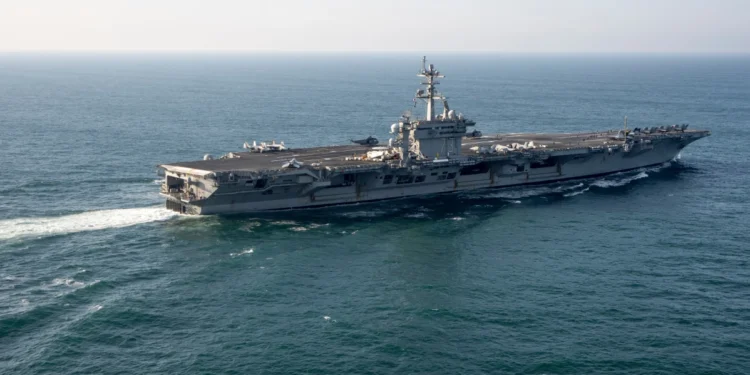
The USS George Washington aircraft carrier has arrived in the Middle East to replace the long-deployed USS Abraham Lincoln, as concerns continue to grow over reports of crew stress, mental health challenges and supply shortages aboard the Lincoln following months of operations linked to the war with Iran.
U.S. Central Command said that the Asia-based USS George Washington entered the region on Wednesday, joining the USS George H.W. Bush and giving the United States a continued aircraft carrier presence in the Middle East. The arrival of the Washington is expected to allow the USS Abraham Lincoln to begin its return from a deployment that has stretched for months and included more than 250 consecutive days at sea, according to reports.
The USS Abraham Lincoln left its homeport in San Diego in November and arrived in the Middle East in January. Since then, the carrier and its crew have supported U.S. military operations in the region, including operations connected to the conflict with Iran. Its extended time at sea has drawn increasing scrutiny following reports of crew stress, mental health difficulties and shortages of essential supplies, including food and hygiene products.
Several Democratic lawmakers have called on the Department of Defense to provide greater accountability and information about conditions aboard the carrier.
Defense Secretary Pete Hegseth has rejected concerns raised about the deployment, saying reports about conditions on the Lincoln had been “completely misrepresented.” Hegseth spoke with members of the carrier’s crew last week, while Adm. Brad Cooper, the head of U.S. Central Command, visited the ship over the weekend.

Following his visit, Cooper praised the carrier’s leadership and said efforts had been made to prioritise the mental health and resilience of service members. “History will record this deployment as one of the most operationally intense and consequential of the modern era,” Cooper said in a statement.
Extended carrier deployments can place significant pressure on sailors, who spend long periods away from their families while operating under demanding conditions. Long deployments can also increase strain on ships, aircraft and other military equipment.
Trump Downplays Concerns
President Donald Trump has also sought to downplay reports about conditions aboard the Lincoln. Speaking to reporters on Monday, Trump described the nearly nine months the carrier’s crew had spent at sea as a “good period of time,” while arguing that U.S. sailors had historically spent even longer deployments at sea.
Trump said that he had spoken with a retired admiral who had assured him that the Lincoln was “beautifully maintained and beautifully taken care of.” The President did not identify the admiral. The USS Abraham Lincoln is now expected to leave the Middle East, although U.S. officials have not said when it will arrive back in the United States or whether it will make a port call during the journey home. The trip is expected to take more than a month.
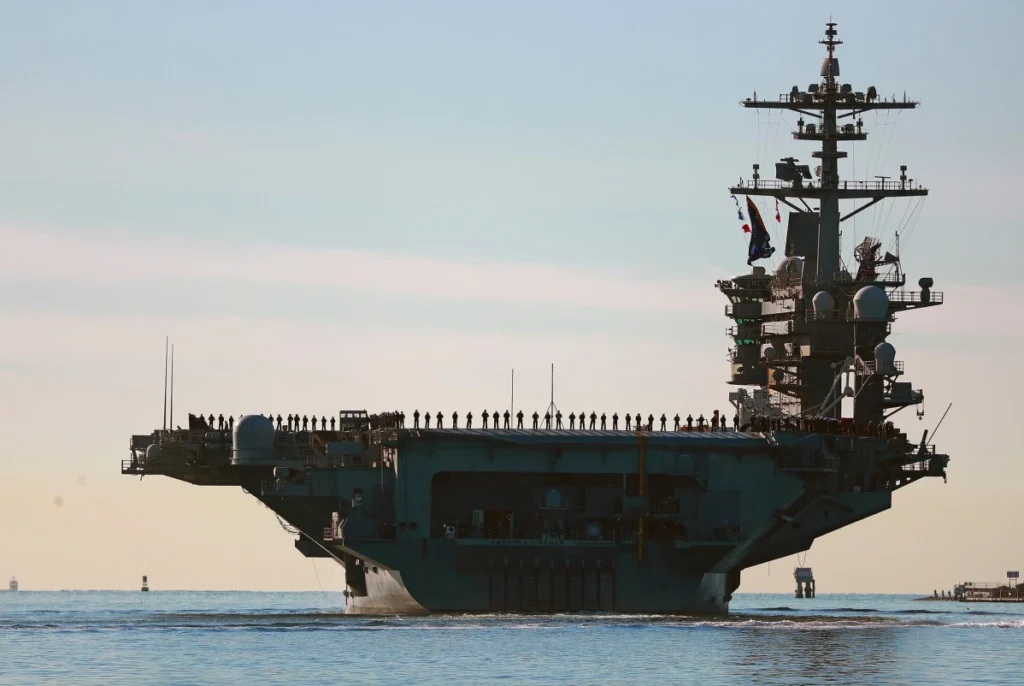
The carrier rotation comes despite a recent easing of direct hostilities between the United States and Iran. The U.S. Navy continues to enforce a reimposed blockade on Iranian ports and maintain operations connected to the Strait of Hormuz. The Trump administration has provided little detail about how or when it intends to bring its broader military campaign against Iran to an end.
Hegseth has said the United States could maintain the blockade “indefinitely,” signalling that American naval forces may remain heavily committed to the region. The arrival of the USS George Washington and the continued presence of the USS George H.W. Bush means the United States will retain two aircraft carriers in the Middle East even as the Lincoln prepares to depart.
Asia Left Without US Carrier
The deployment of the USS George Washington also raises questions about the U.S. military presence in the Asia-Pacific region. With the Washington now operating in the Middle East, Asia has been left without an American aircraft carrier strike group at a time of growing concerns about China’s military activities and increasingly assertive posture in the region.
The absence may be temporary if the U.S. Navy deploys another carrier to the Pacific in the coming months. However, the shift highlights the pressure that prolonged operations in the Middle East can place on America’s global military commitments.
Analysts have warned that the open-ended nature of U.S. operations involving Iran could continue to stretch naval personnel and equipment, particularly if Washington maintains its current military posture in the region.
The movement of the George Washington from Asia to the Middle East also reflects the Trump administration’s shifting strategic priorities, with greater attention focused on the conflict with Iran and other security concerns closer to the Western Hemisphere.
READ ALSO: Xabi Alonso Downplays Fernandez’s Exit Speculations, Says He’s a Chelsea Player