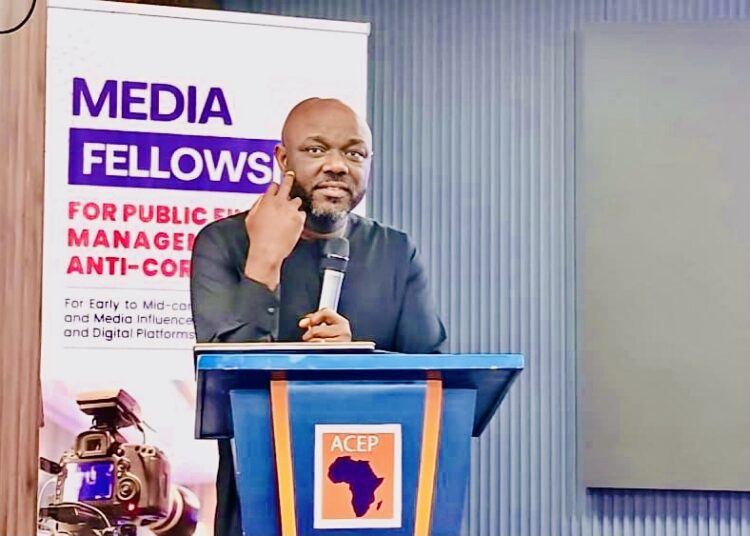
The Executive Director of the Africa Centre for Energy Policy (ACEP), Benjamin Boakye, has described the recent ruling in the Electricity Company of Ghana (ECG) and Power Distribution Services (PDS) arbitration as a mixed moment for Ghana, one that exposes the deep structural failures of the country’s power sector despite the legal victory.
Speaking on the outcome of the international arbitration tribunal in London, which dismissed all claims brought against ECG by PDS, Mr. Boakye said that while the ruling brings relief, it also reflects how politics and inefficiency have undermined genuine reform.
“I think it’s good news for the country. But we are cautious to wait for the ruling documents so we can comment on it.”
Benjamin Boakye, Executive Director of the ACEP
Mr. Boakye explained that the Millennium Challenge Compact, under which PDS took over ECG’s management in 2019, was designed to reform Ghana’s power distribution system and insulate the national budget from the sector’s persistent financial losses.
“The compact was to help us clean up the energy sector and ensure that the budget is insulated from the waste.
“Unfortunately, the politicians made it impossible for the arrangement to succeed, and that’s what got us here, celebrating a court ruling when, in reality, the waste has ballooned since the cancellation of the PDS arrangement.”
Benjamin Boakye, Executive Director of the ACEP
A Lost Opportunity for Reform

Mr. Boakye lamented that the termination of the PDS deal has worsened Ghana’s fiscal exposure to the energy sector.
“Now, we have probably spent more than $10 billion subsidizing the power sector, which shouldn’t have been the case.
“Those resources could have been channeled into infrastructure or other development projects.”
Benjamin Boakye, Executive Director of the ACEP
He argued that the compact’s $500 million U.S. grant to Ghana could have delivered transformative change if fully implemented.
“That money is still not available, and I don’t see how it will be reinstated unless the government engages diplomatically. Donor communities are always open to reforms.”
Benjamin Boakye, Executive Director of the ACEP
The ACEP director criticized the government’s inability to address the recurring inefficiencies that continue to drain the sector.
“Yes, the Ministry of Energy has been working on reforms and committees have been set up, but there is still no concrete pathway for dealing with the recurring debt.
“The Ministry of Finance is still spending, and the inefficiencies persist.”
Benjamin Boakye, Executive Director of the ACEP
Mr. Boakye acknowledged some recent improvements in revenue collection but said these gains are not enough to solve systemic waste.
“From where we sit at ACEP, our conclusion is that government has failed to be efficient in delivering the energy sector.
“The state must step back and allow the private sector to play its role.”
Benjamin Boakye, Executive Director of the ACEP
According to him, political control and entrenched interests have made effective reform nearly impossible. “The Ministry of Energy is responsible, but in our political system, some decisions go beyond the minister,” he explained.
“There are deep-state actors and powerful interest holders who influence decisions and undermine development in the sector.
“We must all appreciate that we are wasting too many resources and deal with those who work against the collective interest.”
Benjamin Boakye, Executive Director of the ACEP
“ECG Must Return to Private Hands”
Mr. Boakye was categorical in his recommendation that ECG should be handed back to private investors if the state cannot ensure efficiency.
“All state-owned enterprises in the energy sector are inefficient.
“Typically, an item that costs GH¢2 on the shelf will cost ECG GH¢6 through procurement. Any agency operating like that must be reformed.”
Benjamin Boakye, Executive Director of the ACEP
He warned that continued inefficiency would only deepen public debt and burden consumers through higher taxes. “If the state cannot do it, the private sector should,” Boakye said.
“Otherwise, mismanagement will keep creating debts that the Finance Ministry must absorb and in the end, the consumer will pay through increased tariffs or taxes.”
Benjamin Boakye, Executive Director of the ACEP
Mr. Boakye concluded that to secure the future of Ghana’s energy sector, efficiency, transparency, and private participation must be at the center of policy.
The ECG-PDS arbitration ruling, though seen as a legal victory for Ghana, has reignited debate over the future of the country’s power distribution system and the urgent need to build a financially sustainable energy market.
READ ALSO: Banks to Adjust Lending Rates Upward as GRR Edges Up for November 2025