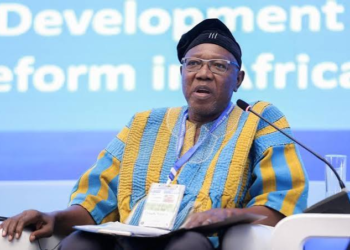

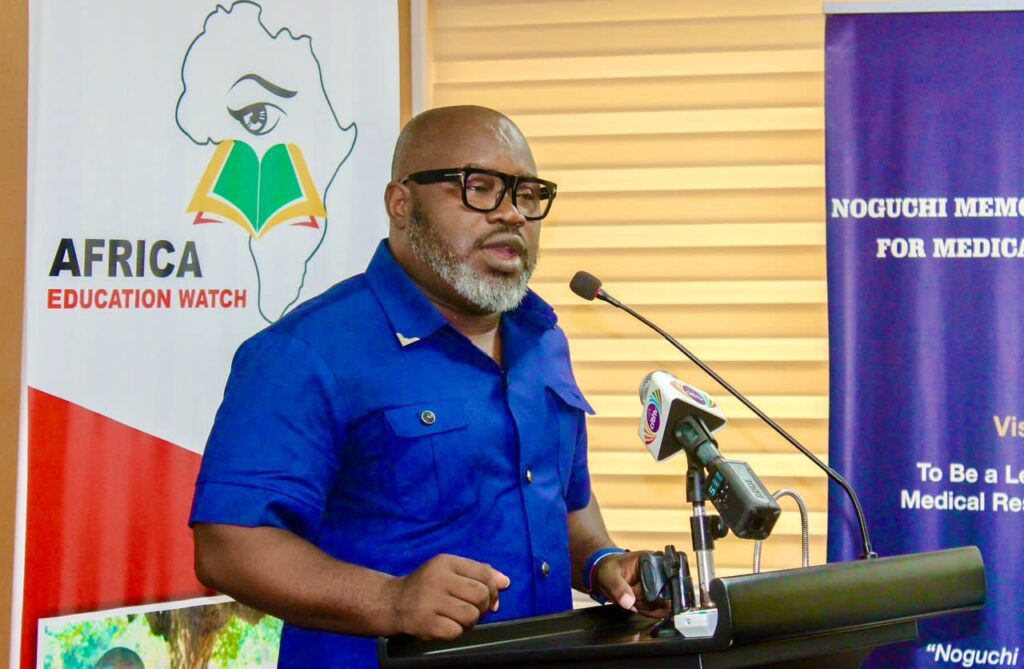
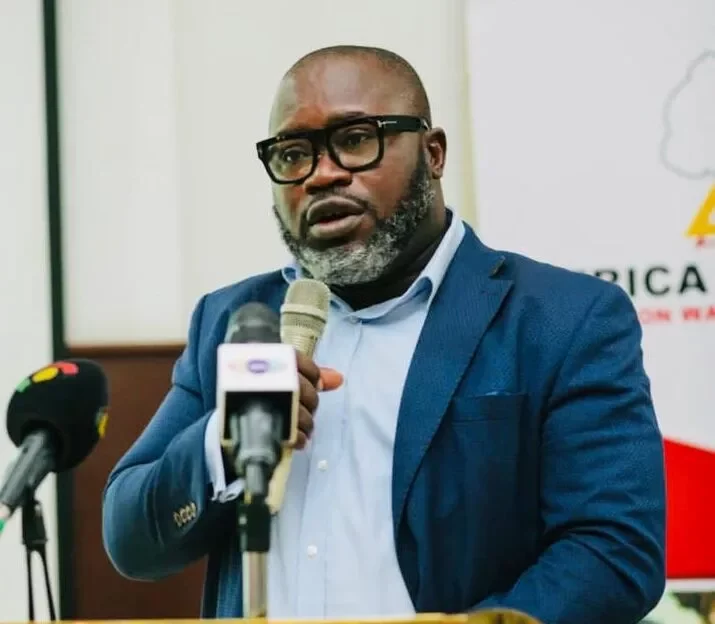
The Executive Director for Africa Education Watch (Eduwatch), Mr. Kofi Asare, has urged Members of Parliament to uphold their oversight role with respect to the budgetary allocations for the education sector for the 2026 fiscal year.
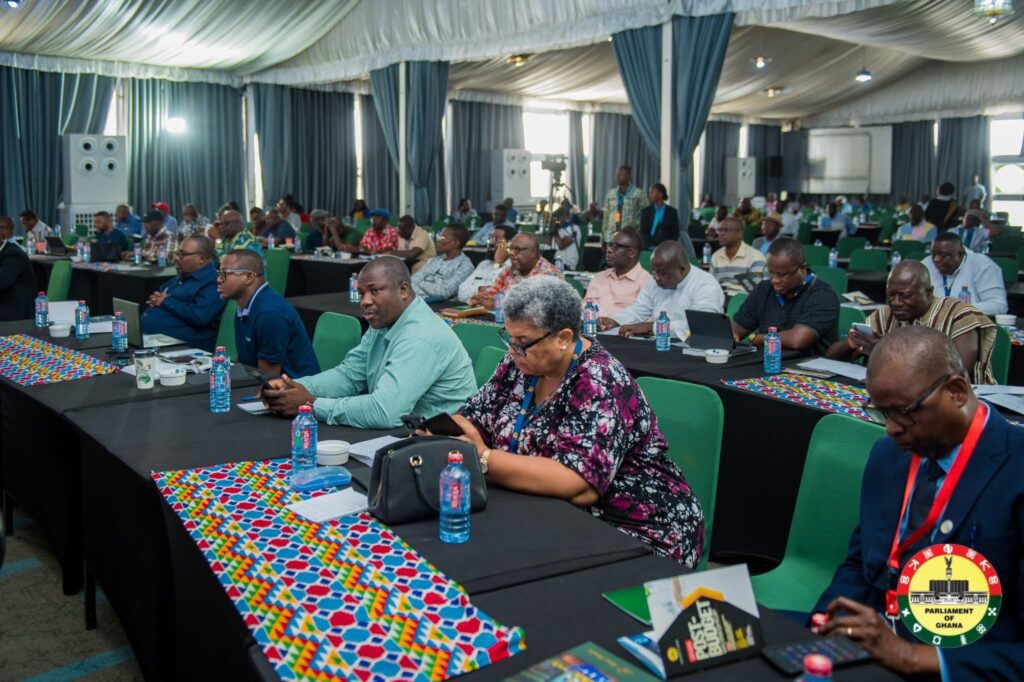
Speaking as a resource person on education during the post-budget workshop for Members of Parliament, Mr. Asare emphasized the crucial role of parliamentary oversight in ensuring the success of envisioned projects and programs outlined for the education sector in 2026.
He stressed that without active involvement and monitoring by MPs, the ambitious goals captured in the budget may not be realized.
“Acknowledging the over 1,200 basic school projects announced in the 2025 and 2026 budgets, including basic schools, teachers’ quarters, and school toilet facilities, I urged MPs to collaborate with Eduwatch in monitoring for quality and accountability.”
Mr. Kofi Asare, Executive Director, Africa Education Watch (Eduwatch)
Mr. Asare went further to emphasize the importance of Technical and Vocational Education and Training (TVET), stressing the need for workplace experience for learners in Ghana’s second-circle institutions.
He thereby called for Personal Protective Equipment (PPEs) to be fully costed under the Free Senior High School policy.
This measure, he argued, would significantly ease the financial burden currently borne by the parents of students enrolled in TVET programs.
He also argued that this would contribute to ensuring that students gain practical industry exposure and safety support, thereby strengthening the overall effectiveness and inclusiveness of the education system.
“I reminded the House that a country that produces 500,000 secondary graduates every year with only 200,000 moving to tertiary has no choice but to make Free SHS skills rich. If we fail, we worsen the 32 percent youth unemployment situation.”
Mr. Kofi Asare, Executive Director, Africa Education Watch (Eduwatch)
Mr. Asare made further demands for TVET education improvement, calling for significant infrastructure improvement.
He emphasized the need for a portion of all senior high school infrastructure to be dedicated for TVET, as well as the construction of new TVET institutions.
“I called for a 20 percent quota for TVET in every secondary school infrastructure intervention.
“As the government plans to complete 30 E blocks, six (6) must be technical and vocational institutes.”
Mr. Kofi Asare, Executive Director, Africa Education Watch (Eduwatch)
“No Teachers, No Learning”
The Executive Director for Eduwatch emphasized the urgent need for massive recruitment of teachers, highlighting a decentralized recruitment process.
He emphasized the need for this recruitment exercise to factor in the gaps in teacher allocation, noting that rural education is left in ruins due to a lack of teachers.
“I spent three (3) hours of my Sunday convincing our MPs that education cannot work in 2026 without recruiting at least 30,000 teachers for basic schools. The focus must be on deploying them to the foundational levels in underserved communities.”
Mr. Kofi Asare, Executive Director, Africa Education Watch (Eduwatch)
Mr. Asare urged the Minister for Education to instruct the Ghana Education Service to fully decentralize teacher postings, ensuring quotas align with declared and verified vacancies.
He emphasized that this approach will promote fairness, transparency, and efficiency in teacher distribution, addressing staffing gaps while strengthening accountability across schools and districts nationwide.
“The current centralized teacher deployment breeds inefficiencies in distribution, leading to teacher surplus in big cities like Tamale, while Chereponi classrooms remain empty. I made a strong case for teacher rationalization.”
Mr. Kofi Asare, Executive Director, Africa Education Watch (Eduwatch)
The Eduwatch Executive Director also emphasized the importance of anchoring effective teacher distribution through the 20% deprived area allowance and provision of teacher accommodation.
The 20% deprived area allowance is a government incentive in Ghana that gives teachers posted to rural or underserved communities an extra 20% of their basic salary.
Mr. Asare argued that this strategy would incentivize postings to underserved communities, ensure equitable access to quality education, and strengthen retention of teachers in challenging environments across the country.
“Eduwatch will continue to provide technical assistance to Ghana’s Parliament to deepen their budgetary oversight on the executive.” He stated.
He therefore emphasized the need for parliament to collaborate with civil society for improved oversight in order to exact transparency and accountability from duty bearers, as far as the budgetary allocations for the education sector are concerned.
READ ALSO: Government to Transform NPA into a Future-Ready, Innovative and Green Regulator