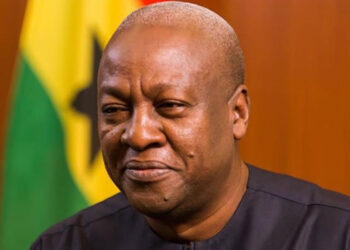
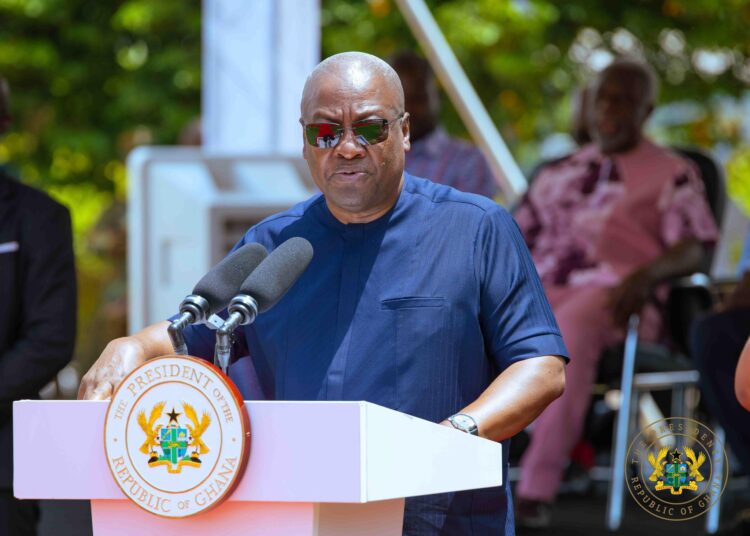
President John Dramani Mahama has announced an ambitious 300 million dollar education transformation package backed by the World Bank, declaring that Ghana’s controversial double track system will become history by 2027 as the government moves to expand infrastructure, improve teaching quality, and widen access to secondary education nationwide.
The President made the announcement while addressing guests at the commissioning of a PET Scan facility at the Swedish Ghana Medical Centre, where he briefly shifted from healthcare to what he described as one of the most strategic sectors for Ghana’s future.
Digressing from the main purpose of the gathering, President Mahama used the occasion to outline what could become one of the most significant education interventions under his administration, linking national progress directly to the quality of teachers and the strength of Ghana’s educational institutions.
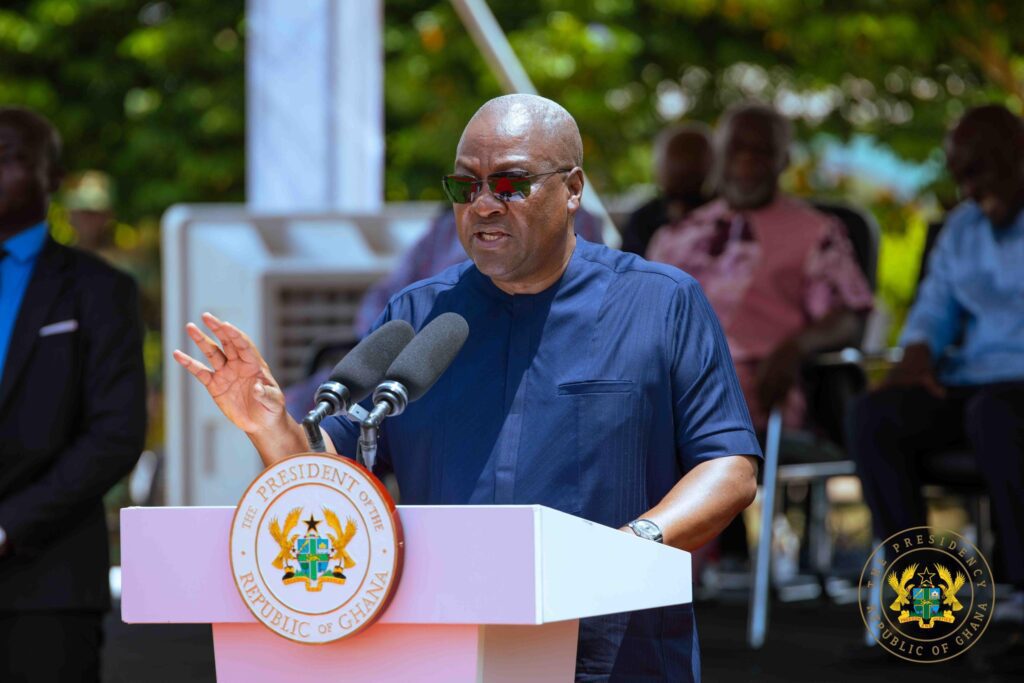
“Education has always been the bedrock of national development,” he told the audience. According to him, every milestone Ghana has achieved socially, politically, and economically can be traced back to the dedication of teachers who shaped generations of leaders, professionals, and innovators.
“The commitment, sacrifice, and professionalism of our teachers have shaped every milestone Ghana has attained politically, socially, and economically,” he said. In one of the most personal moments of his address, the President paid tribute to teachers as the silent architects of national success.
“Behind every successful doctor, every successful engineer, entrepreneur, public servant, scientist, and let me add, behind every president, there stands a teacher who inspired, nurtured, and guided them on that journey.”
President John Dramani Mahama
Government Lands Major World Bank Support: 50 SHSs to Be Upgraded
President Mahama disclosed that government has secured a 300 million dollar financing package from the World Bank under a new intervention known as the Transformative Secondary Education for Access, Results and Relevance for Jobs initiative, commonly referred to as STAR J.
According to him, the initiative is designed to modernize Ghana’s secondary education sector while addressing long-standing infrastructure gaps that have contributed to overcrowding and the introduction of the double track system.
He explained that the funding would support not only the expansion of school infrastructure but also broader reforms aimed at ensuring that every Ghanaian child has access to quality secondary education regardless of location or economic background.
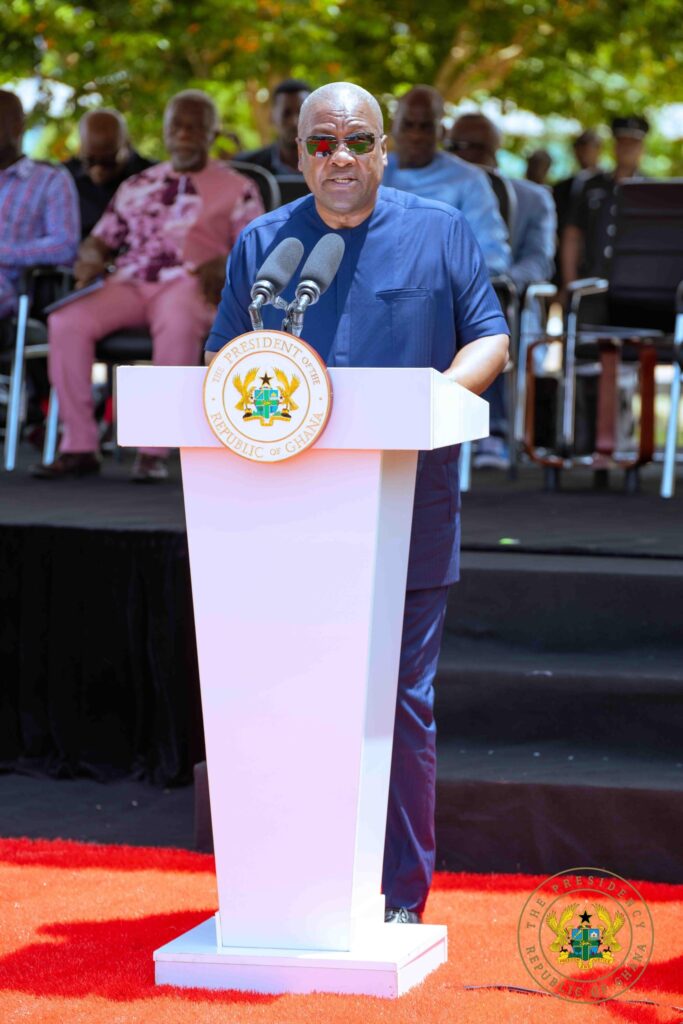
Providing details of the intervention, President Mahama said the STAR J project will upgrade 50 senior high schools across the country, with specific focus on improving standards among lower category institutions.
According to him, 30 Category C senior high schools will be upgraded to Category B status, while an additional 20 Category B schools will be elevated to Category A.
The President said the objective is to reduce disparities within the secondary education system by ensuring that students in less resourced schools have access to facilities and opportunities comparable to those available in top performing institutions.
Education experts present at the event described the initiative as a potentially transformative intervention capable of reshaping academic outcomes across the country.
Community Day Schools to Reduce Pressure
President Mahama also revealed plans to construct new community day secondary schools in urban and peri urban areas as part of efforts to reduce congestion in boarding institutions.
He said the project would build on the E-Block school concept but would strategically place new facilities closer to residential communities where students can commute daily.
According to him, the initiative will help reduce demand for boarding accommodation while expanding access to quality secondary education for families living in major towns and cities.
“So what this means is that if we get some of the children to go to school within their communities, it will ease the pressure on the boarding schools that are elsewhere.”
President John Dramani Mahama
The President said the approach reflects a more efficient use of educational resources while improving convenience for students and parents.
Teachers to Receive Twenty-First Century Training
Beyond infrastructure expansion, President Mahama emphasized that the STAR J project will invest heavily in teacher development to improve classroom outcomes.
He announced that all secondary school teachers in Ghana will benefit from continuous professional development programs aimed at equipping them with modern teaching skills and technological competencies.
The President said the training programs will focus on digital literacy, critical thinking, innovative teaching methods, learner centered education, and the integration of artificial intelligence into classroom instruction.
“Our objective is clear, to ensure that every teacher is not only well qualified but also continuously empowered to deliver relevant high quality education.”
He noted that modern economies require education systems that prepare students not only for examinations but for innovation, entrepreneurship, and global competitiveness.
Technical and Vocational Education Included
President Mahama further revealed that the education reform agenda will extend to technical and vocational education institutions, ensuring that graduates acquire practical skills relevant to the evolving labor market.
According to him, aligning education with industry needs remains essential if Ghana is to build a competitive economy capable of creating sustainable employment opportunities for young people.
He said the STAR J initiative will therefore support both academic and technical institutions as part of a broader strategy to build a resilient and future-ready education system.

In what drew loud applause from education stakeholders at the event, President Mahama made his boldest declaration yet on the future of Ghana’s double track system.
“The STAR J project is going to assist the Ghana government in achieving its target of bringing an end to double track in our secondary school system by next year. By 2027, there should be no secondary school implementing a double track system in Ghana.”
President John Dramani Mahama
According to the President, ending the double track system will not only improve academic delivery for students but also create healthier working conditions for teachers.
“This will also give teachers the time to rest and to prepare their notes and all their teaching and learning materials,” President Mahama said. For many education stakeholders, the announcement signals a major policy shift that could redefine secondary education in Ghana for years to come.
READ ALSO: Tarkwa Mine Lease Renewal, Inimical to Ghana’s National Interest—IEA