
Senior Aide and Advisor to President John Dramani Mahama, Joyce Bawah Mogtari, has hailed the government’s decision to establish specialised financial and environmental courts, describing it as a bold and necessary step toward reversing the persistent cycle of corruption, mismanagement, and environmental degradation exposed annually in Ghana’s audit processes.
In her reflections on the ongoing sittings of the Public Accounts Committee (PAC), she argued that the new policy signals a more decisive and urgent commitment to protecting the public purse and defending the country’s natural environment.
Mogtari noted that anyone following the current PAC hearings will recognise a familiar pattern—glaring financial irregularities, repeated procedural breaches, and systemic failures identified by the Auditor-General, but with limited consequences.
“For how long can we continue to lament leakages in the public purse? For how long must the President repeatedly call for further investigations into audit infractions, only for accountability to stall after the publication of reports?”
Joyce Bawah Mogtari, Senior Advisor and Aide to President John Dramani Mahama
It is against this backdrop that President Mahama, following consultations with Acting Chief Justice Paul Baffoe-Bonnie, Attorney-General Dr. Dominic Ayine, and Auditor-General Johnson Akuamoah-Asiedu, announced in October 2025 the establishment of specialised courts dedicated to handling financial offences flagged in audit reports, as well as illegal mining and related environmental crimes.
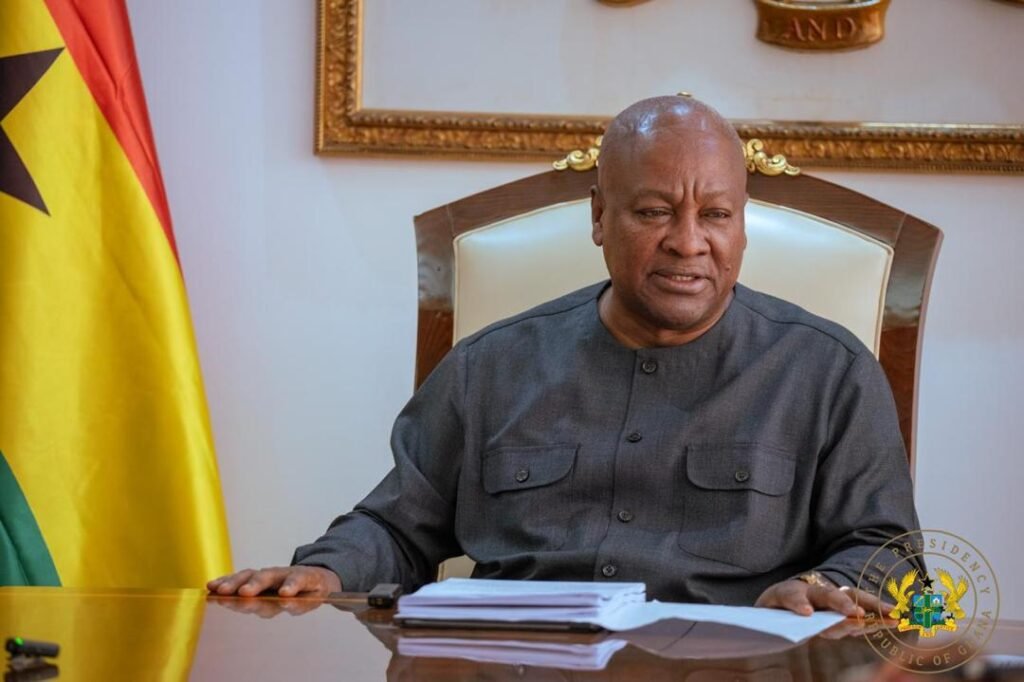
The courts will operate through a system of circuit adjudications across all regions, a structure Mogtari said will ensure that “justice is not only served, but seen and felt across every region of Ghana.” She emphasised that the initiative is designed not just to prosecute, but to restore confidence in public institutions.
Alongside the new courts, Mogtari assured that the Auditor-General will continue to exercise constitutional powers under Article 187(7)(b) to disallow unlawful expenditures and impose surcharges on individuals who misuse public funds. Mogtari said this dual approach sends a clear signal that “impunity is no longer an option.”
Closing the Enforcement Gap
One of the strongest arguments she advanced was the need to close Ghana’s longstanding enforcement gap. For years, she said, audit reports have highlighted troubling sums of money mismanaged or unaccounted for, but prosecution and recovery of funds have often been delayed or entirely absent.
By dedicating judicial resources to audit and environmental offences, the state is signalling that these issues are high priorities. Mogtari believes that the certainty of prosecution will fundamentally alter the behaviour of public officers.
“What will happen when public officers know that audit infractions do not end in reports, but in prosecution? The dynamic changes”.
Joyce Bawah Mogtari, Senior Advisor and Aide to President John Dramani Mahama
Beyond financial mismanagement, the inclusion of illegal mining—popularly known as galamsey—falls firmly within the broader accountability framework the government hopes to enforce.

Mogtari drew attention to the significant environmental destruction caused by galamsey, noting that the cost of rehabilitation, weakened agricultural productivity, and lost revenue also drain the public purse.
By treating environmental crimes with the same seriousness as financial offences, she argued, the government is recognising that environmental harm is inextricably linked to national development. “We must remember that this is a crime against national survival and future generations,” she wrote.
Removing Historical Backlogs
Mogtari further highlighted how the specialised courts will help resolve barriers that have historically undermined accountability, including case backlogs, jurisdictional confusion, and limited specialised capacity within the judiciary.
Circuit courts, she said, will bring justice closer to the people, reduce delays, and increase public confidence in the system. Strengthening accountability, she added, is directly linked to protecting public resources that should be supporting schools, hospitals, infrastructure, and social services.
She also outlined what will be required to ensure that the courts function effectively. This includes proper resourcing, transparent publication of case outcomes, whistle-blower protection, and broader governance reforms such as stricter procurement processes and strengthened internal audits.
Moreover, she cautioned that the courts must remain independent and free from political interference if they are to maintain credibility. At the same time, she acknowledged challenges, including the risk of overburdening the new courts or failing to address the broader conditions that enable corruption and environmental offences.

Despite these concerns, Mogtari described the establishment of specialised courts as a critical milestone in Ghana’s governance evolution. It is a shift, she said, from mere aspiration to genuine enforcement, ensuring that the principle that “no one is above the law” is not treated as a slogan but becomes a lived reality.
The initiative offers Ghana an opportunity to rebuild trust in its institutions and reaffirm that public resources belong to all citizens, not to privileged insiders or political actors.
In her concluding thoughts, she framed the new judicial reforms as an urgent national call to action. “In the fight for transparency and sustainable development, Ghana is drawing a line in the sand,” she wrote.
Whether citizens and institutions will rise to meet this moment, she argued, will determine the nation’s progress in safeguarding both the public purse and the environment. “The answer must be yes—for the public purse, for the environment, and for the generations who depend on our choices today.”
READ ALSO: Energy Commission Sets December 2025 Deadline for New Appliance Efficiency Standards