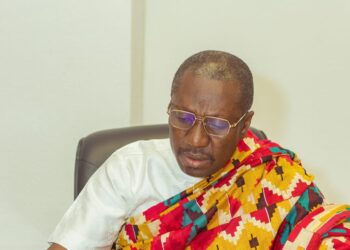
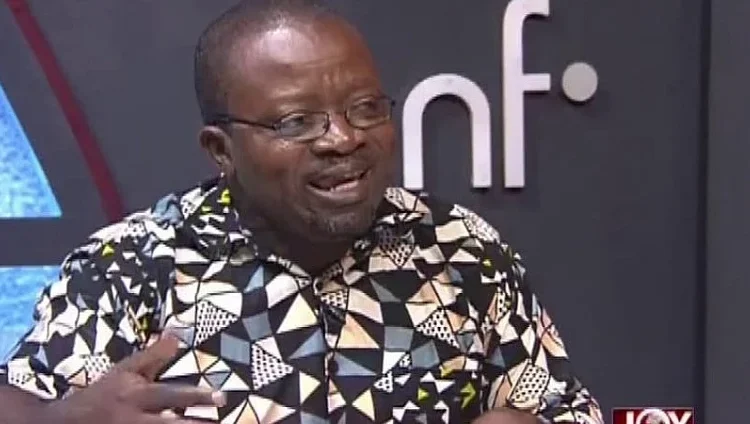
Political scientist at the Department of Political Science, University of Ghana, Dr. Kwame Asah-Asante, has emphasized that Ghana would have to reflect on her place within the geopolitical economy of the world as the country aims to pass the Human Sexual Rights and Family Values Bill, otherwise known as the LGBTQ bill.
Reacting to the president’s comment on the passage of the bill, he noted that it was welcoming news from the president.
However, he emphasized that the government of the day would have to weigh the “pluses and the minuses” that may come with the passage of the bill.
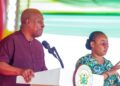
Yesterday, November 18, 2025, the President of the Republic of Ghana, His Excellency John Dramani Mahama, at a meeting with the Christian Council of Ghana, assured them that he will assent to it should parliament pass it.
The president also stated that the Speaker of Parliament has notified him that the bill will be reintroduced and laid in Parliament for the necessary processes before it becomes ready for presidential assent.
Dr. Asah-Asante noted that he aligns with the president’s assurance, emphasizing that the laws are primarily made to regulate human conduct and should therefore be welcomed in society.

“I am not against any law that is passed because laws are nothing but the expression of the will of the people—what we want it to be as a way to regulate human conduct, because every human being has certain negatives that you need a law to regulate.”
Dr. Kwame Asah-Asante, Political Scientist, University of Ghana
However, the political scientist emphasized that Ghana being an actor within the global space, the passage of a bill of that nature would require that the country weigh a number of factors.
He explained that geopolitics has its nuances, such that the powerful countries turn to control the global space while the less powerful tag along.
“Within the global politics, we know that they are bullies and that it is also a chaotic environment and that if you take resources from people to support your country’s affairs, they can push all manner of things down your throat, and this is one of them.”
Dr. Kwame Asah-Asante, Political Scientist, University of Ghana
He further explained that if Ghana truly wants to pass that bill, which may be against the wishes of the country’s donors, then there must be a commitment to generating resources that are sufficient to run the affairs of the country.
Dr. Asah-Asante further explained that as a state, it is a given that you should be able to generate your own resources to manage your affairs instead of seeking resources elsewhere.
He emphasized that this is what asserts the sovereignty of countries, their ability to manage their own affairs.
He further explained that the state is entrusted with that capacity to be able to generate resources from within to cater for its needs.
“The state capacity, what we call extractive capacity, is the ability of the state to generate resources within its own country and use them to run its own affairs.”
Dr. Kwame Asah-Asante, Political Scientist, University of Ghana
The politician argued that Ghana has more than enough resources that can assert her sovereignty and should therefore be able to extract these resources and put them to good use.

He, however, expressed his dismay with how the country still finds herself depending on external donors and aid.
“If God has blessed you with all the resources—if you look at this country, we are almost everywhere littered with gold or diamonds or, in recent times, lithium—and yet we have a cap in hand, globetrotting, looking for resources. I think those who give us resources are so good.”
Dr. Kwame Asah-Asante, Political Scientist, University of Ghana
He further highlighted the achievements of the Ghana Gold Board (GoldBod), querying that if the institution could bring in such an amount of money in just a few months, then what has the country been doing over the years?
He stated that GoldBod is said to have to “rake in about seven billion dollars” since its institution earlier this year.
Dr. Asah-Asante also lamented the country’s failure to curb the devastating effects of corruption that continues to undermine the value of the nation’s resources.
“Look at financial indiscipline, go to the Auditor General’s report, and check the parliamentary committee on these, you know, ministries, departments, and agencies when they appear, and you will see excesses, financial waste, corruption, and all that.”
Dr. Kwame Asah-Asante, Political Scientist, University of Ghana
He also cited Transparency International, which states that every year Ghana loses over five billion dollars to corruption.
He emphasized that “If we are able to plug in all that, you don’t go to IMF for three billion dollars.”
He therefore noted that if the country could make good use of the abundant resources, then the country would not worry about a possible negative reaction from its donors upon the passage of the Human Sexual Rights and Family Values Bill, otherwise known as the LGBTQ bill.
READ ALSO: Lands Minister Outlines Interventions to Enhance Responsible Mining