Africa Minerals Development Centre (AMDC) has asserted that the long-term prosperity of the continent’s extractive industry is inextricably linked to the rigorous classification, governance, and sustainable management of its vast natural wealth.
This strategic shift from mere extraction to high-level resource stewardship is being championed as the essential catalyst for ensuring that mineral assets translate into tangible socio-economic benefits for African citizens.
By prioritizing harmonized reporting and governance frameworks, the AMDC aims to redefine how the continent interacts with its geological endowments on the global stage.
“Africa’s mineral future depends not only on what we extract but also on how we classify, govern, and manage our resources sustainably. Strengthening knowledge-sharing and implementation pathways remains central to ensuring Africa’s mineral resources deliver long-term value for Africans. This requires a transparent approach to mineral resource governance across the continent.”
Africa Minerals Development Centre (AMDC)
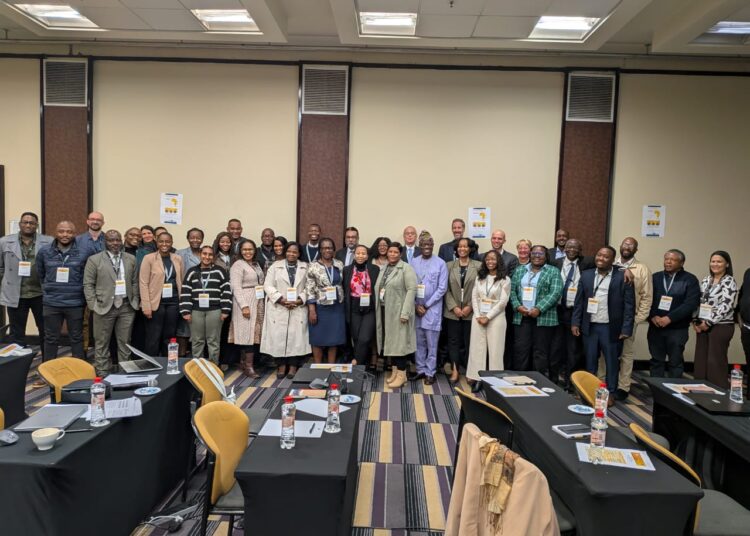
In a high-level technical gathering in Pretoria, South Africa, the PanAfGeo+ National AMREC/PARC – UNFC Workshop has convened experts from across Africa and Europe to solidify these governance structures.
This collaborative effort focuses on implementing the African Mineral and Energy Resources Classification and Management System (AMREC) and the Pan-African Resource/Reserve Estimation Code (PARC).
These tools are designed to align continental mining activities with the broader aspirations of the Africa Mining Vision (AMV) and the African Union’s Agenda 2063.
The workshop serves as a critical nexus for geological surveys, industry leaders, and academic institutions to exchange the technical expertise necessary to move Africa from being a passive resource provider to an active, sovereign manager of its mineral future.
Harmonizing Standards for Continental Sovereignty
The transition toward a unified reporting standard like AMREC is a pivotal move for African mineral sovereignty. Currently, the lack of a standardized, continent-wide classification system often leads to fragmented data, which weakens Africa’s bargaining power in international markets.
By adopting the United Nations Framework Classification for Resources (UNFC) as a foundation, African nations can provide a “common language” for investors and policymakers alike.

This transparency is expected to attract more “patient capital” investments that are focused on long-term industrialization rather than short-term extraction.
Tunde Arisekola FNMGS, the Officer in Charge at the AMDC, emphasized during the Pretoria sessions that the deployment of AMV implementation tools is not merely a bureaucratic exercise but a fundamental step in capacity building.
He noted that “advancing transparent approaches to mineral resource governance” is the only way to safeguard against the historic pitfalls of the “resource curse.”
As Arisekola and other dignitaries like Prof. Olugbenga Okunlola and Ms. Anna Nguno engage in these discussions, the focus remains on creating a resilient institutional framework that can withstand global market volatility.
Strengthening Value Chains through Geological Knowledge
Sustainable mineral management acts as a multiplier for economic gains by shifting the focus toward local beneficiation and value addition.

When African countries utilize codes like PARC, they gain a clearer, more accurate “geological bank account,” allowing them to negotiate from a position of data-driven strength.
This enhanced geological knowledge, supported by the PanAfGeo+ programme, is essential for identifying “green minerals” such as lithium, cobalt, and copper that are critical to the global energy transition.
By managing these resources through a sustainable lens, Africa can ensure that the manufacturing of batteries and renewable technologies happens within its own borders, creating jobs and fostering domestic industrial hubs.
Furthermore, the participation of international figures such as Slavko Solar, Harikrisnan Tulsidas, and Snježana Miletić underscores the global significance of Africa’s regulatory evolution.
The workshop highlights that when environmental and social governance (ESG) is integrated into the very “reporting standards” of a project, the resulting stability reduces the risk profile for large-scale infrastructure developments.
This alignment ensures that mining projects are not isolated enclaves but are integrated into the national economy, supporting the infrastructure and energy needs of surrounding communities.

Building Institutional Synergy for Agenda 2063
The success of Africa’s mineral future rests on the “partnerships emerging from this engagement” between state geological institutions and international organizations.
Prof. Maideyi Lydia Mabvira-Meck and other academic experts at the workshop are stressing the need for a “knowledge-driven” mining sector that prioritizes the training of the next generation of African geoscientists.
By fostering institutional collaboration, the AMDC is ensuring that the technical expertise gained in Pretoria is disseminated across national borders, creating a cohesive continental front.
READ ALSO: Legal Education Law Could Expand Opportunities For Graduates — Kwame Adofo