Bank of Ghana (BoG)’s efforts to crack down unethical banking appears to be paying off as Ghana’s financial sector is entering a decisive new chapter with the Chartered Institute of Bankers (CIB) Ghana launching its Ethics 2.0 Programme alongside a groundbreaking Non-Interest Banking and Finance Certification.
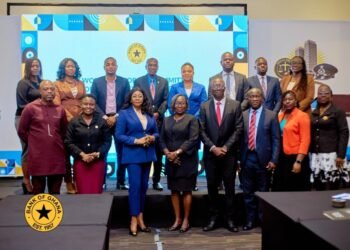
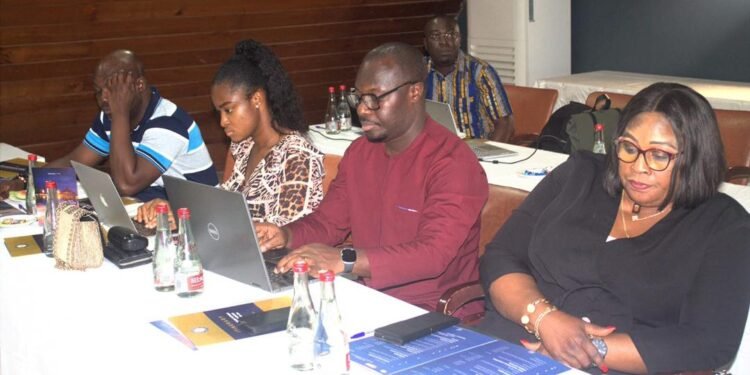
This bold step comes at a time when the Bank of Ghana (BoG) is intensifying its crackdown on unethical behaviour and staff-related fraud. The initiative was unveiled during the 29th National Banking and Ethics Conference in Accra, a high-level gathering of regulators, policymakers, and industry leaders.
The conference, held under the theme Building Future-Ready Banks: Ethical Leadership, Sustainable Finance, and Currency Stability amid Disruption, reaffirmed the urgent need to strengthen integrity, professionalism, and sustainability within Ghana’s evolving financial landscape.
Welcoming participants, Mr. Benjamin Amenumey, FCIB and President of CIB Ghana, highlighted the Institute’s statutory mandate under Act 991 to promote ethical and professional banking practices nationwide. He stressed that ethics remains the anchor of financial stability and public confidence.
He stated that banking is first and foremost a trust profession. He added that where trust is strong, stability is possible, and where trust is weak, the system is at risk. Mr. Amenumey noted that the Institute has already taken significant steps to deepen professional competence through several capacity-building initiatives. These include the revised Associate Chartered Banker curriculum, the Chartered Banker for Executive Leadership programme, the Branch CEO Programme, and the Digital Banking Academy.

He also touched on the importance of the Environmental, Social, and Governance Certification Programme, developed with the International Finance Corporation and the Environmental Protection Agency. According to him, that programme aims to entrench responsible and sustainable finance in Ghana.


Ethics 2.0 and Non-Interest Banking Programme Set New Standards
Delivering remarks on behalf of the Institute, Mr. Robert Dzato, CEO of CIB Ghana, described the launch of Ethics 2.0 and the Non-Interest Banking Certification as a defining milestone in shaping a trustworthy and future-ready banking workforce.
He said that the currency in banking is trust, adding that trust is built through character, competence, and consequence. He emphasized that these are the pillars the Institute is reinforcing across the banking sector. Mr. Dzato revealed that more than 9,000 banking professionals have already completed the earlier Ethics 1.0 Programme which was developed in partnership with the Bank of Ghana.
He added that Ethics 2.0 will extend to every level of the banking profession including executives and board members. He also confirmed that under a new directive from the central bank, ethics certification from CIB will now be mandatory for all banking staff. In addition, branch managers are required to attain the Associate Chartered Banker qualification within the next five years.
Touching on the Non-Interest Banking and Finance Certification, Mr. Dzato explained that the programme aligns with Ghana’s vision for an inclusive financial system. It supports the growing demand for Sharia-compliant services and promotes ethical finance alternatives in an increasingly diverse market.
BoG Issues Strong Warning on Rising Fraud and Ethical Breaches
Representing the Governor of the Bank of Ghana, Dr. Johnson Pandit Asiama, the Director of the Banking Supervision Department, Mr. Ismail Adam, delivered a message that underscored the gravity of current ethical challenges confronting the financial system.
He cautioned that although Ghana’s financial sector has become more stable, unethical practices remain widespread. He noted that staff-related fraud is rising and poses a direct threat to public confidence and institutional integrity. According to him, these trends highlight the urgent need for stronger ethical frameworks and accountability systems.
He further confirmed that the Bank of Ghana will integrate ethics certification into its fit-and-proper assessment for senior managers and board members. This signals a stronger regulatory shift toward ensuring integrity at the highest levels of Ghana’s banking institutions.

Special Guest of Honour, Hon. Haruna Iddrisu, Minister for Education, commended CIB Ghana for its partnership with the central bank while calling for an independent Bank of Ghana to safeguard monetary policy integrity. He urged banks to refuse involvement in unethical financial activities and warned that many of the unethical and corrupt monies in this country pass through the banking system.
He also announced ongoing collaboration between the Ministry of Education, CIB Ghana, and the National Council for Curriculum and Assessment to integrate financial ethics and literacy into the educational system. This initiative aims to nurture a new generation of professionals grounded in integrity and responsible financial behavior.
The conference featured rich discussions that explored the future of ethical banking, sustainable revenue models, and digital asset regulation. Industry leaders emphasized the importance of values-driven leadership, governance reforms, and technological innovation in building resilient financial institutions.
A second panel focused on the stability of Ghana’s currency in an era of cryptocurrency and virtual assets. Experts examined the delicate balance between innovation and regulatory oversight as the financial landscape becomes increasingly digital.
In closing, Mr. Amenumey noted that the conference was more than a routine gathering. He said it served as a renewal of shared commitment to build banks that are trusted, nurture leaders who act with integrity, and create a financial system that serves Ghana with excellence and honor.
READ ALSO: CalBank and SIC Insurance Join the Rally as Investors Bet on Financial Sector Stocks