• About
  • Advertise
  • Privacy Policy
  • Contact
Sunday, May 17, 2026
  • Login
The Vaultz News
  • Top Stories
  • News
    • General News
    • Education
    • Health
    • Opinions
  • Economics
    • Economy
    • Finance
      • Banking
      • Insurance
      • Pension
    • Securities/Markets
  • Business
    • Agribusiness
    • Vaultz Business
    • Extractives/Energy
    • Real Estate
  • World
    • Africa
    • America
    • Europe
    • UK
    • USA
    • Asia
    • Around the Globe
  • Innovation
    • Technology
    • Wheels
  • Entertainment
  • 20MOBPL2DNew
  • Jobs & Scholarships
    • Job Vacancies
    • Scholarships
No Result
View All Result
The Vaultz News
  • Top Stories
  • News
    • General News
    • Education
    • Health
    • Opinions
  • Economics
    • Economy
    • Finance
      • Banking
      • Insurance
      • Pension
    • Securities/Markets
  • Business
    • Agribusiness
    • Vaultz Business
    • Extractives/Energy
    • Real Estate
  • World
    • Africa
    • America
    • Europe
    • UK
    • USA
    • Asia
    • Around the Globe
  • Innovation
    • Technology
    • Wheels
  • Entertainment
  • 20MOBPL2DNew
  • Jobs & Scholarships
    • Job Vacancies
    • Scholarships
No Result
View All Result
The Vaultz News
No Result
View All Result
in Banking

BoG Cracks Down on Unethical Banking as CIB Rolls Out Ethics 2.0 for All Staff and Executives

M.Cby M.C
November 20, 2025
Reading Time: 5 mins read
BoG Cracks Down on Unethical Banking as CIB Rolls Out Ethics 2.0 for All Staff and Executives

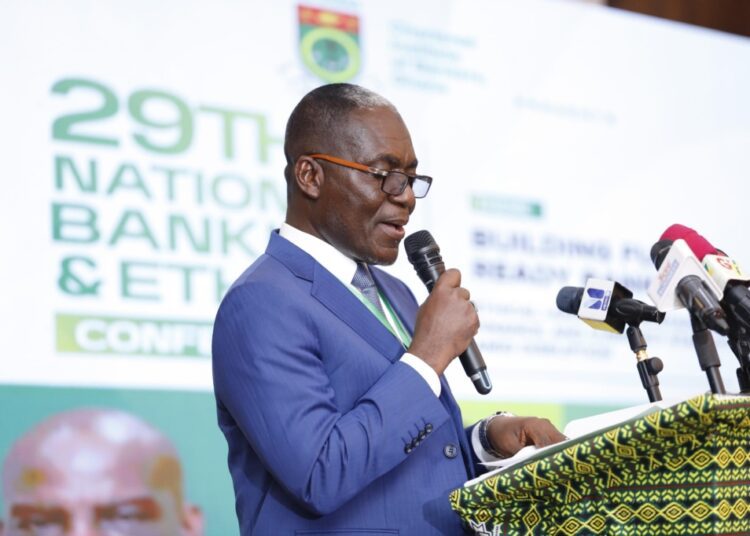
Mr. Ismail Adam, Director of Banking Supervision Department at the Bank of Ghana, delivering speech at the 29th National Banking and Ethics Conference

Bank of Ghana (BoG)’s efforts to crack down unethical banking appears to be paying off as Ghana’s financial sector is entering a decisive new chapter with the Chartered Institute of Bankers (CIB) Ghana launching its Ethics 2.0 Programme alongside a groundbreaking Non-Interest Banking and Finance Certification.

This bold step comes at a time when the Bank of Ghana (BoG) is intensifying its crackdown on unethical behaviour and staff-related fraud. The initiative was unveiled during the 29th National Banking and Ethics Conference in Accra, a high-level gathering of regulators, policymakers, and industry leaders.

The conference, held under the theme Building Future-Ready Banks: Ethical Leadership, Sustainable Finance, and Currency Stability amid Disruption, reaffirmed the urgent need to strengthen integrity, professionalism, and sustainability within Ghana’s evolving financial landscape.

Welcoming participants, Mr. Benjamin Amenumey, FCIB and President of CIB Ghana, highlighted the Institute’s statutory mandate under Act 991 to promote ethical and professional banking practices nationwide. He stressed that ethics remains the anchor of financial stability and public confidence.

ADVERTISEMENT

He stated that banking is first and foremost a trust profession. He added that where trust is strong, stability is possible, and where trust is weak, the system is at risk. Mr. Amenumey noted that the Institute has already taken significant steps to deepen professional competence through several capacity-building initiatives. These include the revised Associate Chartered Banker curriculum, the Chartered Banker for Executive Leadership programme, the Branch CEO Programme, and the Digital Banking Academy.

e1 1024x682 1
From left to right – Mr Robert Dzato, CEO of CIB Ghana; Hon Haruna Iddrisu, Minister for Education; and Mr Benjamin Amenumey FCIB, President of CIB Ghana, seated at the 29th National Banking and Ethics Conference

He also touched on the importance of the Environmental, Social, and Governance Certification Programme, developed with the International Finance Corporation and the Environmental Protection Agency. According to him, that programme aims to entrench responsible and sustainable finance in Ghana.

Ethics 2.0 and Non-Interest Banking Programme Set New Standards

Delivering remarks on behalf of the Institute, Mr. Robert Dzato, CEO of CIB Ghana, described the launch of Ethics 2.0 and the Non-Interest Banking Certification as a defining milestone in shaping a trustworthy and future-ready banking workforce.

He said that the currency in banking is trust, adding that trust is built through character, competence, and consequence. He emphasized that these are the pillars the Institute is reinforcing across the banking sector. Mr. Dzato revealed that more than 9,000 banking professionals have already completed the earlier Ethics 1.0 Programme which was developed in partnership with the Bank of Ghana.

He added that Ethics 2.0 will extend to every level of the banking profession including executives and board members. He also confirmed that under a new directive from the central bank, ethics certification from CIB will now be mandatory for all banking staff. In addition, branch managers are required to attain the Associate Chartered Banker qualification within the next five years.

Touching on the Non-Interest Banking and Finance Certification, Mr. Dzato explained that the programme aligns with Ghana’s vision for an inclusive financial system. It supports the growing demand for Sharia-compliant services and promotes ethical finance alternatives in an increasingly diverse market.

BoG Issues Strong Warning on Rising Fraud and Ethical Breaches

Representing the Governor of the Bank of Ghana, Dr. Johnson Pandit Asiama, the Director of the Banking Supervision Department, Mr. Ismail Adam, delivered a message that underscored the gravity of current ethical challenges confronting the financial system.

He cautioned that although Ghana’s financial sector has become more stable, unethical practices remain widespread. He noted that staff-related fraud is rising and poses a direct threat to public confidence and institutional integrity. According to him, these trends highlight the urgent need for stronger ethical frameworks and accountability systems.

He further confirmed that the Bank of Ghana will integrate ethics certification into its fit-and-proper assessment for senior managers and board members. This signals a stronger regulatory shift toward ensuring integrity at the highest levels of Ghana’s banking institutions.

ADVERTISEMENT
e 636x424 1
Executives and members of the Chartered Institute of Bankers Ghana in a group picture with Hon. Haruna Iddrisu, Minister for Education

Special Guest of Honour, Hon. Haruna Iddrisu, Minister for Education, commended CIB Ghana for its partnership with the central bank while calling for an independent Bank of Ghana to safeguard monetary policy integrity. He urged banks to refuse involvement in unethical financial activities and warned that many of the unethical and corrupt monies in this country pass through the banking system.

He also announced ongoing collaboration between the Ministry of Education, CIB Ghana, and the National Council for Curriculum and Assessment to integrate financial ethics and literacy into the educational system. This initiative aims to nurture a new generation of professionals grounded in integrity and responsible financial behavior.

The conference featured rich discussions that explored the future of ethical banking, sustainable revenue models, and digital asset regulation. Industry leaders emphasized the importance of values-driven leadership, governance reforms, and technological innovation in building resilient financial institutions.

A second panel focused on the stability of Ghana’s currency in an era of cryptocurrency and virtual assets. Experts examined the delicate balance between innovation and regulatory oversight as the financial landscape becomes increasingly digital.

In closing, Mr. Amenumey noted that the conference was more than a routine gathering. He said it served as a renewal of shared commitment to build banks that are trusted, nurture leaders who act with integrity, and create a financial system that serves Ghana with excellence and honor.

READ ALSO: CalBank and SIC Insurance Join the Rally as Investors Bet on Financial Sector Stocks

Sign Up to Our Newsletter

Fresh updates, Straight to your inbox

Tags: Bank of GhanaBanking ReformsCIB GhanaCurrency Stabilitydigital banking GhanaEthical BankingEthics 2.0 ProgrammeNon Interest Banking CertificationProfessional Banking StandardsSharia Banking GhanaSustainable Finance
Share2Tweet1ShareSendSend
Please login to join discussion
Previous Post

Trump Sparks 30-day Countdown To Release Epstein Files

Next Post

ACEP Warns Against GNPC Takeover of Springfield Asset

Related Posts

Ecobank Ghana PLC Breaks Silence After Supreme Court Judgement
Banking

Ecobank Ghana PLC Breaks Silence After Supreme Court Judgement

May 17, 2026
Ghana Defies Odds With Record Financial Growth
Banking

Ghana Defies Odds With Record Financial Growth

May 16, 2026
Fidelity Demands Africa Own Its Digital Future At a time when Africa’s digital economy is accelerating at an unprecedented pace, Fidelity Bank Ghana has delivered one of the strongest messages yet on the continent’s technological future. The bank made a bold and urgent case for Africa to stop depending on foreign controlled digital systems and begin building its own infrastructure capable of retaining value, strengthening currencies, and driving long term economic sovereignty. As one of the key sponsors of the 3i Africa summit, Fidelity Bank did not just show up to participate. It arrived with a message that resonated deeply across conference halls and policy discussions. Fidelity Bank emerged as one of the loudest voices championing a future where African nations control the very digital rails that power their economies. Digital Infrastructure Is The New Economic Power One of the defining moments of the summit came during a high level panel discussion on digital public infrastructure, where Adeline Aryee delivered a statement that immediately captured the attention of participants. She declared that if Africa builds its own digital rails, it naturally retains the value created by those systems. Her message was clear and uncompromising. In previous decades, national infrastructure was measured by roads, bridges, ports, and airports. Today, the true engines of economic power are payment platforms, identity systems, financial technology ecosystems, and digital marketplaces. According to Aryee, digital public infrastructure is no longer a luxury. It is now a strategic national asset. Her remarks struck at the heart of one of Africa’s most pressing economic concerns. Despite growing digital adoption, many transactions across the continent still pass through foreign payment systems, resulting in value leakage and continued pressure on local currencies. Ghana’s Success Story Becomes A Continental Blueprint Aryee highlighted Ghana’s progress in financial inclusion, mobile payments, and digital banking, describing the country as an emerging model for other African economies. Over the years, Ghana has invested heavily in domestic payment systems such as GhIPSS and its flagship platform, Gh-link. These systems have significantly expanded access to financial services while promoting digital transactions across urban and rural communities. Yet Aryee argued that inclusion alone is no longer enough. The next chapter for Africa, she insisted, must focus on ownership. She questioned why local transactions continue to depend on foreign rails when domestic infrastructure already exists. According to her, such dependence creates unnecessary external exposure and limits the continent’s ability to fully capture the economic benefits of its growing digital market. Her comments triggered intense debate among summit participants, many of whom acknowledged the urgent need for policy reforms and infrastructure investments. Market Driven Innovation Takes Center Stage Beyond infrastructure, Fidelity Bank also made a strong case for innovation that begins with real market needs. During the Ecosystem Roundtable on platforms, talent, and digital markets, Prince Osei Hyeaman-Addai shared insights from the bank’s years of digital financial innovation. He stressed that successful digital products are not built in boardrooms or based on assumptions. Instead, they are created by listening carefully to the market and understanding customer pain points. According to him, the market itself reveals the problems that need solving, the type of platform required, and the path toward scalable growth. His comments reflected a growing shift in African fintech circles, where customer centered design is becoming essential for product adoption and long term relevance. Trust And Credibility Remain The Real Currency Prince also emphasized that technology alone does not guarantee success. In his view, trust, credibility, and strong operational structures remain the real foundations of successful innovation. He noted that while investor interest in African fintech continues to rise, startups must prove they can deliver sustainable solutions, maintain transparency, and build products that respond to local realities. This perspective reflects Fidelity Bank’s own journey in digital transformation. Over the years, the bank has built strategic collaborations with leading fintech players, including IT Consortium, helping pioneer wallet to bank integrations and mobile financial solutions in Ghana. These partnerships have helped position Fidelity as one of Ghana’s most innovation driven financial institutions. A Defining Moment For Africa’s Digital Future Fidelity Bank’s participation at the 3i Africa Summit 2026 was more than a corporate appearance. It was a strategic declaration. At a time when Africa is racing to build competitive digital economies, the bank’s message was impossible to ignore. Africa cannot simply consume technology created elsewhere. It must own the infrastructure, shape the platforms, and capture the value generated by its digital future. As conversations from the summit continue to ripple across financial and policy circles, one thing is becoming increasingly clear. Africa’s next economic revolution may not be built on oil, gold, or minerals. It may be built on digital rails designed, owned, and powered by Africans. READ ALSO: IMF Ghana Review Ends in Dramatic Cliffhanger Fidelity Demands Africa Own Its Digital Future At a time when Africa’s digital economy is accelerating at an unprecedented pace, Fidelity Bank Ghana has delivered one of the strongest messages yet on the continent’s technological future. The bank made a bold and urgent case for Africa to stop depending on foreign controlled digital systems and begin building its own infrastructure capable of retaining value, strengthening currencies, and driving long term economic sovereignty. As one of the key sponsors of the 3i Africa summit, Fidelity Bank did not just show up to participate. It arrived with a message that resonated deeply across conference halls and policy discussions. Fidelity Bank emerged as one of the loudest voices championing a future where African nations control the very digital rails that power their economies. Digital Infrastructure Is The New Economic Power One of the defining moments of the summit came during a high level panel discussion on digital public infrastructure, where Adeline Aryee delivered a statement that immediately captured the attention of participants. She declared that if Africa builds its own digital rails, it naturally retains the value created by those systems. Her message was clear and uncompromising. In previous decades, national infrastructure was measured by roads, bridges, ports, and airports. Today, the true engines of economic power are payment platforms, identity systems, financial technology ecosystems, and digital marketplaces. According to Aryee, digital public infrastructure is no longer a luxury. It is now a strategic national asset. Her remarks struck at the heart of one of Africa’s most pressing economic concerns. Despite growing digital adoption, many transactions across the continent still pass through foreign payment systems, resulting in value leakage and continued pressure on local currencies. Ghana’s Success Story Becomes A Continental Blueprint Aryee highlighted Ghana’s progress in financial inclusion, mobile payments, and digital banking, describing the country as an emerging model for other African economies. Over the years, Ghana has invested heavily in domestic payment systems such as GhIPSS and its flagship platform, Gh-link. These systems have significantly expanded access to financial services while promoting digital transactions across urban and rural communities. Yet Aryee argued that inclusion alone is no longer enough. The next chapter for Africa, she insisted, must focus on ownership. She questioned why local transactions continue to depend on foreign rails when domestic infrastructure already exists. According to her, such dependence creates unnecessary external exposure and limits the continent’s ability to fully capture the economic benefits of its growing digital market. Her comments triggered intense debate among summit participants, many of whom acknowledged the urgent need for policy reforms and infrastructure investments. Market Driven Innovation Takes Center Stage Beyond infrastructure, Fidelity Bank also made a strong case for innovation that begins with real market needs. During the Ecosystem Roundtable on platforms, talent, and digital markets, Prince Osei Hyeaman-Addai shared insights from the bank’s years of digital financial innovation. He stressed that successful digital products are not built in boardrooms or based on assumptions. Instead, they are created by listening carefully to the market and understanding customer pain points. According to him, the market itself reveals the problems that need solving, the type of platform required, and the path toward scalable growth. His comments reflected a growing shift in African fintech circles, where customer centered design is becoming essential for product adoption and long term relevance. Trust And Credibility Remain The Real Currency Prince also emphasized that technology alone does not guarantee success. In his view, trust, credibility, and strong operational structures remain the real foundations of successful innovation. He noted that while investor interest in African fintech continues to rise, startups must prove they can deliver sustainable solutions, maintain transparency, and build products that respond to local realities. This perspective reflects Fidelity Bank’s own journey in digital transformation. Over the years, the bank has built strategic collaborations with leading fintech players, including IT Consortium, helping pioneer wallet to bank integrations and mobile financial solutions in Ghana. These partnerships have helped position Fidelity as one of Ghana’s most innovation driven financial institutions. A Defining Moment For Africa’s Digital Future Fidelity Bank’s participation at the 3i Africa Summit 2026 was more than a corporate appearance. It was a strategic declaration. At a time when Africa is racing to build competitive digital economies, the bank’s message was impossible to ignore. Africa cannot simply consume technology created elsewhere. It must own the infrastructure, shape the platforms, and capture the value generated by its digital future. As conversations from the summit continue to ripple across financial and policy circles, one thing is becoming increasingly clear. Africa’s next economic revolution may not be built on oil, gold, or minerals. It may be built on digital rails designed, owned, and powered by Africans. READ ALSO: IMF Ghana Review Ends in Dramatic Cliffhanger Fidelity Demands Africa Own Its Digital Future
Banking

Fidelity Demands Africa Own Its Digital Future

May 15, 2026
Absa Bank Ghana Empowers Academic City University College With Money Skills
Banking

Absa Bank Ghana Empowers Academic City University With Money Skills

May 14, 2026

Sign Up to Our Newsletter

Fresh updates, Straight to your inbox

Recent News

Davies Narh Korboe, President of the FAGE

Horticulture Expo 2026 Targets Non-Traditional Export Growth

May 17, 2026
Ecobank Ghana PLC Breaks Silence After Supreme Court Judgement

Ecobank Ghana PLC Breaks Silence After Supreme Court Judgement

May 17, 2026
download 53

Drone Strike Targets UAE’s Sole Nuclear Power Plant

May 17, 2026
Hanan Abdul and wife

AG Recharges Former Buffer Stock CEO as Fake Rent Documents Revive GHS70m Case

May 17, 2026
NPP's Ashanti Regional Chairman, Bernard Antwi Bosiako

AG Slaps Wontumi With Fresh GHS30m EximBank Fraud Charges

May 17, 2026
Next Post
Benjamin Boakye, Executive Director of the Africa Centre for Energy Policy (ACEP)

ACEP Warns Against GNPC Takeover of Springfield Asset

The Vaultz News

Copyright © 2025 The Vaultz News. All rights reserved.

Navigate Site

  • About
  • Advertise
  • Privacy Policy
  • Contact

Follow Us

Welcome Back!

Login to your account below

Forgotten Password?

Retrieve your password

Please enter your username or email address to reset your password.

Log In
No Result
View All Result
  • Top Stories
  • News
    • General News
    • Education
    • Health
    • Opinions
  • Economics
    • Economy
    • Finance
      • Banking
      • Insurance
      • Pension
    • Securities/Markets
  • Business
    • Agribusiness
    • Vaultz Business
    • Extractives/Energy
    • Real Estate
  • World
    • Africa
    • America
    • Europe
    • UK
    • USA
    • Asia
    • Around the Globe
  • Innovation
    • Technology
    • Wheels
  • Entertainment
  • 20MOBPL2D
  • Jobs & Scholarships
    • Job Vacancies
    • Scholarships

Copyright © 2025 The Vaultz News. All rights reserved.

This website uses cookies. By continuing to use this website you are giving consent to cookies being used. Visit our Privacy and Cookie Policy.

Discover the Details behind the story

Get an in-depth analysis of the news from our top editors

Enter your email address