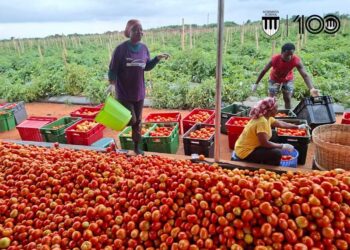

Ghana is taking significant steps to strengthen its agricultural export sector by revising certification standards to reduce rejections and ensure that local products meet global requirements.
The initiative, announced by Minister for Trade, Agribusiness and Industry, Hon. Elizabeth Ofosu-Adjare, aims to enhance the competitiveness of Ghanaian goods in international markets and promote the integration of agriculture with industrial growth.
Speaking at the Agriculture Modernisation Conference in Accra, Hon. Ofosu-Adjare highlighted the critical role of regulatory agencies such as the Food and Drugs Authority (FDA) and the Ghana Standards Authority in improving the approval processes for agricultural exports.
The review of certification systems, she explained, is expected to reduce export rejections and position Ghanaian products as reliable and high-quality commodities globally.
“Sustainable transformation requires a tight linkage between agriculture and industry. Agriculture feeds industry and industry expands the value of agriculture. Ladies and gentlemen, to support agro-processing and industrial expansion, the Ministry of Trade, Agribusiness and Industry continues to promote industrial parks and special economic zones”
Hon. Elizabeth Ofosu-Adjare, Minister for Trade, Agribusiness and Industry

The minister emphasised that the special economic zones are designed to provide improved infrastructure, lower the cost of doing business, and create opportunities for clustering, logistics, efficiency, and export-oriented production.
She noted that these measures are part of Ghana’s broader agenda to strengthen local industries, promote value addition, and ensure that agricultural outputs are processed to meet international standards.
Hon. Ofosu-Adjare noted that “strengthening the certification system,” is essential not only for exports but also for building trust in Ghanaian products and enhancing their marketability abroad. The revised standards, she said, would also “align domestic production with international requirements,” allowing farmers and exporters to compete effectively in global markets.
“We are also working closely with standard agencies such as Ghana Standards Authority and Food and Drugs Authority to improve certification systems, reduce export rejection, and ensure that Ghanaian products meet global quality requirements”
Hon. Elizabeth Ofosu-Adjare, Minister for Trade, Agribusiness and Industry
Collaborating With Private Partners
The Trade Minister also underscored the importance of collaboration between government, the private sector, and development partners in promoting industrialisation and improving agricultural outputs.

Beyond reducing the volume of rejected exports, which has been a persistent challenge affecting revenue, farmer incomes and investor confidence in the sector, improving certification and export standards is also part of a broader strategy to boost agro-processing, create jobs, and stimulate rural economies.
Hon. Ofosu-Adjare noted that by linking agricultural production directly to industrial growth, the government hopes to generate value-added products that can command higher prices everywhere they go and foster sustainable economic development.
The minister called on stakeholders, including exporters, farmers, and investors, to embrace the revised systems, noting that compliance will be key to maintaining Ghana’s reputation as a reliable exporter of high-quality agricultural products. She stressed that ongoing training, support, and awareness campaigns will be rolled out to ensure smooth adoption of the new standards.
The government’s proactive approach reflects its commitment to positioning Ghana as a competitive player in global agriculture and trade by strengthening its industrial base, enhancing economic resilience, and creating opportunities for inclusive growth across the country.
Through these measures, the Trade Ministry hopes to ensure that Ghanaian agricultural products not only meet global standards but also contribute meaningfully to national development, regional trade, and continental integration.

The success of this initiative, according to Hon. Elizabeth Ofosu-Adjare, will depend on effective regulation, industry collaboration, and continuous monitoring to maintain high standards across the sector.
READ ALSO: Nnamdi Kanu Convicted Of Seven Terrorism-related Charges