The government of Ghana has announced plans to recapitalise the Agricultural Development Bank (ADB), to the applause of policymakers and the bank’s growing customer base.
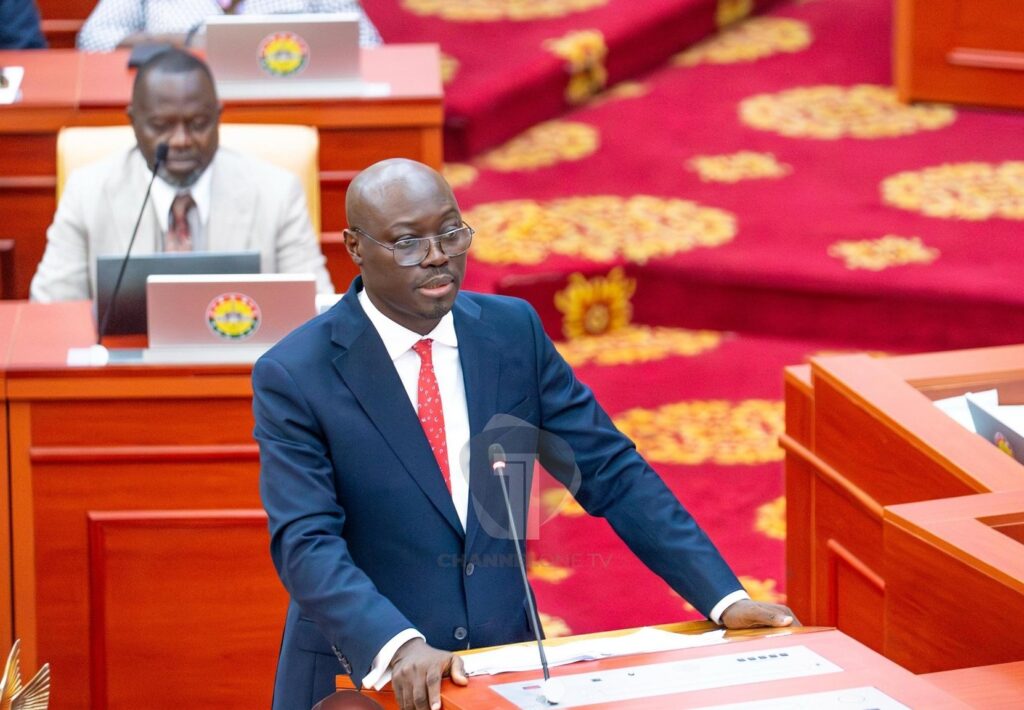
The decision, revealed by the Minister for Finance, Dr. Cassiel Ato Forson, during the post 2026 Budget Statement discussion, could not have come at a more decisive moment. ADB is experiencing one of its strongest financial periods in decades, and the injection of new capital is expected to catapult the bank into a new era of growth and competitiveness.
For a bank that has held a central role in Ghana’s agricultural and economic development for nearly six decades, this renewed support feels both strategic and symbolic. It signals the government’s recognition of ADB’s resilience, solid fundamentals, and importance in the broader national development framework.
Record-Breaking Performance Signals New Dawn
The figures coming out of ADB paint a picture of a bank that has truly turned a corner. For the third quarter of 2025, ADB reported a pre-tax profit of GH¢447 million—more than twice what it made during the same period last year. It’s a jump that speaks to real progress, not just on paper but in the way the bank is being run. After taxes, profit rose to GH¢288 million, a sign that ADB’s balance sheet is healthier and its operations far more efficient than they were just a year ago.
Even more striking is the bank’s total operating income, which climbed to GH¢1.71 billion, driven by strong performances across both interest and non-interest income lines. For a financial institution once perceived as struggling to keep pace with industry giants, ADB’s recent leap forward is nothing short of remarkable.
Its liquidity ratio remains well above regulatory benchmarks, offering customers convenience, access, and assurance that their transactions and deposits are safe and supported. Analysts argue that this level of financial stability underscores the bank’s disciplined execution of its transformation agenda.
The government’s decision to recapitalise ADB has been met with an emotional, heartfelt response from the bank’s leadership. Managing Director of ADB PLC, Edward Ato Sarpong, did not mince words in expressing the institution’s gratitude.
“The planned recapitalisation of ADB is a strong vote of confidence in the institution’s resilience, performance and national mandate,” he said. For him and the entire management team, this move is more than just a financial decision—it represents a long-term commitment to strengthening an institution that has been pivotal to Ghana’s development priorities.
“ADB is on the verge of achieving a historic financial milestone, in terms of performance, and the planned recapitalisation provides a fresh momentum for the Bank to expand its operations and deepen support for national development.”
Edward Ato Sarpong

Strengthening Foundations for the Future
ADB’s management believes the recapitalisation will allow the bank to consolidate recent gains and scale up its impact. The MD reaffirmed this commitment, assuring all stakeholders of ADB’s determination to maintain its current trajectory. He emphasized the dedication of the Board, Management, and Staff to make ADB “great and among the top 3 leading and performing banks in Ghana.”
It’s an ambitious target, but one that seems increasingly within reach as the bank continues to strengthen governance systems, invest in technology, and improve operational efficiency. The confidence of customers and the general public has grown significantly, thanks largely to transparent processes, improved service delivery, and the bank’s renewed alignment with its founding mission.
As ADB celebrates 60 years of service to Ghana, the recapitalisation comes as both a birthday gift and a springboard. The bank’s brand philosophy, Beyond Banking, has resonated deeply with stakeholders as the institution seeks not only to drive financial inclusion but to anchor Ghana’s agricultural transformation, rural development, and economic resilience.
The bank’s recent performance underscores its disciplined approach to operational excellence. Analysts note that ADB’s turnaround can be attributed to a combination of improved risk management, targeted lending strategies, and a renewed focus on customer satisfaction. These reforms have helped shape a bank that is stronger, more competitive, and more aligned with the evolving needs of Ghana’s economy.
With government backing and strong financial fundamentals, ADB is now better positioned to scale its role in national development. From supporting agro-industrial growth to financing medium and large-scale enterprises, the bank is poised to drive meaningful impact across key sectors.
The recapitalisation is expected to accelerate this momentum, offering ADB the capacity to roll out new products, expand branch networks, and strengthen partnerships with both local and international development agencies.
READ ALSO:KPMG to Gov’t: Convert Commitments to Opportunities for Ghanaians