
Legal practitioner and activist Osagyefo Oliver Barker-Vormawor has drawn public attention to the latest Governance Diagnostic Report released by the International Monetary Fund (IMF), a document that lays bare the structural governance failures and corruption vulnerabilities undermining Ghana’s development trajectory.
Sharing a summary of the report’s key findings, Barker-Vormawor underscored the urgency of confronting the country’s unresolved governance challenges, pointing to persistent corruption, institutional weakness and poor fiscal discipline as central obstacles to progress.
According to the IMF’s November assessment, Ghana continues to enjoy a reputation for political stability in a volatile region, but this stability is not matched by governance integrity. The report identified corruption as a major barrier to effective economic management, public trust and sustainable growth.
It highlighted the public procurement system as one of the most corruption-prone areas of governance, describing it as heavily dependent on sole sourcing and restricted tendering.
These practices, often conducted without adequate justification or transparent oversight, have created a system marked by inflated contract costs, inefficient delivery, and recurrent non-performance.
The IMF further warned that Ghana’s growing stock of expenditure arrears—the unpaid bills government owes contractors and service providers—has deepened governance vulnerabilities.
These arrears, which stem from weak budget credibility and lax commitment controls, create what the report calls “discretionary opportunities for corrupt practices in payment prioritization.”
In practice, this means officials can determine which contractors get paid first, a situation the Fund considers ripe for political favoritism, influence peddling, and rent-seeking.
Fragmented and Under-Resourced Anti-Corruption Institutions
The report also delivered a tough assessment of Ghana’s anti-corruption institutional landscape. While the country hosts multiple bodies tasked with fighting corruption, the IMF finds that these institutions remain fragmented, under-resourced and often ineffective.
Preventive mechanisms such as asset declaration systems, conflict-of-interest rules and beneficial ownership registries—critical tools for detecting and deterring corruption—are described as incomplete or poorly enforced. This, the report argued, significantly weakens Ghana’s ability to prevent or respond to corruption at its earliest stages.
Revenue administration is another central area of concern. The IMF noted that outdated legal frameworks, political interference, limited digitalization, and antiquated operational systems have weakened the effectiveness of the Ghana Revenue Authority (GRA).
The judiciary, although protected under the Constitution as an independent branch of government, is also flagged for its own internal challenges. The report noted delays in case processing, resource inadequacies, and concerns about corruption—factors that collectively erode public trust in the justice system.
The IMF further highlighted persistent land tenure complications that complicate property rights, noting that these weaknesses create opportunities for manipulation, fraud, and prolonged disputes.
In the financial sector, the IMF acknowledges significant progress since the sector clean-up but points out that supervisory capacity gaps remain, adding that governance problems within certain banks persist, and overlapping mandates among regulatory institutions create inefficiencies.
“Overall, important inefficiencies and overlapping mandates create space for corruption, underscoring the need for comprehensive and well-sequenced reforms”
IMF Technical Assistance Report-Governance Diagnostic Assessment
Government’s Strong Commitment
Despite these concerns, the report noted that the Ghanaian government has expressed a strong commitment to improving governance and fighting corruption. The IMF framed this as a crucial opportunity to enact reforms that have been discussed for years but rarely implemented with consistency.
However, the Fund cautions that “lasting improvements in governance and corruption control will require sustained effort over time—a phrase Barker-Vormawor highlighted to show that reform demands political will beyond short-term gestures.
Reflecting humorously but pointedly on the IMF’s findings, Barker-Vormawor reiterated his familiar mantra about the power of accountability mechanisms, stating: “Like I always say, 99% of problems can be solved with ORAL (Operation Recover All Loots) oo. Yoooo!”
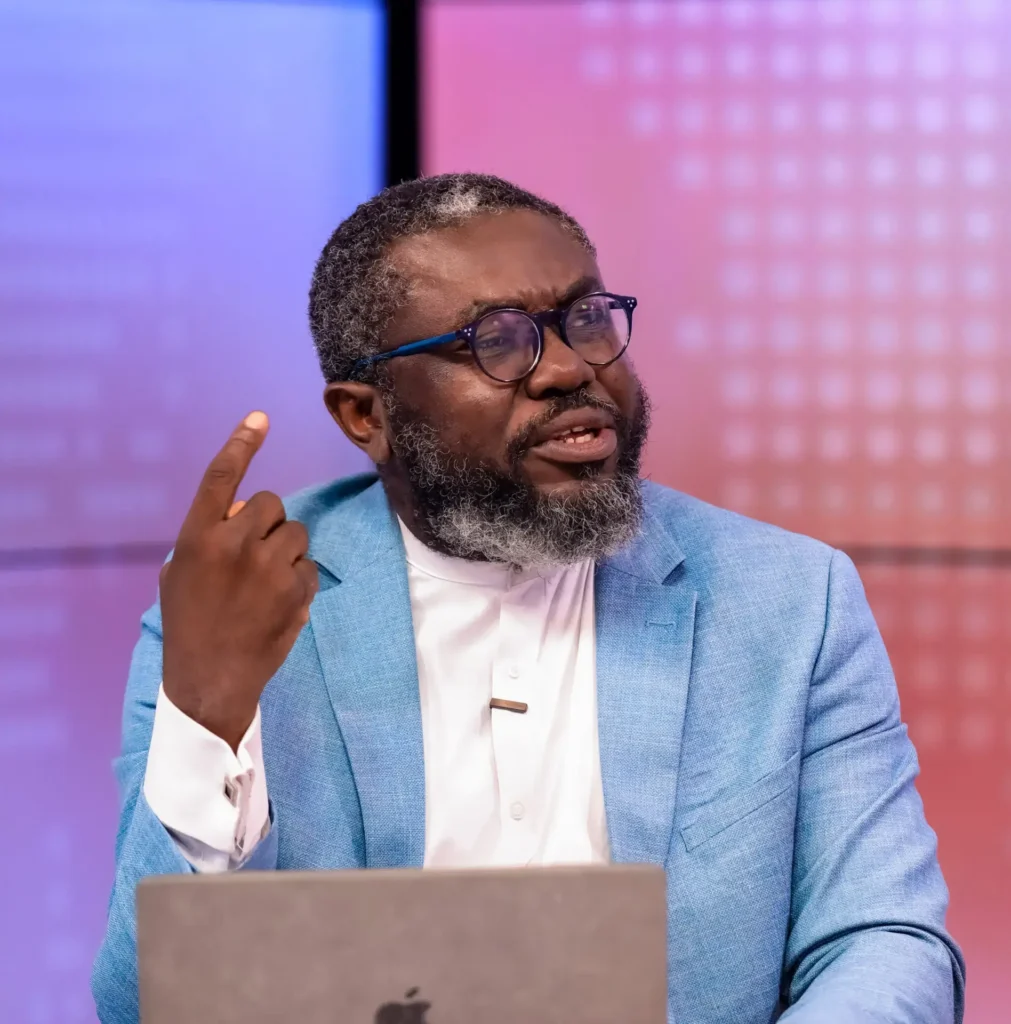
His comment, mixing irony with advocacy, suggests that recovering misappropriated public funds and enforcing integrity rules could resolve many of the governance failures identified in the report.
The IMF’s Governance Diagnostic Report, as amplified by Barker-Vormawor, presents a stark but actionable picture of Ghana’s governance landscape. It identified clear weaknesses but also points toward a path of reform that, if sustained, could significantly strengthen institutions, rebuild public trust and restore confidence in the country’s governance systems.
READ ALSO: KPMG to Gov’t: Convert Commitments to Opportunities for Ghanaian