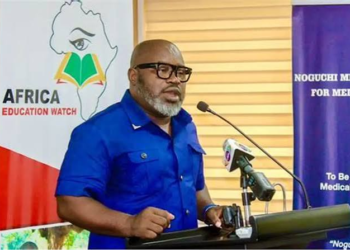
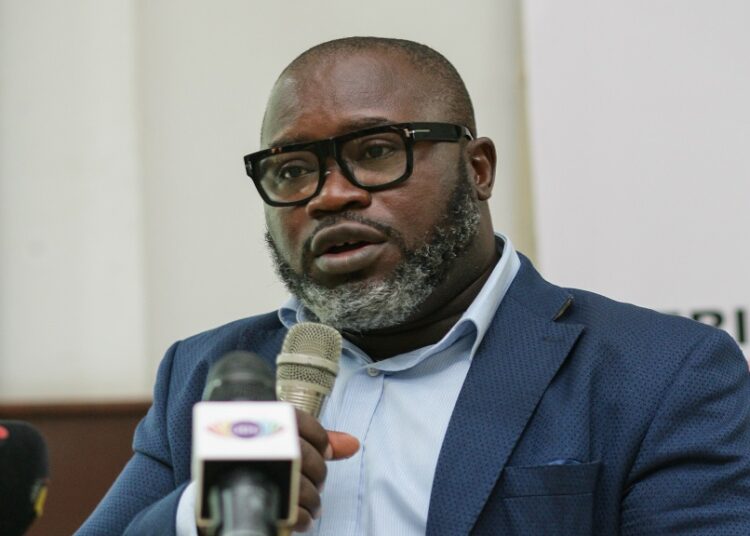
The renewed call by Africa Education Watch (Eduwatch) to scrap the Teacher Trainee Allowance has reignited debate over the sustainability of education financing in Ghana. The advocacy group argues that the allocation in the 2026 Budget is not only uneconomical but also undermines broader goals of equity and infrastructure expansion.
Their concerns intersect with ongoing conversations about strained capital expenditure, pressing classroom deficits and the absence of teacher recruitment in 2025, a challenge that continues to weaken foundational learning outcomes.
Citing the 2026 Budget presented on November 13 by Minister for Finance Dr. Cassiel Ato Forson, which allocated GHS 207.8 million for allowances for students in the Colleges of Education, Eduwatch maintained that the policy no longer aligned with the realities of the sector’s financing needs.
“The allocation is uneconomical. Eduwatch reiterates its long-standing position that this allocation should be scrapped, and resources redirected to the Students’ Loan Scheme to benefit all tertiary students, including teacher trainees”
Africa Education Watch
Eduwatch insisted that scrapping the allowance would ensure fairness, especially at a time when tertiary institutions face urgent capital needs.
While the group acknowledged the significance of supporting Free SHS, it warned that the heavy reliance on GETFund to finance recurrent expenditure risks sidelining long overdue infrastructure projects.

The 2026 Budget allocated GHS 4.2 billion, representing around forty two percent of GETFund resources, to the Free Senior High School Programme, marking an increase from GHS 3.5 billion in 2025.
“With the very slim capital expenditure space within the main education budget, and GETFund being the only reliable source of financing infrastructure projects, allocating over 40% of GETFund to Free SHS – primarily for food and recurrent expenditure – risks further deprioritising tertiary education infrastructure”
Africa Education Watch
Eduwatch also highlighted the government’s allocation of GHS 1.1 billion to the Ghana Secondary Learning Improvement Programme, as part of reforms to end the double track system.
They welcomed the planned upgrades to fifty Category A, B and C schools, as well as the completion of thirty E block projects, yet stressed the need for timely releases and strict monitoring, noting that “infrastructure expansion alone is insufficient without a credible placement system,” that ensures fairness and transparency.
Infrastructure Expansion and Funding Clarity
According to the 2026 budget, the education sector is expected to receive GHS 2 billion for the construction of two hundred new Junior High Schools, two hundred primary schools, two hundred kindergartens, four hundred teacher bungalows and four hundred sanitation facilities in underserved communities.

Additionally, GHS 1.4 billion, representing twenty percent of the District Assemblies Common Fund, will support the construction of two hundred sixty one classrooms across the basic school spectrum, alongside GHS 700 million for furniture procurement.
Eduwatch asked for clarity regarding whether the total number of schools being funded is four hundred sixty one or whether overlaps exist between GETFund and DACF commitments. The group further raised concerns about furniture durability, urging the inclusion of minimum one year warranties in all supply contracts.
Eduwatch also warned that the decision not to recruit teachers in 2025 has worsened Ghana’s learning crisis, estimating that around thirty thousand basic school classrooms currently lack trained teachers, with twenty one thousand vacancies at the kindergarten and primary levels.
The organisation urged the Ministry of Education and the Ghana Education Service to “prioritise teacher recruitment in 2026 and rationalise staffing,” to ensure teachers in oversubscribed urban schools are reassigned to areas with severe shortages. The absence of adequate personnel, they argued, undermines curriculum delivery and widens inequality across rural and peri urban districts.
Eduwatch’s call to scrap the trainee allowance forms part of a broader warning that education financing must shift toward sustainability and impact. In highlighting the risks associated with overburdened funding streams, the group emphasised the need for innovative approaches such as leveraging corporate social responsibility mechanisms and diaspora bonds.
It maintained that “genuine transformation will hinge not simply on allocations but on strategic, equitable and transparent use of resources.”

As pressure on the sector grows, the debate over allowances and competing priorities underscores the tension between political commitments and long term structural needs. The challenge before government is to balance access, quality and sustainability in a sector central to national development.
READ ALSO: Energy Minister Charges New NPG Board to Accelerate Ghana’s Nuclear Agenda