A fresh debate has emerged over the proposed state involvement in Springfield Exploration and Production Limited’s interest in the West Cape Three Points Block 2. Public discussion intensified over the past day as civil society groups questioned the rationale and possible implications of any acquisition.
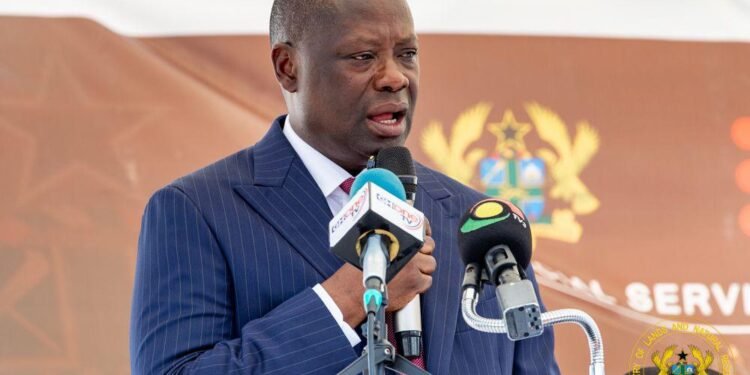
In response, the Minister for Energy and Green Transition, John Jinapor, explained the basis of the ongoing consultations and stressed that any step taken by the state would follow strict technical and commercial scrutiny.
“Springfield is an indigenous Ghanaian company and so, as Minister, whatever I can do, legitimately, fairly, within fair conscience to support a Ghanaian company, I would do it, and I have no regrets for that.”
John Jinapor, Minister for Energy and Green Transition

But he stressed that national interest and legal compliance remain paramount. “I would embrace the law, and I would put Ghana’s interest in it,” he stated.
The minister explained that Springfield has been working on WCTP2 for years, conducted exploration activities and indicated a strong belief that the field “holds huge potential” and is “prolific.”
He added that his ministry has a history with the block, noting, “Don’t forget that I’m the minister who issued the directive on unitization.”


According to Jinapor, Springfield approached government, GNPC and GNPC Explorco seeking support after progressing through the riskiest phases of exploration.
The minister said his role is not to automatically endorse their request but to ensure any engagement is based on verified, independent analysis.
Independent Valuation at the Heart of Government’s Approach

Hon. Jinapor made clear that the government’s next steps will depend entirely on the outcome of “an independent technical and commercial valuation of the field.”
“If it proves that the field holds huge potential, we will engage Springfield and give them whatever support that is required.
“If it does not meet the criteria, forget about it. It’s as simple as that.”
John Jinapor, Minister for Energy and Green Transition
The Petroleum Commission, he revealed, has begun identifying top-tier international firms capable of conducting a credible, industry-standard assessment.
The process is yet to reach the stage where government would consider financial commitments or stake acquisition.
The minister also addressed questions on why Springfield has been unable to proceed to production despite its long-standing presence on the block.
He attributed the delay primarily to commercial constraints. “Raising funding has pushed to a certain level, and they think that where they’ve reached, they need some support,” he stated.
He argued that, like any indigenous company in a high-risk, capital-intensive sector, Springfield’s request for support is not out of place provided it is legitimate.
“If an indigenous company pushes legitimately, for a certain level, where they are struggling, I think that the state should come in and support that company.”
John Jinapor, Minister for Energy and Green Transition
However, he made clear that government’s support cannot override the need for technical and financial due diligence.
Determining Commercial Viability

On the issue of commercial viability, Hon. Jinapor outlined key considerations, explaining that only an independent evaluator can determine whether the field merits state involvement.
He said such firms assess criteria including potential reserves, breakeven costs, capital expenditure claims and projected production lifespan.
“There’s a criteria and that will be done by a credible independent valuation company or institution.
“They are trained to do that. And these are international companies that have their reputation.”
John Jinapor, Minister for Energy and Green Transition
He emphasized the importance of verifying Springfield’s expenditure claims: “They made the claim that they spent some money. Have they indeed spent that money? Can we validate those expenditures? Very, very critical.”
Throughout the discussion, Hon. Jinapor was keen to reinforce his commitment to transparency. “I’m determined to help any Ghanaian company. But I’ll never bend the rules. I’ll never bend fair principles,” he insisted.
Civil society groups, including ACEP, have raised concerns about the state’s potential role in acquiring Springfield’s stake.
Hon. Jinapor said such feedback is welcome, adding that their scrutiny helps shape government’s decisions.

“Whenever the report becomes ready, I’ll make it available to all of them, and we will together discuss the way forward.”
John Jinapor, Minister for Energy and Green Transition
For now, the minister remains focused on ensuring that Ghana’s decision is grounded in incontrovertible data rather than speculation or pressure.
“We need an independent assessment, a detailed incontrovertible assessment and a report that meets best practices.
“Springfield has told us there is huge potential, very good, but that is not enough. Let us do a detailed assessment and then we’ll take it from there.”
John Jinapor, Minister for Energy and Green Transition
As discussions continue, the future of WCTP2 and Springfield’s role within it will depend on the findings of the independent valuation, a process Hon. Jinapor insists will place Ghana’s long-term energy interests above all else.
READ ALSO: Publish All Contracts, Abolish Sole-Sourcing to End Procurement Rots – CDD-Ghana Fellow