Ghana is finally winning the battle against inflation, yet borrowers are seeing little relief.
Inflation dropped sharply to 8.0 per cent year over year in October 2025, down from 9.4 per cent in September. This marks the lowest level since mid-2021 and the tenth consecutive month of decline. Ordinarily, such gains in macroeconomic stability should translate into cheaper credit for households and businesses.
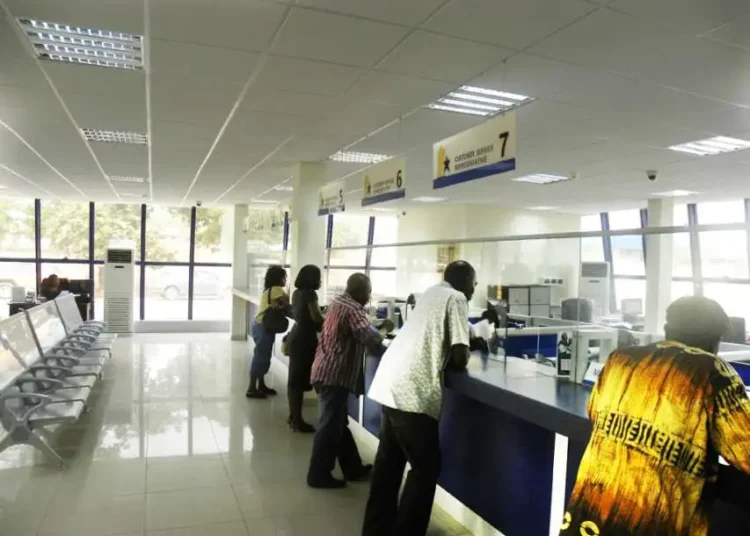
Instead, the opposite appears to be playing out in the banking halls of Ghana, where the cost of borrowing remains painfully high and deeply disconnected from the country’s improving economic fundamentals.
The average lending rate currently sits at a staggering 24.2 per cent as of October 2025. While this represents a slight reduction from previous months, it still places Ghana among the most expensive credit markets in the sub-region. For many business owners, especially SMEs, the numbers confirm a painful reality. Banks are tightening their grip even as the broader economy stabilises, and the impact on investment, expansion, and job creation is now a serious concern.
A Lending System Out of Sync with Market Conditions
The striking mismatch between macroeconomic indicators and bank lending behaviour has triggered widespread public outcry. With the Ghana Reference Rate, the benchmark used by banks, set at 17.86 per cent for October 2025, borrowers expected a meaningful drop in the rates offered to them.
Even the interbank interest rate, which influences overall liquidity, fell to around 20.90 per cent as of November 20, 2025. These movements reflect a general downward trend in borrowing costs across the financial system.
Moreover, the Bank of Ghana’s aggressive monetary policy easing should have been a game changer. The policy rate has been reduced by more than 600 basis points, reaching 21.5 per cent. Combined with declining treasury bill yields and a sustained slowdown in inflation, the environment is ripe for significantly cheaper credit.
Yet commercial banks appear unmoved. Their lending practices have remained rigid, keeping interest rates high while reaping substantial profits. Analysts and industry observers argue that the persistent high lending rates are not merely conservative risk management practices but a worrying sign of systemic inefficiencies and potentially exploitative tendencies in the sector.
Record Profits Raise Eyebrows Nationwide
Nothing has intensified public frustration more than the staggering profits posted by banks this year. The banking sector recorded a profit-after-tax of GH¢9.7 billion in just the first eight months of 2025, representing a growth rate of 46.1 per cent. For many critics, these numbers paint a picture of a sector cashing in heavily while businesses struggle under the weight of high credit costs.
Small enterprises, manufacturers, agribusiness operators, and traders continue to cite borrowing as their biggest obstacle. The perception that banks are prioritising shareholder returns over national economic recovery is now gaining traction. Several civil society organisations and private sector associations have openly questioned why lending rates remain among the highest in West Africa despite Ghana’s improved economic outlook.
For some economic and financial commentators, the situation amounts to what they call a national rip-off. Their argument is simple: if inflation, policy rates, and liquidity costs are falling, lending rates should fall too. Anything short of that is unfair to the productive sectors of the economy that rely on credit to grow.
Despite the uproar, financial experts caution that the issue cannot be attributed solely to banking behaviour. Ghana’s high lending rates are heavily influenced by structural economic problems that increase lending risks. Challenges such as fiscal instability, high levels of non-performing loans, and weak credit infrastructure all contribute to cautious and expensive lending.
Until these structural problems are addressed, banks will continue to perceive lending to businesses as high risk, even when macroeconomic indicators improve. Analysts, however, recommend stronger coordination between monetary and fiscal policy, arguing that policy alignment is essential for reducing borrowing costs sustainably.
The call is therefore not only for banks to adjust their rates responsibly but also for government institutions to remove long-standing bottlenecks that increase lending risks. This includes improving the credit information system, strengthening regulatory enforcement, expanding financial inclusion, and ensuring more predictable fiscal management.
A Turning Point for Ghana’s Credit Sector
The widening disconnect between falling inflation and stubbornly high lending rates has placed Ghana’s credit market at a critical turning point. The country’s strong macroeconomic signals provide an opportunity for businesses to expand, invest, and generate jobs, but only if credit becomes affordable.
If lending rates remain unreasonably high, Ghana risks stalling its own recovery. The private sector cannot thrive in a credit environment that punishes those who seek to grow the economy. It is now up to policymakers, regulators, and financial institutions to work collaboratively and restore fairness, transparency, and balance to Ghana’s credit system.
All in all, Ghana’s economic recovery must be felt in the cost of credit. Until then, the crushing burden of borrowing will continue to undermine the country’s progress.
READ ALSO:Ghana Revises Certification Standards to Boost Agricultural Exports