Qatar’s Emir, Sheikh Tamim bin Hamad Al Thani, has expressed confidence in the country’s economic resilience despite disruptions caused by the regional crisis, saying that Qatar’s existing policies have helped it absorb the impact of exceptional developments.
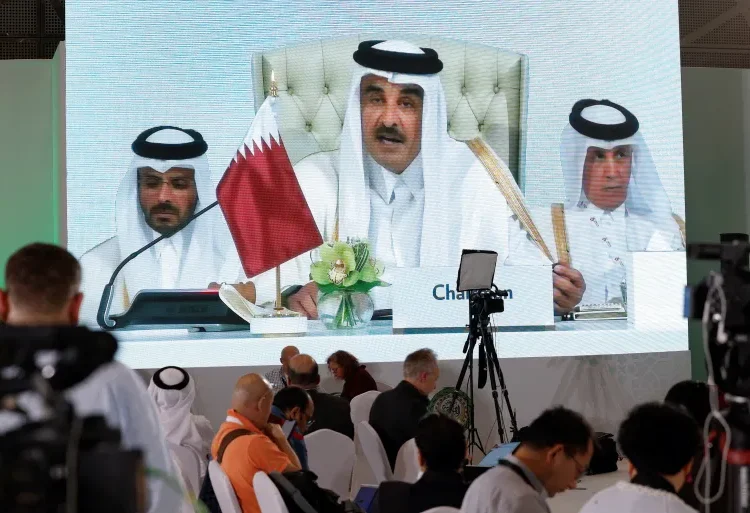
Addressing the Shura Council, Qatar’s legislative body, during its annual session, the Emir said that the country and the wider region “have faced exceptional events that have once again proven the cohesion of state institutions.”
Sheikh Tamim noted that Qatar had prioritised protecting its population since the beginning of the crisis, while its economic sector continued to demonstrate capacity despite the difficult international environment.
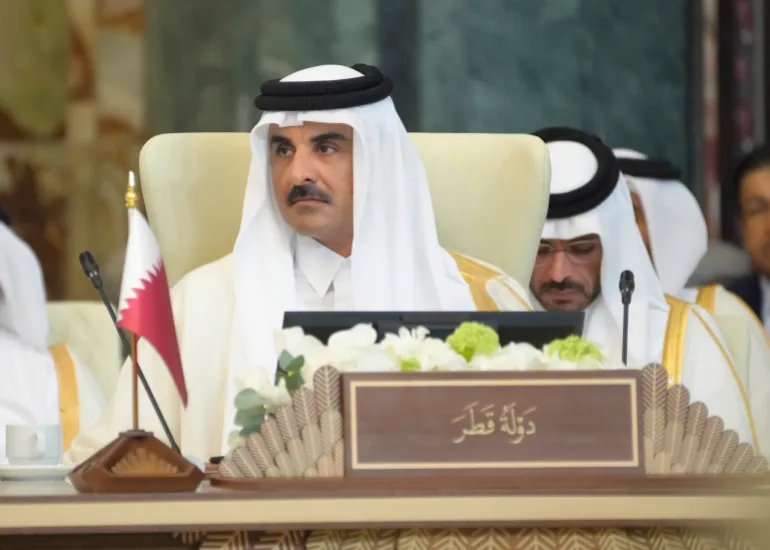
He added that the country’s preparations and policies before the crisis had helped cushion its effects, expressing confidence that Qatar would emerge more flexible and better equipped to respond to global changes.
Energy Disruptions Raise Economic Concerns
The Emir acknowledged that the closure of the Strait of Hormuz and damage to the Ras Laffan energy facility had disrupted a significant portion of Qatar’s exports.
The developments have heightened concerns about energy supplies and international markets, given Qatar’s importance as a major exporter of liquefied natural gas (LNG). “Qatar accounts for nearly one-fifth of global liquefied natural gas trade, and anything affecting it is reflected in markets and consumers,” Sheikh Tamim said.
The Emir called for stronger measures to protect vital shipping routes and infrastructure, stressing the importance of maintaining maritime security and regional stability. “Efforts must be doubled to secure navigation in the Gulf and the Strait of Hormuz and to protect energy facilities and civilian infrastructure,” he said.
The Strait of Hormuz is a critical route for global energy shipments. Prolonged disruption to maritime traffic through the waterway can affect oil and gas exports, increase uncertainty in energy markets and place additional pressure on regional economies.

The Emir also stated that Qatar had been attacked by Iran, describing the incident as a “flagrant violation of its sovereignty.”
He reaffirmed the importance of the security of Gulf Cooperation Council (GCC) member states. “The security of the Gulf Cooperation Council states and the preservation of their sovereignty is a matter that cannot be compromised on,” he said.
Despite the tensions, Sheikh Tamim maintained that Qatar remained committed to diplomatic engagement as its preferred approach to resolving disputes. “Qatar has always preferred to resolve dispute issues through negotiation and diplomatic and peaceful means,” he said.
IMF Warns Of Regional Economic Contraction
The Emir’s address comes amid a worsening economic outlook for the Middle East and Central Asia, with the International Monetary Fund (IMF) sharply revising its growth projections for 2026.
The fund now forecasts the region’s economy will contract by 0.3 per cent, a significant reversal from the 1.9 per cent growth it projected six months earlier.
According to the IMF, the revised outlook reflects the prolonged closure of the Strait of Hormuz and disruptions to oil production, shipping and exports associated with the US-Israel war on Iran.
Qatar, Iraq, Kuwait and Bahrain are expected to experience double-digit economic contractions this year. However, the fund anticipates strong recoveries in 2027 if production stabilises and trade routes return to normal.
Iran’s economy is projected to shrink by 7.6 per cent, while Saudi Arabia’s gross domestic product is expected to decline by 3.3 per cent. The United Arab Emirates is forecast to record a 3.9 per cent contraction.
Oman is the only Gulf country expected to achieve positive growth in 2026, with the IMF projecting an expansion of 2.4 per cent.
The fund’s outlook also points to the importance of restoring energy production and export routes to support a regional recovery next year. However, the projected improvement depends on the Strait of Hormuz reopening and oil exports resuming.
Qatar Emir Addresses Gaza, West Bank Situation
Beyond economic concerns, Sheikh Tamim addressed the conflict involving Palestinians, describing Israel’s assault on the Gaza Strip as undoubtedly a “genocide.” He said that those responsible must not be allowed to escape accountability.
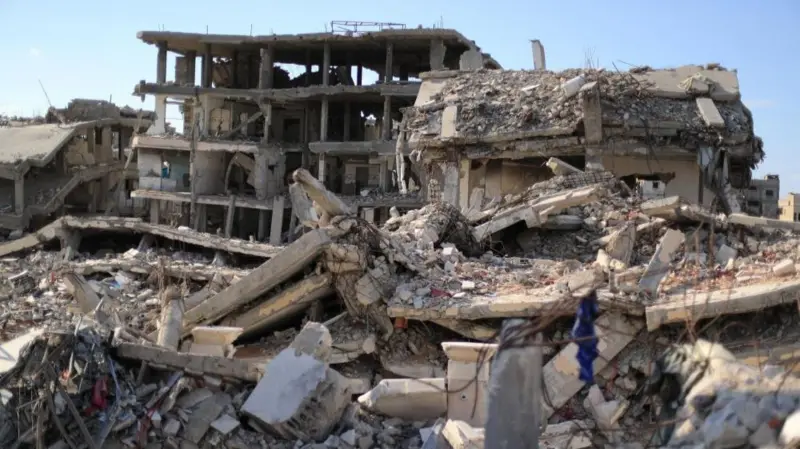
He also warned about Israeli settler attacks against Palestinians in the occupied West Bank, underscoring the continuing security and humanitarian concerns facing the Palestinian territories.
The Emir’s address brought together concerns about Qatar’s economic resilience, regional security, energy infrastructure and the wider political crisis. His remarks emphasized the importance Doha places on protecting its sovereignty, maintaining the flow of international energy supplies and pursuing diplomatic solutions despite mounting regional pressures.
READ ALSO: GYDA Demands NAIMOS’ Intervention, Answers On Forest Reserve Mining