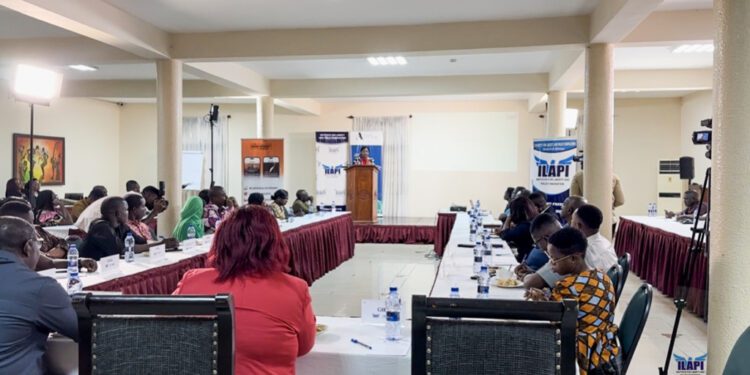
A new nationwide study by the Institute for Liberty and Policy Innovation (ILAPI) has sparked a national conversation about the true cost of doing business in Ghana.
The report warns that an overwhelming and inefficient regulatory environment is silently draining the lifeblood of Ghana’s micro, small and medium enterprises (MSMEs). According to the findings, the current system functions like a hidden tax on entrepreneurship, pushing many businesses into stagnation and millions of Ghanaians into unemployment and poverty.
According to ILAPI’s research, conducted between September 2024 and July 2025 and involving 600 MSMEs across manufacturing, ICT and tourism, the average small business spends substantial sums on basic regulatory requirements. Entrepreneurs spend an average of GH₵1,030 to register a business, GH₵1,275 to obtain a permit from MMDAs and up to GH₵10,100 on licensing. Some respondents even reported costs as high as GH₵20,000.
For MSMEs that often operate on thin margins, these costs are alarming. The study observed that most of these expenses are driven up by reliance on middlemen popularly known as “goro boys.” Eighty four percent of the surveyed businesses admitted to using these intermediaries to navigate Ghana’s slow and fragmented regulatory system.
While the Office of the Registrar of Companies stipulates 14 working days for business registration, 40.8 percent of business owners said they waited more than a month. Those who avoided middlemen waited up to six months or more.
The report concludes that these delays and inefficiencies have turned registration and licensing into an unofficial tax on entrepreneurs struggling to formalize their operations.
A Regulatory Trap That Destroys Jobs Before They Exist
One of the most troubling insights from the ILAPI study is the direct impact of regulatory costs on job creation. If the average MSME spends 30 percent of its working capital on compliance, the think tank estimates that each business loses the potential to hire at least three workers. Given that Ghana has more than one million MSMEs, the country could be losing up to three million jobs every year due to regulatory bottlenecks.
“This is not just a business problem. This is a national employment crisis. Bureaucracy is silently pushing millions into unemployment and poverty,” the study cautions. Many young entrepreneurs who lose significant capital in regulatory processes abandon their ventures entirely and instead pursue risky migration journeys overseas.
The High Cost of Staying Formal
Ghana’s informal sector contributes nearly 70 percent to GDP and employs about 86.4 percent of the population. The ILAPI study reveals that the growth of informality is not driven by choice. Entrepreneurs are increasingly turning away from formalization because the costs are simply too high. More than half of the SMEs surveyed, 57.3 percent, were operating without the required licenses.
According to the report, the heavy regulatory burden discourages formal sector participation. It weakens revenue mobilization, undermines investor confidence and blocks businesses from accessing credit and government support. For an economy seeking structural transformation, this trend is deeply concerning.
Businesses, particularly those in manufacturing, ICT and tourism, are forced to navigate a complex web of institutions and laws. Manufacturing companies interact with as many as 13 different agencies including the Environmental Protection Agency, Food and Drugs Authority, Ghana Standards Authority, Ghana National Fire Service, Local Government units, Public Health Authority and the Ghana Tourism Authority. These agencies often have overlapping mandates, resulting in repeated inspections, conflicting guidelines and multiple payment requirements.
This complex landscape poses a serious barrier to business expansion. Only 44.6 percent of micro businesses are able to transition to small enterprises and a mere 28.2 percent eventually grow into medium scale.
The ILAPI report emphasizes that this slow progression has little to do with market limitations but everything to do with regulatory pressure. “It takes some businesses over a decade just to move from micro to medium. This is not a market failure. It is a regulatory failure,” the study notes.
Urgent Reforms Needed to Support a 24 Hour Economy Vision
The ILAPI report makes a strong case for comprehensive reforms that will relieve SMEs of excessive regulatory burden. Key recommendations include the creation of a unified digital registration platform to remove duplication and reduce dependence on middlemen, decentralization of registration services through MMDAs and harmonization of regulations in sectors like manufacturing and tourism.
The study also calls for mandatory Regulatory Impact Assessments for new policies, one stop shops for each major sector and full digitization of post registration compliance. According to ILAPI, these reforms could reduce compliance costs by up to 40 percent and unlock significant job creation potential.
The report concludes with a caution. Ghana cannot achieve economic transformation or realize its 24 hour economy vision without addressing the deep rooted regulatory problems that constrain MSMEs.
READ ALSO: One Year On: Mahama Celebrates Historic Mandate to Reset Ghana