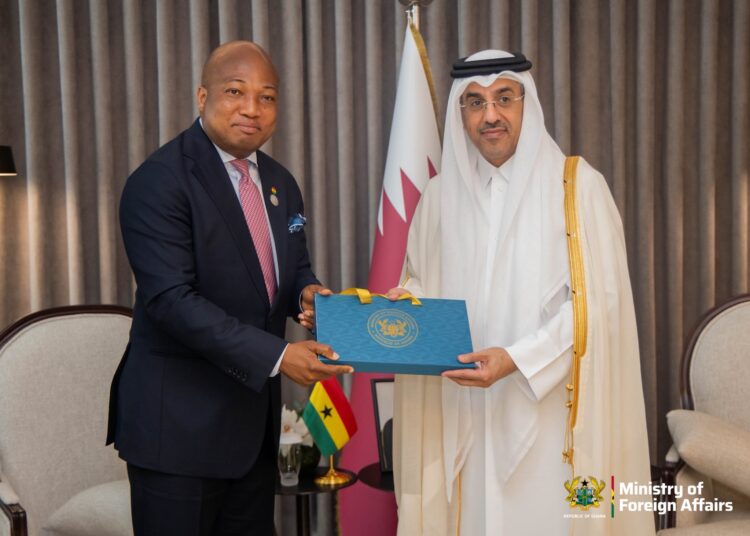
Ghana’s Minister for Foreign Affairs, Hon. Samuel Okudzeto Ablakwa, has reaffirmed government’s commitment to expanding job opportunities for Ghanaian professionals abroad as the newly ratified Ghana–Qatar Labour Mobility Agreement moves into full implementation.
Speaking after a bilateral engagement on the sidelines of the Doha Forum, the Minister announced that both countries have completed all parliamentary processes required to operationalise the partnership, paving the way for a significant scaling-up of Ghanaian labour participation in Qatar.
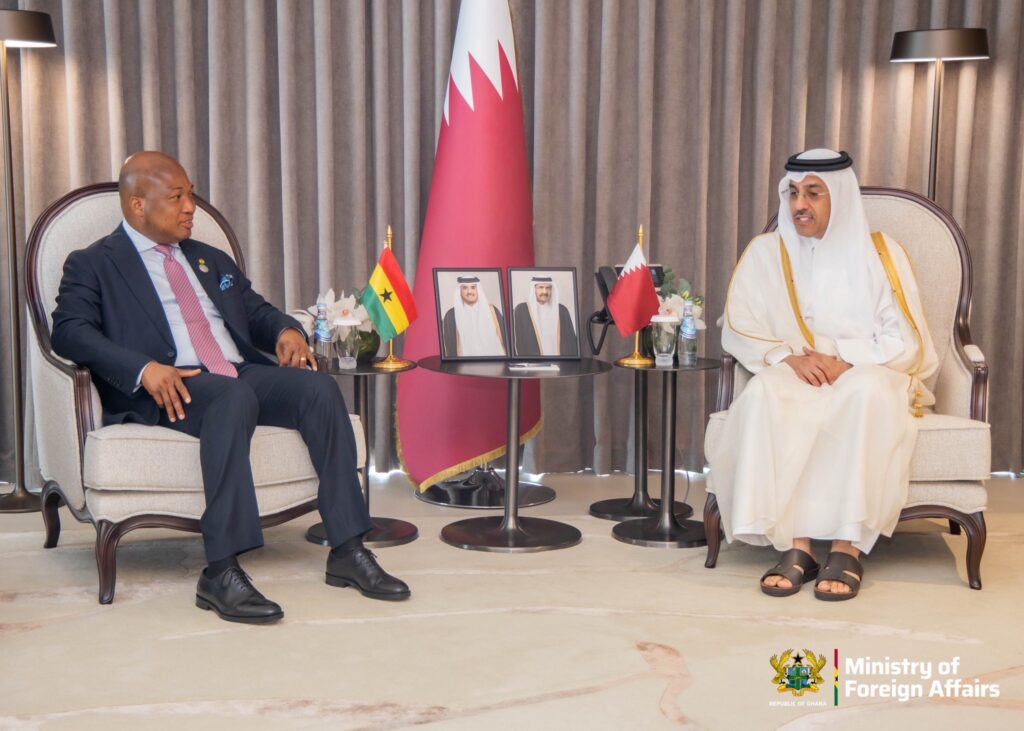
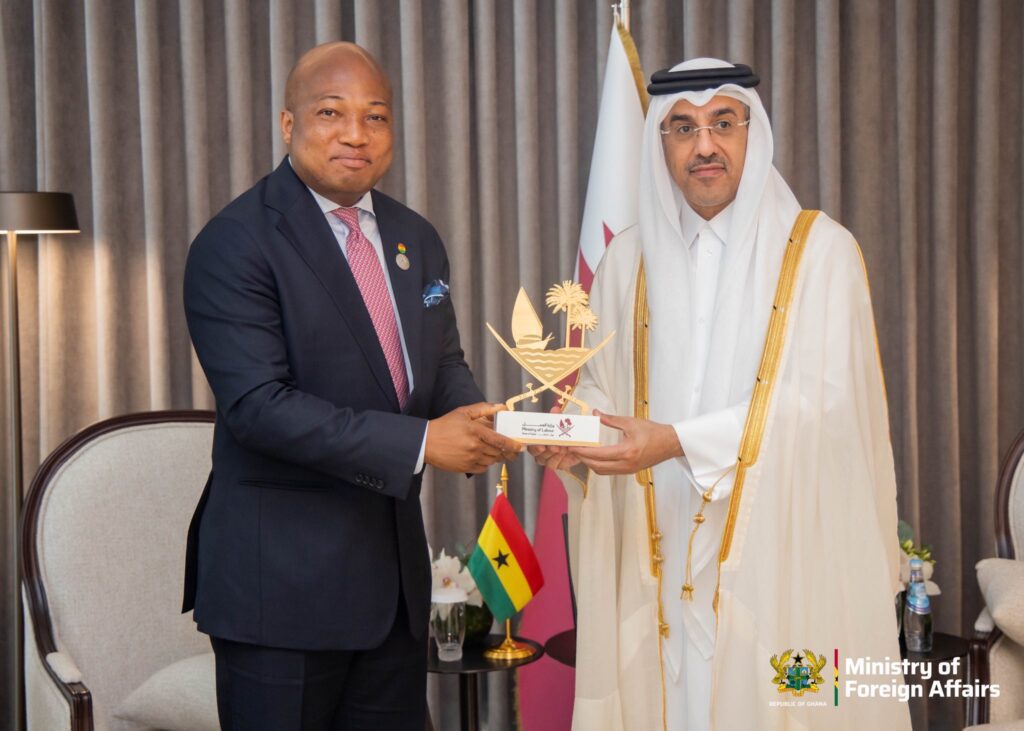
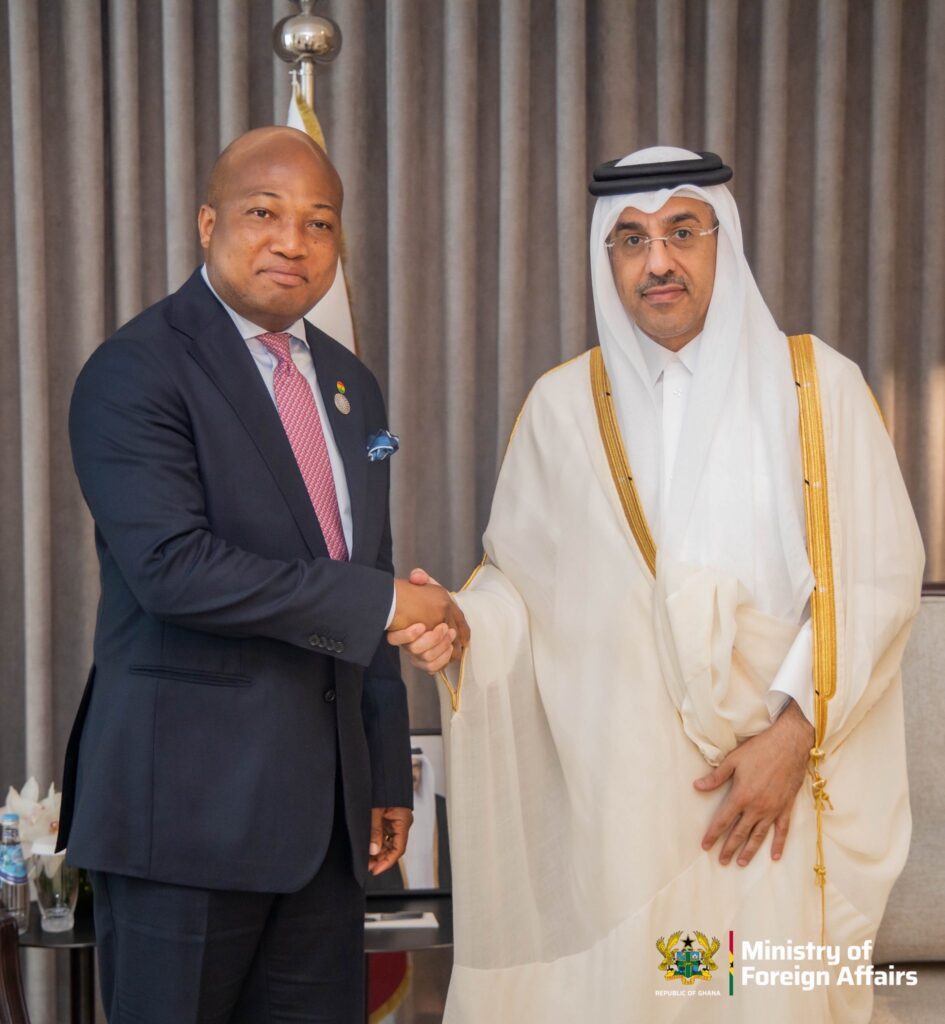
Hon. Ablakwa disclosed that he was hosted by Qatar’s Minister for Labour, His Excellency Dr. Ali bin Saeed bin Samikh Al Marri, with whom he held extensive discussions on the next phase of the agreement.
Expressing appreciation for the warm reception and growing diplomatic ties, he noted: “I am grateful to my good friend for his excellent hospitality and exceptional brotherhood.” He added that the meeting provided an important platform to align expectations and priorities as implementation begins in earnest.
The agreement, which was ratified by Ghana’s Parliament last week, establishes a structured framework to facilitate labour migration between the two countries. With Qatar’s Parliament having already ratified the same, both parties can now proceed with coordinated recruitment, deployment and protection mechanisms for Ghanaian workers seeking employment opportunities in the Gulf state.
Ghana Targets 50,000 Jobs under Agreement
According to official data from Qatar’s Ministry of Labour, approximately 13,000 Ghanaians are already employed across various sectors in the country. Hon. Ablakwa revealed government’s ambition to significantly expand this number, stating that “we intend to double this number by next year and hit 50,000 in the medium term.” the
This projection reflects the government’s broader objective of using well-regulated labour mobility arrangements to open new economic pathways for Ghana’s youth, especially in high-demand sectors. As part of the agreement, Ghana will host the maiden meeting of the Ghana–Qatar Joint Technical Committee in February 2026.
The committee, created under the provisions of the new pact, will serve as the central supervisory body responsible for steering implementation, resolving operational challenges, and ensuring both governments adhere to agreed standards of worker welfare and recruitment transparency.
Hon. Ablakwa underscored the administration’s commitment to fairness and integrity in the recruitment process, emphasizing that the government “commits to a transparent and credible recruitment process.”
This focus on accountability is in line with growing public concern about unethical practices within the overseas recruitment ecosystem, particularly issues of exploitation and inadequate oversight.
By establishing a clear institutional structure between both countries, the agreement is expected to reduce risks and ensure that Ghanaian workers benefit from legitimate, well-protected job placements. The Minister also extended his best wishes to the many skilled Ghanaians who will soon take up roles in Qatar under the expanded programme.
He highlighted the diversity of sectors in which Ghanaian workers are expected to be engaged, noting that they will be “holding high the flag of Ghana in multiple sectors including aviation, tourism, IT, logistics, transportation and public health — as they work under better conditions with strong protection of their rights.”
These sectors reflect Qatar’s current labour market priorities as the country expands its service industries and adopts new technologies in the aftermath of major national development projects.
Tackling Unemployment
The labour mobility agreement forms part of the Mahama administration’s broader strategy to address youth unemployment through a combination of domestic job creation measures and curated international employment partnerships.
Hon. Ablakwa reaffirmed this policy direction, stating that “the Mahama administration will keep pursuing smart policies to create jobs for the youth both in Ghana and abroad.”
For many young Ghanaians, this approach offers expanded opportunities to earn competitive incomes, acquire advanced skills, and contribute to national development through remittances and international exposure.
The deepening cooperation between Ghana and Qatar also aligns with long-term diplomatic and economic objectives. Qatar continues to be one of the Gulf region’s most sought-after labour destinations due to its strong regulatory structures and high standards of worker protection.
For Ghana, strengthening bilateral relations with Qatar not only creates employment channels but also enhances prospects for broader economic partnerships in investment, trade and technology transfer.
As the agreement transitions from ratification to implementation, both countries will now focus on operational details, recruitment procedures and worker support systems. With the upcoming Joint Technical Committee meeting scheduled for early 2026, government officials, recruitment agencies and partner institutions are expected to intensify preparations to ensure a smooth and transparent rollout.
Hon. Ablakwa concluded his statement by reaffirming Ghana’s commitment to nurturing mutually beneficial diplomatic ties, saying, “God bless Ghana–Qatar relations.”
The successful execution of the labour mobility agreement will be a key test of this growing partnership and of Ghana’s renewed drive to expand opportunities for its youthful population.
READ ALSO: Zelenskyy To Hold Peace Talks With British, French and German Leaders