Ghana’s domestic revenue mobilisation agenda has taken centre stage as the country prepares to transition out of its International Monetary Fund programme next year.
With the 2026 Budget outlining a series of bold tax compliance and administrative reforms, the Ghana Revenue Authority is intensifying efforts to strengthen revenue performance and build a more sustainable fiscal framework.
According to the Acting Head of Strategy and Research at the Authority, Dominic Naab, the reforms are designed to create a more reliable stream of funds to support development priorities as Ghana moves toward economic self-reliance.
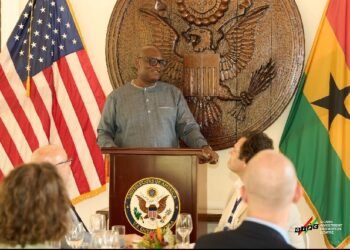
Speaking at the Media Foundation for West Africa’s Tax Dialogue, Dominic Naab explained that the Authority has already begun rolling out several high-impact initiatives intended to minimise revenue leakages and expand the tax net. He noted that one of the leading interventions is the Electronic Value Added Tax invoicing system, popularly known as E-VAT.
“We have instituted a lot of measures. If you look at the budget that was read for example, you have the E-VAT that is using electronic means to generate VAT invoices. That will help GRA to monitor real time what is happening. It means therefore that if we are able to do it very well, we are likely to make so much revenue.”
Dominic Naab

The E-VAT system forms part of the broader digitalisation agenda aimed at enhancing transparency in revenue collection. By providing real time insights, the GRA expects to curb underreporting of sales, increase compliance among businesses and significantly raise tax revenue.
Harnessing Technology to Seal Revenue Leakages
In addition to E-VAT, the GRA is exploring the integration of artificial intelligence into critical aspects of tax administration. The Finance Minister highlighted the use of AI particularly in port operations to identify gaps and improve monitoring. This initiative is expected to address issues related to misclassification, under declaration and other systemic challenges that have historically undermined revenue generation at the ports.


Naab reiterated this vision, noting that the Authority is committed to correcting long-standing defects that create loopholes. “The Minister also mentioned using artificial intelligence especially in port operations to make sure the gaps are identified and he also mentioned some declaration defects and all those things will be corrected,” he added.
The introduction of AI in customs processes is anticipated to speed up verification procedures, improve accuracy and enhance the overall integrity of Ghana’s tax system.
Expanding the Tax Net to Capture Untapped Income
One of the major challenges facing the GRA is the significant number of individuals and businesses that continue to operate outside the tax radar. Naab acknowledged that a considerable share of income earners are not captured in the formal tax system, which deprives the state of much-needed revenue.
“It is our hope that when these measures are put in place, we should be able to raise the revenue to help us develop our country. We are also aware there is fatigue internationally so we can’t get revenue from anywhere so we just need to generate revenue here. Truth of the matter is that there are people really making income but because they are not in our radar, we don’t get to tax them.”
Dominic Naab
This statement reflects a broader fiscal reality that Ghana faces. With donor fatigue and global financial constraints limiting access to external funding, the country must rely more heavily on domestic sources of revenue to meet its development goals. The GRA’s strategy therefore places emphasis on identifying informal sector operators, enhancing data integration across institutions and promoting voluntary compliance.
Fiscal Resilience Beyond IMF Support
As Ghana approaches the close of its IMF-supported programme, tax analysts have emphasised the crucial role domestic revenue mobilisation will play in shaping the country’s post-IMF resilience. A strong and predictable revenue base is essential for maintaining macroeconomic stability, reducing dependence on external borrowing and supporting long-term development projects.
The government’s commitment to digital tax transformation, coupled with renewed administrative vigilance, signals a shift toward a more self-sustaining fiscal model. However, the effectiveness of these measures will depend largely on implementation, enforcement and the willingness of taxpayers to comply with the evolving system.
The coming months are expected to be decisive as the GRA scales up its reforms and works to build public trust through transparency and improved service delivery. If successful, these efforts could mark a turning point in Ghana’s fiscal journey and provide a foundation for a more resilient and independent economy.
READ ALSO:Ghana Heading for 14% Policy Rate by 2026 as Fitch Forecasts Big Shift Ahead