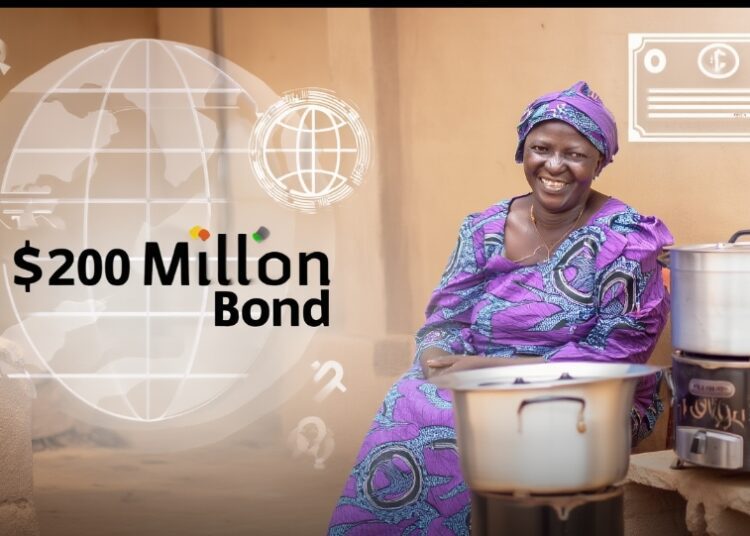
The World Bank has issued a landmark USD 200 million Clean Cooking Outcome Bond aimed at expanding access to cleaner cooking solutions for more than one million people in Ghana.
The innovative financing instrument, which matures on March 31, 2032, represents one of the most ambitious uses of outcome-linked capital in the global clean energy and climate finance space.
Anshula Kant, Managing Director and World Bank Group Chief Financial Officer, highlighted the significance of the transaction, stressing the growing investor appetite for instruments that blend returns with impact.
“This transaction shows how investors can align financial returns with tangible development outcomes – expanding access to cleaner cooking solutions in Ghana.”
Anshula Kant, Managing Director and World Bank Group Chief Financial Officer
She added that the strong uptake reflects the market’s confidence in outcome bonds and their potential to address pressing global development challenges.
Under the structure of the bond, part of the coupon payments that would typically flow to investors will instead be redirected upfront to fund the distribution of over 400,000 efficient and electric cookstoves across Ghana.
The initiative is designed to curb reliance on traditional biomass, meaningfully reduce household air pollution, and cut greenhouse gas emissions while creating local manufacturing and distribution jobs.
Mobilizing Private Capital for Development
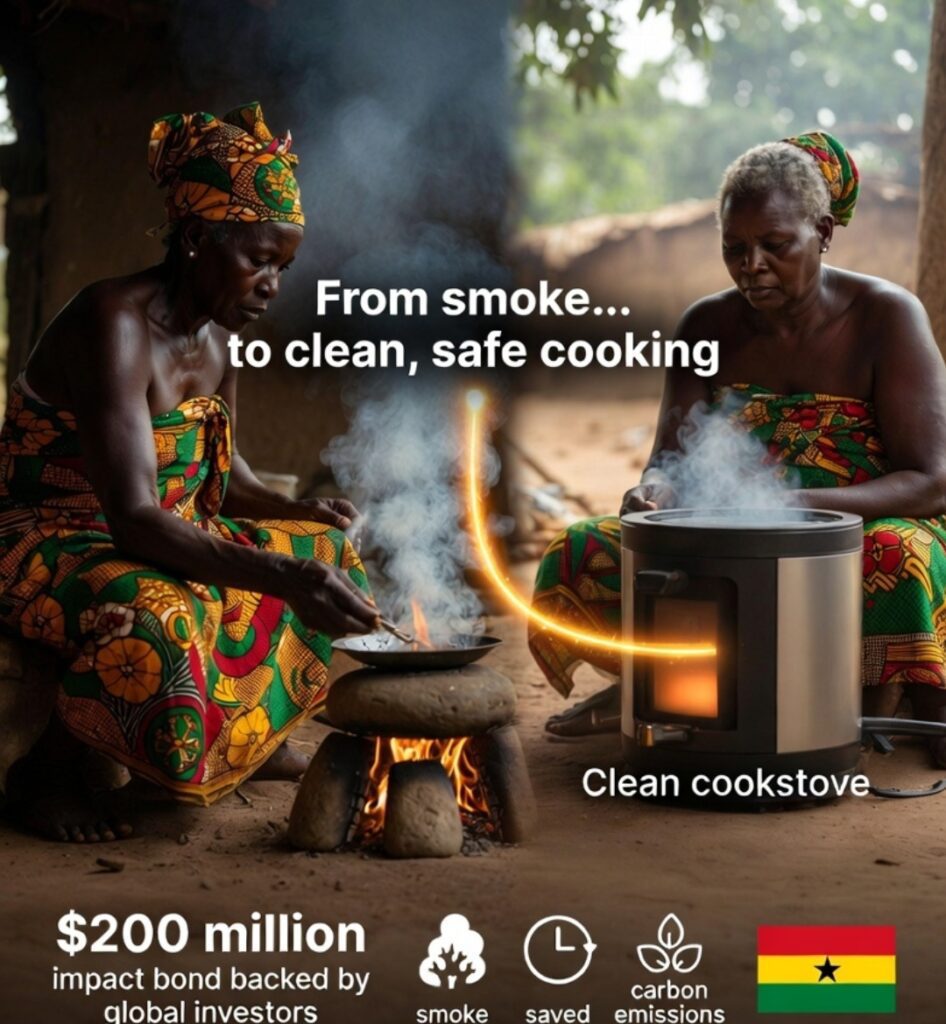
The issuance mobilizes approximately USD 30.5 million in private capital to support Ghana’s clean cooking programme. UpEnergy, the East Africa-based project developer, will implement the initiative, which is expected to generate internationally certified carbon credits under Article 6 of the Paris Agreement.
The Government of Ghana and the Government of Switzerland have authorized the project, paving the way for the production of Internationally Transferred Mitigation Outcomes (ITMOs).
The KliK Foundation of Switzerland has committed to buying the carbon credits through a long-term offtake agreement. A portion of the revenue from these sales will be passed on to investors as part of their variable coupon payment.
Stephen M. Liberatore, Head of ESG/Impact for Global Fixed Income at Nuveen, described the bond as an important milestone for Article 6 implementation.
“We are especially excited to support the operationalization of Article 6.2… by investing in a transaction that will create high-quality Internationally Transferred Mitigation Outcomes (ITMOs), helping Ghana and Switzerland collaborate to meet their Nationally Determined Contributions.”
Stephen M. Liberatore, Head of ESG/Impact for Global Fixed Income at Nuveen
Standard Chartered Leads the Transaction

Standard Chartered served as the sole Lead Manager and Bookrunner, providing structuring, carbon market expertise, and global capital markets reach. The bank described the transaction as a powerful demonstration of how innovative financial engineering can drive social and environmental change.
“We’re proud to partner with the World Bank and UpEnergy to deliver the first Clean Cooking Outcome Bond.”
Henrik Raber, Global Head of Global Banking at Standard Chartered
He noted that the transaction’s USD 200 million size and diverse investor base from four regions, reflect strong confidence in outcome-based financing.
The bond offers 100% principal protection, giving investors security while enabling upfront climate financing. This structure allows the World Bank to continue supporting global sustainable development activities using the bond proceeds.
Global Investors Welcome the Innovation
A broad spectrum of institutional investors from Europe, North America, and emerging markets participated in the issue, many of them highlighting the bond’s alignment with climate goals, risk-adjusted returns, and measurable real-world impact.
Skandia, one of the investors, said the bond exemplifies responsible capital deployment.
“We are actively supporting innovative projects that have real environmental and social outcomes. Financial performance and responsibility go hand in hand.”
Alexander Onica, Head of Fixed Income and FX at Skandia
Canadian asset manager Mackenzie Investments also praised the structure for advancing clean energy adoption.
“This innovative transaction… represents a meaningful step forward in scaling the global adoption of Internationally Transferred Mitigation Outcomes.”
Hadiza Djataou, Vice President & Portfolio Manager
She emphasized that linking capital to climate outcomes “advances multiple sustainable development goals while delivering a compelling risk-adjusted return.”
Velliv Pension’s Chief Investment Officer, Lea Vaisalo, said the institution was “very pleased to support another impact investment,” highlighting the bond’s role in providing cleaner, fuel-efficient cookstoves that “support the country’s energy transition.”
Legal & General, another major investor, noted that the deal highlights how pension funds can drive measurable social impact.
Jake Harper, Senior Investment Manager, said this first outcome bond investment for L&G demonstrates how capital can help address a global USD 8 billion clean cooking financing gap.
Rathbones Asset Management, known for sustainability-focused portfolios, also invested. Bryn Jones, Head of Fixed Income, explained that the firm supports structures that “deal with the Anthropocene,” adding that the World Bank’s principal-protected model offers both safety and climate impact.
RBC BlueBay Asset Management described its investment as a natural extension of its impact-aligned strategy. “This is another tangible example of how fixed income markets are evolving,” said Portfolio Manager Harrison Hill, adding that linking returns to clean cooking outcomes shows how finance can improve daily life for millions.
Reducing Emissions While Improving Quality of Life
The improved cookstoves will help reduce reliance on traditional biomass fuels such as firewood and charcoal, which drive deforestation and expose households especially women and children to harmful indoor air pollution.
Health experts estimate that smoke from inefficient cooking contributes to respiratory illnesses and premature deaths across Africa.
The introduction of electric cookstoves, alongside efficient charcoal models, promises to lower emissions further and strengthen Ghana’s progress toward its climate commitments.
Beyond climate and health benefits, the initiative will create local manufacturing and distribution jobs, supporting Ghana’s green economy and strengthening local capacity in clean energy technologies.
The World Bank says the Clean Cooking Outcome Bond will serve as a model for mobilizing private investment for sustainable development in low- and middle-income countries.
For Ghana, the initiative represents a major step toward reducing household air pollution, improving health outcomes, cutting greenhouse emissions, and accelerating the transition to cleaner, modern energy systems, while offering a template for future climate finance innovation.
READ ALSO: Fidelity Bank Pushes ESG, GreenTech and Youth Innovation as Ghana’s New Growth Pillars