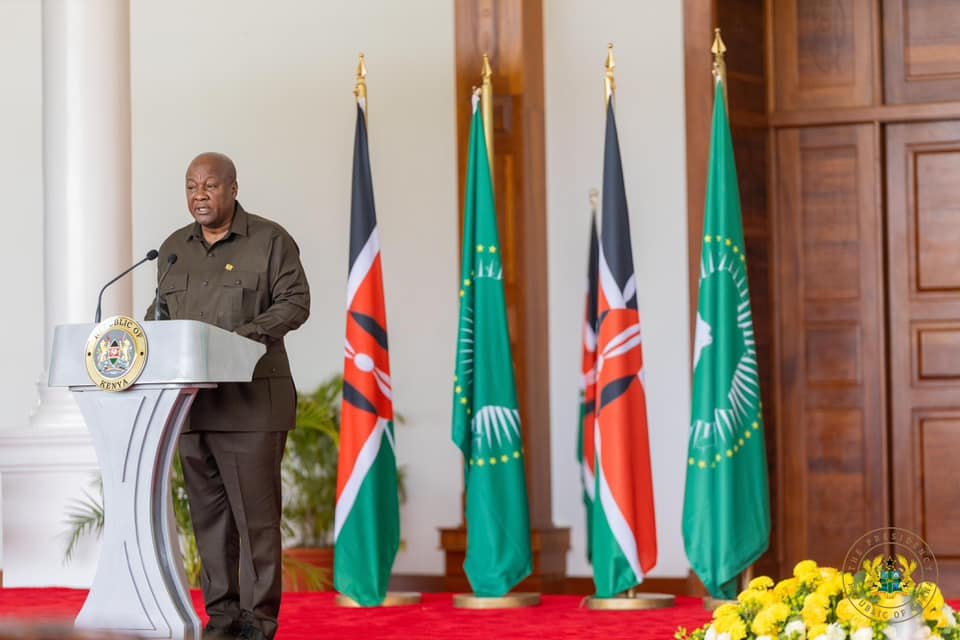
President John Dramani Mahama has clarified that the objective of his leadership is to ensure Ghana accomplishes economic liberation through vital reforms to protect Ghana’s sovereignty.
He urged leaders of other African countries to also protect their economic sovereignty and prioritize economic independence and prosperity through proper management of their natural resources.
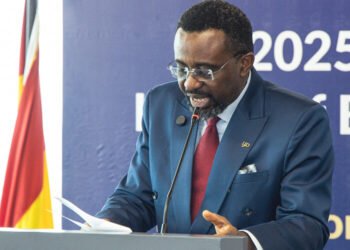
Speaking at the 62nd Jamhuri Day celebrations in Kenya, President Mahama indicated that if “our forebearers won for us independence, it is the responsibility of our current African leadership to win economic independence and prosperity for our people.”
While extending the agenda of Ghana to the African continent, he was bold to push for an economic reset of the African continent centered on industrialization, value addition, resource ownership, and self-reliance.
“The time has come for us to add value to our exports. The time has come to claim a fairer share of our natural resource endowment. The time has come to provide transparent and accountable leadership.”
John Dramani Mahama, President of Ghana
This call comes on the acknowledged global economic order that challenges African countries, including Ghana. He stated boldly that the global system today is structured to make the African continent primarily a supplier of unprocessed raw materials while importing finished goods.
In this dilemma, President Mahama rallies all African leaders to end the practice and ensure value for money for the continent and its citizens in terms of natural resource management.



As Ghana’s 24-Hour economy takes shape, expansion of the agriculture sector materializes, the government’s focus on the development of the real sector yields fruit, and the overall productivity of the country increases, Ghana hopes to utilize the African Continental Free Trade Area (AfCFTA).
However, the AfCFTA initiative, especially in the West African region, seems to be taking a downturn. President Mahama, therefore, calls for the agreement to be upheld and intensified by all countries in Africa.
“We must increase trade among ourselves, and we recommend a trade protocol within the African Continental Free Trade Area.”
John Dramani Mahama, President of Ghana
President Mahama further urged African countries to harness the creativity and energy of their youth, while increasing intra-African trade. The youth in their majority serve as the most valuable resource of the continent.
Ghana’s Value Addition Initiatives
The government of Ghana, led by President Mahama, has engineered strategies to increase the value of Ghana’s natural resources before exports. The government has made it clear on several occasions of its commitment to value addition to the country’s raw materials. While putting measures in place, the government has embarked on structural reforms of the mineral sector to ensure Ghana gains the maximum benefit from its resources.
Value addition in Ghana is a major initiative for economic growth, involving transforming raw materials like cocoa, gold, and agricultural produce into finished or processed goods (like chocolates, refined gold, and packaged foods) to create more jobs, boost farmer incomes, reduce imports, increase export revenue, and ensure food security.
These rest on government initiatives like the Feed Ghana Program and the Bank of Ghana’s gold refining push, driving efforts to industrialize and integrate into global value chains. The government is also building cocoa processing industries to supplement the efforts of the Cocoa Processing Unit of the Ghana Cocoa Board.
The government is scaling up staple food processing and industrial crops, as well as ensuring the reduction of post-harvest losses. The government is also supplying local agro-processing machines to create higher-value products like organic foods. The government is adding value through Agribusiness Development, Feed Ghana, Ghana CARES, and Planting for Export and Rural Development (PERD).
The Ghana Gold Board has also created the GoldBod Jewelry, moving from raw export to domestic refining, positioning Ghana as a regional gold hub, supported by the Bank of Ghana’s policies. The Bank of Ghana (BoG) Initiatives include Gold-for-Oil (G4O) and the Domestic Gold Purchase Program (DGPP).
These are to boost local processing and economic self-sufficiency by moving from raw material export to industrialization. At the same time, efforts are made to support farmers with inputs, infrastructure, and market access, to foster agro-processing and sustainable growth across key sectors.
It is also meant to boost the Arts and Crafts industry and promote local artisans through training, exhibitions (like Adinkra Show), and connecting them with international buyers.
Therefore, the promotion of value addition of raw materials, which leads to economic liberation and sovereignty, enhances national industrial capacity, greater control over commodity pricing and revenue, reduced waste and increased shelf-life of products, and provides higher incomes for farmers and producers.
READ ALSO: SMEs at Risk: UKGCC and Deloitte Warn Ghanaian Firms Against ‘Dangerous’ DIY Transactions