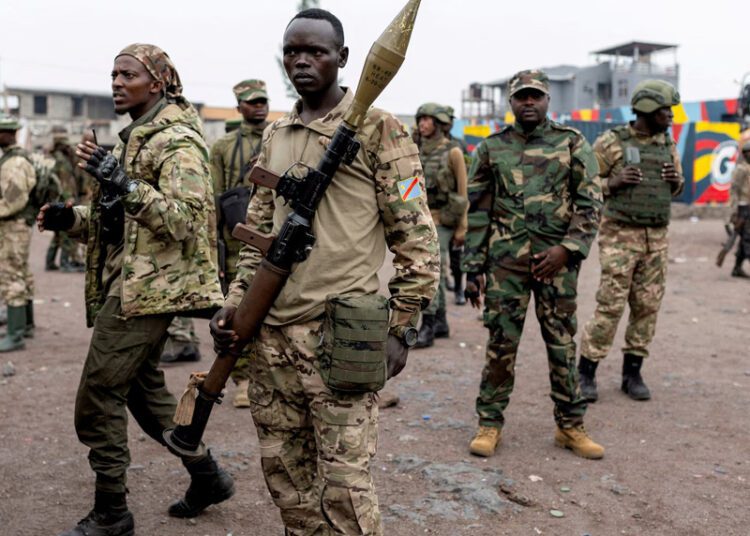
Rwanda-backed M23 rebels have announced that they will withdraw from Uvira, the strategic town in eastern Democratic Republic of the Congo (DRC) after seizing it last week, as fighting in the region escalated despite a US mediated peace deal.
Corneille Nangaa, leader of the Congo River Alliance, which includes M23, posted a signed statement on X that confirmed fighters would withdraw from the town located in South Kivu province, near the border with Burundi, “as per United States mediation request.”
He said that the withdrawal is a “unilateral trust-building measure” aimed at giving the “Doha peace process the maximum chance to succeed.”
The statement also called for the demilitarization of Uvira, the protection of its population and infrastructure, and the monitoring of the ceasefire through the deployment of a neutral force.
It did not say whether M23’s withdrawal is contingent on implementing these measures.
M23 took control of the city last week following a rapid offensive launched at the start of the month. Along with the more than 400 people killed, about 200,000 have been displaced, regional officials say.
The rebels’ latest offensive comes despite a US-mediated peace agreement signed earlier this month by the Congolese and Rwandan Presidents in Washington.
The US last week accused Rwanda of violating the agreement by backing a deadly new rebel offensive in the mineral-rich eastern Congo, and warned that the Trump administration will take action against “spoilers” of the deal.
The accord didn’t include the rebel group, which is negotiating separately with Congo and agreed earlier this year to a ceasefire that both sides accuse the other of violating.
However, it obliges Rwanda to halt support for armed groups like M23 and work to end hostilities.
The rebels’ advance pushed the conflict to the doorstep of neighboring Burundi, which has maintained troops in eastern Congo for years, heightening fears of a broader regional spillover.
According to the Burundian Ministry of Foreign Affairs, at least 30,000 Congolese have crossed the nearby border into Burundi since December 8.
There have also been reports of shells falling in the town of Rugombo, on the Burundian side of the border.
Meanwhile, a rebel source said that both M23 and Congolese forces would withdraw 5 km (3 miles) from Uvira to establish a buffer zone, something M23 had proposed at a press conference last week.
M23 staged a lightning offensive in January, seizing eastern Congo’s two biggest cities in fighting that has killed thousands and displaced hundreds of thousands more.
The insurgents have since worked to establish a parallel administration in the east, potentially setting the vast Central African country up for an enduring fracture.
M23 Actions Deemed Negotiating Tactic
Paul-Simon Handy, the East Africa Regional Director at the Institute for Security Studies, said that M23’s actions in Uvira were “a negotiating tactic” by the group to create facts on the ground and push the DRC’s government “to make more territorial and economic concessions.”
He noted that the withdrawal announcement was likely “a direct consequence of the very strong” reaction by the US.
“I struggle to see the strategic objective they are trying to gain by aggrieving the main backer of the peace agreement.
“Wanting to give peace a chance would have meant not taking over Uvira after the signing of the Washington and the Doha agreements.”
Paul-Simon Handy,
He added that taking over and now saying we are withdrawing is a “tactic we’ve seen … else[where] by the M23 – taking over territories, appearing to withdraw, to take them again.”
READ ALSO: Abuakwa South MP Slams Government Over 11-Month Salary Arrears for 6,500 Health Workers