• About
  • Advertise
  • Privacy Policy
  • Contact
Friday, January 16, 2026
  • Login
The Vaultz News
  • Top Stories
  • News
    • General News
    • Education
    • Health
    • Opinions
  • Economics
    • Economy
    • Finance
      • Banking
      • Insurance
      • Pension
    • Securities/Markets
  • Business
    • Agribusiness
    • Vaultz Business
    • Extractives/Energy
    • Real Estate
  • World
    • Africa
    • America
    • Europe
    • UK
    • USA
    • Asia
    • Around the Globe
  • Innovation
    • Technology
    • Wheels
  • Entertainment
  • 20MOBPL2DNew
  • Jobs & Scholarships
    • Job Vacancies
    • Scholarships
No Result
View All Result
The Vaultz News
  • Top Stories
  • News
    • General News
    • Education
    • Health
    • Opinions
  • Economics
    • Economy
    • Finance
      • Banking
      • Insurance
      • Pension
    • Securities/Markets
  • Business
    • Agribusiness
    • Vaultz Business
    • Extractives/Energy
    • Real Estate
  • World
    • Africa
    • America
    • Europe
    • UK
    • USA
    • Asia
    • Around the Globe
  • Innovation
    • Technology
    • Wheels
  • Entertainment
  • 20MOBPL2DNew
  • Jobs & Scholarships
    • Job Vacancies
    • Scholarships
No Result
View All Result
The Vaultz News
No Result
View All Result

BOG, GoldBod, and The Acceptable Costs of Public Policy

thevaultzby thevaultz
January 7, 2026
Reading Time: 4 mins read
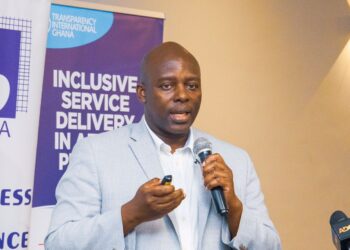
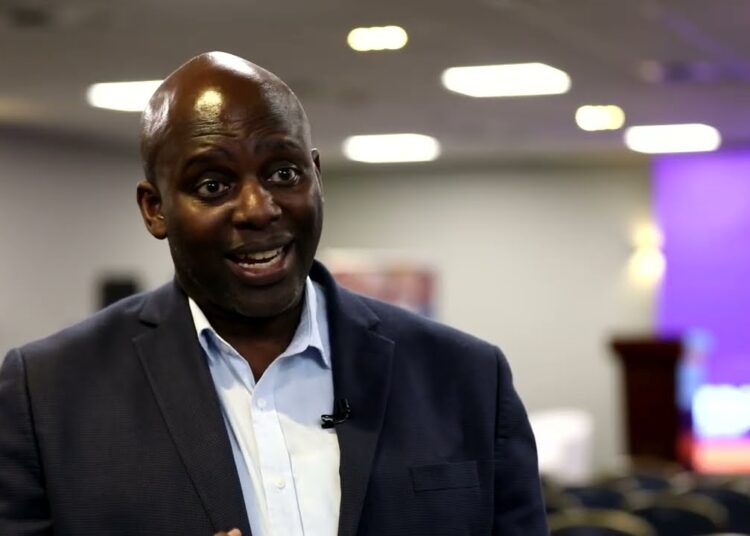
Author: Dr. John Osae-Kwapong, Democracy and Development Fellow, CDD-Ghana, and Project Director, the Democracy Project

Author: Dr. John Osae-Kwapong, Democracy and Development Fellow, CDD-Ghana, and Project Director, the Democracy Project

Author: Dr. John Osae-Kwapong, Democracy and Development Fellow, CDD-Ghana, and Project Director, the Democracy Project

The International Monetary Fund (IMF), noted in a recent report (IMF Country Report No. 25/343, 2025) the following: “In 2025 through end-Q3, losses from the artisanal and small-scale (ASM) doré gold transactions component of G4R have reached US$214 million (0.2 percent of GDP), mostly on trading losses but also on GoldBod off-takers’ fees.”  The Gold for Reserves (G4R) is a component of the Domestic Gold Purchase Program (DGPP).

In response to this disclosure, the minority caucus in parliament held a press conference, demanding that – a) the Central Bank Governor and CEO of GoldBod appear before the parliamentary committee on economy and development; b) a parliamentary ad hoc investigative committee with subpoena powers be set up; and c) criminal prosecution, including funds recovery in case of evidence of corruption.  

RelatedPosts

Who Will Win the NPP’s January 31st Primary?

Resetting Ghana’s Foreign Policy: One Year in Review

Indiscipline And The Decline of Learning Standards in Ghana’s Pre-Tertiary Schools: An Education Specialist’s Perspective

Last Saturday, on Joy News’ Newsfile, the CEO of GoldBod took time to respond to the minority caucus’s concerns. The Bank of Ghana (BOG) has also issued a statement in response to the developments as noted in the IMF Staff Report.

Policy activists, including the likes of Mr. Bright Simons, have also weighed in on the matter.  At the heart of the heated exchanges and strong disagreements over the issue is the vexing problem of how to resolve one of the key dilemmas of public policy. Let me explain.

The Policy Dilemma

Citizens expect governments to solve public problems. In response, governments design interventions by drawing on various tools of public policy at their disposal. Such interventions come with both costs and benefits.

ADVERTISEMENT

The goal of every government, when designing a policy intervention, is that the benefits would far outweigh the costs. The question, though, is what are the acceptable costs of policy interventions when weighed against the benefits? And in public discourse, where should the focus be? On the benefits, costs, or both?

In my understanding of the BOG’s press release as well as the submissions of GoldBod’s CEO on Newsfile, the public is urged to place the $214million within a bigger context – the benefits of the policy intervention to the overall economy of the country. In their view, the macroeconomic benefits such as currency stability, improved reserves, access to foreign exchange, etc. far outweigh the associated costs of DGPP.

Mr. Simons, a policy analyst in civil society, argues, which I agree with, that we cannot overlook the cost of public policy interventions. As a matter of fact, a close look at Text Figure 9, in the IMF Staff report, shows that the cumulative costs of the G4R program have been steadily rising.

And in the same graph, I noticed that when the cumulative costs are juxtaposed against the cumulative gold quantity, the gap appears to be narrowing. In my layman’s view, the increasing cumulative costs do not appear to be resulting in a higher net gain of cumulative gold quantity. Again, this is part of the policy efficiency concerns raised by Mr. Simons.

Both sides of the argument raise very legitimate points. Those projecting benefits force us to confront the potential downside of not having the policy intervention. For example, would we rather have a macroeconomic environment with an unstable currency that keeps depreciating? For most people, I am sure the answer is no.

Those projecting the costs, on the other hand, force us to confront the financial implications of policy interventions. Are we risking diminishing marginal returns at some point if the cost trajectory, as shown in the IMF Staff report, continues to trend upwards? Is the cost, even if deemed acceptable, sustainable?

Resolving The Dilemma

How do we resolve this dilemma? The benefits of policy intervention and its acceptable costs do not lend themselves to easy and simple resolutions. It is, however, a delicate balancing act complicated in electoral democracies by partisanship.

What partisanship does is it creates two opposing camps – those who roll out interventions are reluctant to acknowledge any faultlines, including cost concerns, while those who do not are reluctant to acknowledge the good by focusing predominantly on the faultlines, including cost concerns.

This means the job of every government is to devise strategies on how best to manage this balancing act between the cost of important policy interventions and the national benefits in a partisan environment. That is why it does the country and the policy intervention itself no good to treat such matters as either-or propositions.

When policy interventions work as designed, the benefits are collective. At the same time, the consequences are collective when they fail to work as designed. So, while we champion the benefits of DGPP, and the country is experiencing them, care must be taken not to be oblivious to cost concerns. If at some point the cost of a policy intervention becomes worrying, it is perfectly okay to make the necessary adjustments.

READ ALSO: One Year in Office: Mahama Says Foundations Laid for Sustainable National Progress

Tags: Artisanal small scale miningBank of GhanaDomestic Gold Purchase Program (DGPP)Ghana Gold Board (GoldBod)Gold for Reserves ProgrammeInternational Monetary Fund
Share2Tweet1ShareSendSend
Please login to join discussion
Previous Post

UK Discloses Support To US Seizure Of Marinera Tanker

Next Post

Japan Engages Ghana in Bilateral Talks Ahead of Forum

Related Posts

NPP 2026 Flagbearership Aspirants.
Opinions

Who Will Win the NPP’s January 31st Primary?

January 14, 2026
Author: Ishmael Kwabla Hlovor (PhD): International Relations Analyst and  Lecturer, Department of Political Science Education, University of Education, Winneba
Opinions

Resetting Ghana’s Foreign Policy: One Year in Review

January 12, 2026
Mr. Henry Osabutey, Human rights, Peace and Conflict studies Scholar and a Global Goodwill Ambassador.
Opinions

Indiscipline And The Decline of Learning Standards in Ghana’s Pre-Tertiary Schools: An Education Specialist’s Perspective

December 29, 2025
Author: Dr. John Osae-Kwapong, Democracy and Development Fellow, CDD-Ghana, and Project Director, the Democracy Project
Opinions

The Constitution Review Committee’s Recommendations

December 24, 2025
West Africa Project Scorecard
Opinions

West Africa’s Democracy and the Failed Coup d’état in Benin

December 20, 2025
The Ghana Flag
Opinions

Just Say No to A Presidential Third Term!

December 13, 2025
“2025 Was a Year of Painful Adjustments but Stability Is Back,” BoG Governor Declares
Economy

“2025 Was a Year of Painful Adjustments but Stability Is Back,” BoG Governor Declares

by M.CJanuary 16, 2026
Standard Chartered Tops Ghana’s Retail Banking CX Rankings for Second Straight Year
Banking

Standard Chartered Tops Ghana’s Retail Banking CX Rankings for Second Straight Year

by M.CJanuary 16, 2026
Ashanti Regional Minister, Dr Frank Amoakohene
General News

Ashanti Region Stalled Road Projects Resume as Government Releases New Funding

by Evans Junior OwuJanuary 16, 2026
Mr. Simon Madjie, CEO of GIPC, with Ms. Catarina Vieira, European Parliament Delegation Lead and Co.
Vaultz Business

GIPC Dismantles Barriers to Foreign Capital in High-Level EU Engagement

by Silas Kafui AssemJanuary 16, 2026
Trump Rebuffs Putin’s Offer To Aid Israel-Iran Conflict Mediation
USA

Trump Threatens Tariffs Over Greenland Control Push

by Comfort AmpomaaJanuary 16, 2026
Hon. Eric Opoku, Minister for Food and Agriculture, at the US-Ghana Investor Forum in Pennsylvania
Agribusiness

Agric Minister Courts U.S. Investors to Drive Ghana’s Agricultural Reset

by Silas Kafui AssemJanuary 16, 2026
“2025 Was a Year of Painful Adjustments but Stability Is Back,” BoG Governor Declares
Standard Chartered Tops Ghana’s Retail Banking CX Rankings for Second Straight Year
Ashanti Regional Minister, Dr Frank Amoakohene
Mr. Simon Madjie, CEO of GIPC, with Ms. Catarina Vieira, European Parliament Delegation Lead and Co.
Trump Rebuffs Putin’s Offer To Aid Israel-Iran Conflict Mediation
Hon. Eric Opoku, Minister for Food and Agriculture, at the US-Ghana Investor Forum in Pennsylvania

Recent News

“2025 Was a Year of Painful Adjustments but Stability Is Back,” BoG Governor Declares

“2025 Was a Year of Painful Adjustments but Stability Is Back,” BoG Governor Declares

January 16, 2026
Standard Chartered Tops Ghana’s Retail Banking CX Rankings for Second Straight Year

Standard Chartered Tops Ghana’s Retail Banking CX Rankings for Second Straight Year

January 16, 2026
Ashanti Regional Minister, Dr Frank Amoakohene

Ashanti Region Stalled Road Projects Resume as Government Releases New Funding

January 16, 2026
Mr. Simon Madjie, CEO of GIPC, with Ms. Catarina Vieira, European Parliament Delegation Lead and Co.

GIPC Dismantles Barriers to Foreign Capital in High-Level EU Engagement

January 16, 2026
Trump Rebuffs Putin’s Offer To Aid Israel-Iran Conflict Mediation

Trump Threatens Tariffs Over Greenland Control Push

January 16, 2026
The Vaultz News

Copyright © 2025 The Vaultz News. All rights reserved.

Navigate Site

  • About
  • Advertise
  • Privacy Policy
  • Contact

Follow Us

Welcome Back!

Login to your account below

Forgotten Password?

Retrieve your password

Please enter your username or email address to reset your password.

Log In
No Result
View All Result
  • Top Stories
  • News
    • General News
    • Education
    • Health
    • Opinions
  • Economics
    • Economy
    • Finance
      • Banking
      • Insurance
      • Pension
    • Securities/Markets
  • Business
    • Agribusiness
    • Vaultz Business
    • Extractives/Energy
    • Real Estate
  • World
    • Africa
    • America
    • Europe
    • UK
    • USA
    • Asia
    • Around the Globe
  • Innovation
    • Technology
    • Wheels
  • Entertainment
  • 20MOBPL2D
  • Jobs & Scholarships
    • Job Vacancies
    • Scholarships

Copyright © 2025 The Vaultz News. All rights reserved.

Discover the Details behind the story

Get an in-depth analysis of the news from our top editors

Enter your email address