The Minority in Parliament has issued a chilling assessment of Ghana’s domestic security, alleging a “sharp and frightening,” rise in kidnappings and violent crime across the country, claiming that the nation is currently gripped by a governance crisis that has left citizens “sleeping with one eye open.”
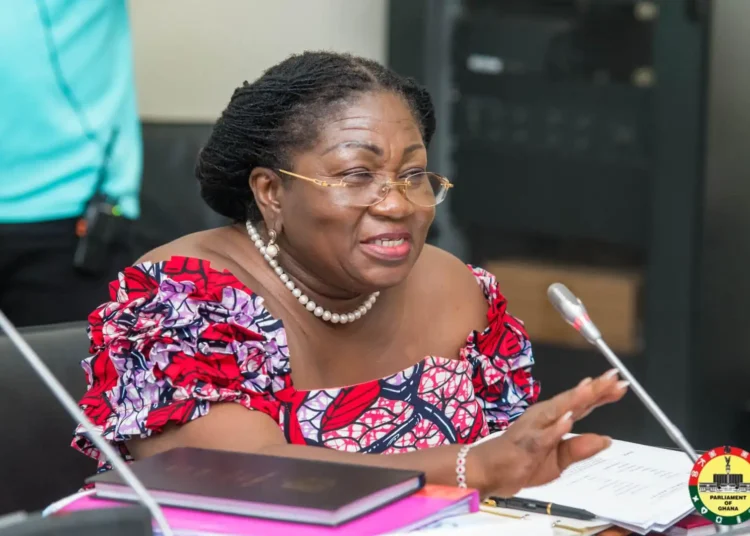
At a high-profile press conference held in Accra, Deputy Minority Leader, Hon. Patricia Appiagyei said the nature of recent abductions indicates that insecurity has evolved from isolated incidents into a full-scale national emergency, with young adults and school children increasingly becoming targets of organized criminal networks.
“Kidnapping has risen sharply. Young women and men disappear. Children vanish on their way to school. We need a comprehensive national security strategy, visible results, and sustained leadership”
Hon. Patricia Appiagyei, Deputy Minority Leader
The group argued that these disappearances are not mere statistics but evidence of a state that is failing in its primary duty to protect its people, asserting that the psychological toll on parents and the general public has reached a breaking point – creating an atmosphere of pervasive fear that inhibits movement and economic activity.
Hon. Appiagyei provided a statistical backdrop to the group’s concerns, citing figures previously acknowledged by the Interior Ministry. She noted that as of July 2025, the country had already recorded approximately 628 cases of armed robbery and 340 murders involving illicit firearms.
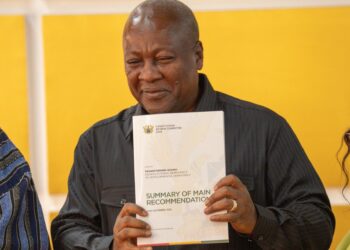
This data, covering only the first half of the previous year, was presented as proof of a deteriorating security landscape under the first year of President John Dramani Mahama’s renewed mandate.
A significant portion of the security failure was attributed to what the Minority described as “gravely weakened,” borders. They warned that the free flow of illegal arms across Ghana’s frontiers is directly fueling the operations of criminal gangs and kidnapping syndicates.
The opposition argued that while criminal elements operate with growing impunity, the state’s response has remained largely cosmetic, characterized by bureaucratic delays rather than tactical efficiency.
Criticism Of Response
Hon. Appiagyei was particularly scathing regarding the government’s tactical approach to the crisis, labeling it symbolic rather than substantive. She contended that the administration has favored “committees and meetings,” over direct, visible interventions in vulnerable communities.
“The security situation has deteriorated, transforming our once-peaceful nation into fear and uncertainty. This is not something that can be brushed aside with ceremonies and speeches”
Hon. Patricia Appiagyei, Deputy Minority Leader

The Deputy Minority Leader further alleged that security agencies are being forced to operate under severe resource constraints. She argued that the crisis is not strictly a result of a lack of funds, but rather a misplacement of priorities.
The group suggested that the neglect of security services and the perceived politicization of the police force have eroded the effectiveness of law enforcement, leaving citizens to fend for themselves.
“When citizens cannot travel safely on our highways, when parents fear their children will not return home, when investors question whether Ghana can protect assets and personnel, and when terrorists probe our borders, this is not merely a security failure. It is a governance crisis”
Hon. Patricia Appiagyei, Deputy Minority Leader
According to the Minority, the ripple effects of this insecurity are reportedly being felt in the wider economy.
They warned that when investors begin to question the state’s ability to protect personnel and assets, the nation’s economic recovery is placed at risk – and emphasized that the current climate of uncertainty acts as a deterrent to both local and foreign investment, potentially stalling growth.

Concluding their address, the Minority stressed that the restoration of public confidence requires more than just increased funding; it requires a shift in leadership priority. “The state’s duty to protect life and property has weakened.”
READ ALSO: Relief for Borrowers as Ghana Reference Rate Falls Again, Signaling Lower Interest Rates