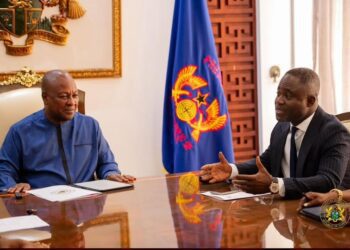

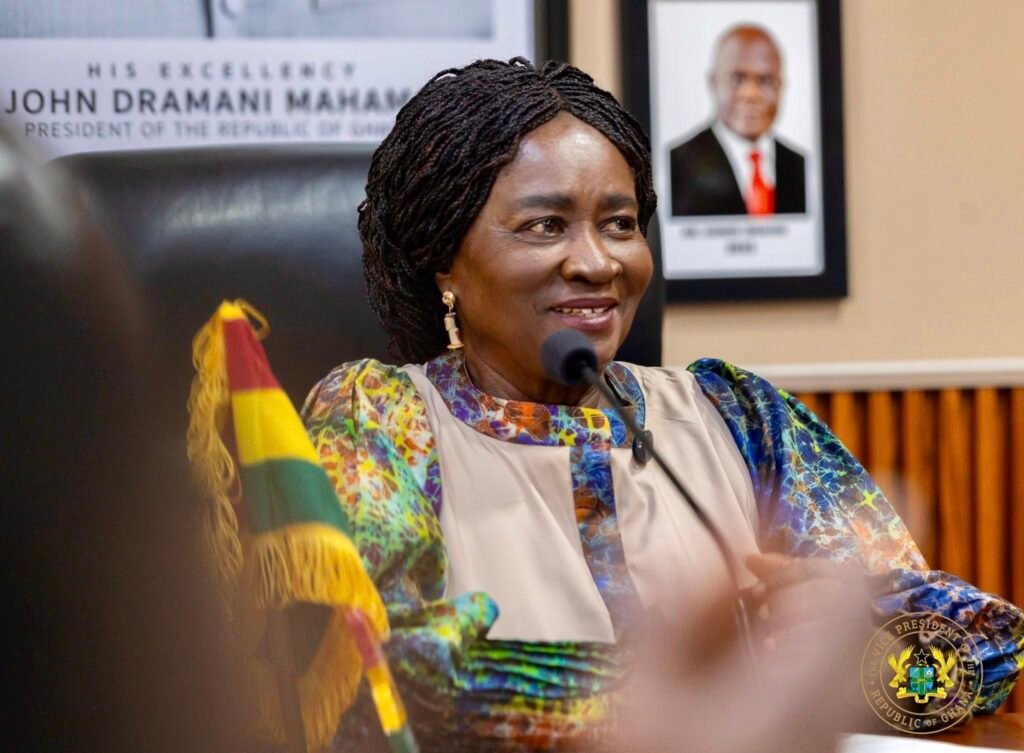
Vice President Professor Naana Jane Opoku-Agyemang has affirmed the central role of local governance in the current administration’s “reset” agenda, highlighting decentralization as the primary tool for fostering peace and enhancing the lives of Ghanaians.
During a high-level engagement at the Ministry of Local Government, Chieftaincy and Religious Affairs, the Vice President emphasized that bringing governance closer to the people is not merely an administrative task but a moral imperative for social stability.
“The Ministry is truly at the heart of the Government, especially as we work to reset the decentralization agenda and strengthen institutions. Social governance is essential for fostering peace, and decentralization should be used as a tool to enhance the daily lives of Ghanaians.
“Governance is a collective responsibility; government does not work alone, and we must continue to treat every stakeholder with the respect they deserve”
Vice President Professor Naana Jane Opoku-Agyemang
The visit, aimed at assessing the progress of effective service delivery, provided a platform for the Vice President to witness firsthand the structural shifts being implemented under the leadership of Sector Minister Hon. Ahmed Ibrahim.
For the Vice President, the Ministry represents the core of the government’s efforts to strengthen grassroots institutions and ensure that the dividend of democracy reaches every community regardless of geographic location.
Strengthening the Chieftaincy Institution
Adding up to the Vice President’s vision for social governance, Hon. Ahmed Ibrahim noted that the Ministry has taken unprecedented steps to integrate traditional authorities into the national development framework.
In a move that has been widely seen as a significant win for local leadership, the Minister announced a staggering 300% increase in allowances for paramount chiefs and queen mothers.
Hon. Ibrahim argued that this adjustment is not just a financial increment but a reaffirmation of the vital role traditional leaders play in maintaining national unity and local stability. He noted that the Ministry has significantly ramped up its engagement with traditional councils to ensure that chiefs are not just spectators but active partners in the decentralization journey.

The engagement also highlighted a shift toward stricter financial accountability at the local level. Hon. Ahmed Ibrahim briefed the Vice President on the successful orientation of Metropolitan, Municipal, and District Chief Executives (MMDCEs) regarding the utilization of the District Assemblies Common Fund (DACF).
According to him, clear guidelines have been issued to ensure that these public funds are directed toward their intended purposes, effectively curbing the historical trend of administrative leakage.
Furthermore, the Minister announced the rollout of a 24-hour sanitation programme, a key component of the broader National Sanitation Day work plans. This initiative aims to improve public hygiene nationwide while contributing to the administration’s goal of a round-the-clock economy.
Restoring Investor Confidence
While the Vice President focused on the social impact of these policies, Hon. Ibrahim underscored the economic dividends. He reported that the clear direction and stability provided by the current administration have sparked a resurgence in interest from development partners and private investors.

Professor Opoku-Agyemang noted that the National Decentralization Dialogue was cited as a critical milestone that allowed stakeholders to shape the next phase of Ghana’s governance structure. This dialogue, according to the Local Government Minister, has created a transparent environment that encourages external support for local projects.
The Vice President concluded the visit with a call for continued institutional transparency. As the government moves forward with its reset strategy, the collaboration with the Local Government Ministry remains a cornerstone of the effort to restore public trust in state institutions.
READ ALSO: NAIMOS Hunts Illegal Miners along River Ankobrah, Apprehends 7 Operators