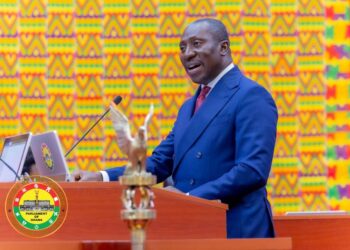
Ing. Kenneth Ashigbey, Chief Executive Officer of the Ghana Chamber of Mines, has called on the government to strategically divert a portion of the country’s mineral revenue windfalls into commercial agriculture and a stabilization reserve.
This proposal aims to safeguard the economy against the volatility of global commodity prices by ensuring that the current surge in mining gains is not merely consumed but invested in sustainable, forward-looking national projects.
Expanding on this vision, Ashigbey warned that Ghana’s recent macroeconomic gains—characterized by a stabilizing cedi and easing inflation remain “predicated on commodity prices” over which the nation has no control.
He argued that instead of spending the entirety of these mineral windfalls during periods of high market performance, the state must adopt a medium-term strategy.
By establishing a dedicated stabilization fund and a “Minerals Revenue Management Act,” the government could formalize the process of setting aside funds during price booms to provide a fiscal cushion when market conditions eventually decline.
“You see, eating on a constant and continual basis is better than eating one large meal once. So that tomorrow, when things are not good, you are able to recover. But what we are saying is that let’s live and let’s live so that everybody gets.”
Ing. Kenneth Ashigbey
Mitigating the Boom-and-Bust Cycle

Ashigbey’s advocacy for a Minerals Revenue Management Act mirrors the governance framework of Ghana’s petroleum sector.
The mining industry is currently enjoying a “short term” period where everything looks “very good,” yet the CEO insists that the “medium term” requires a deliberate shift.
By channeling mineral royalties into commercial agriculture, Ghana can transform finite underground wealth into renewable surface assets.
This move would address the “inherent tension” often found between mining and farming, effectively using mining as an engine to scale up agricultural productivity and food security.
Strengthening Macroeconomic Resilience
The proposed move offers a structural solution to the fragility of the Ghanaian cedi.
Ashigbey noted that while current indicators are positive, they are vulnerable to “global market swings.”
Investing in agriculture creates a secondary pillar for foreign exchange earnings and employment, reducing the state’s over-reliance on the extractive sector.
Furthermore, the Chamber’s suggestion of a “sliding royalty structure” that moves both up and down ensures that mining operations remain viable and can “keep the wheels running” even when gold prices dip, preventing the mass layoffs and project stalls that typically follow a market crash.
Promoting Sustainable Community Development
Beyond national fiscal stability, the Chamber is pushing for a more equitable “benefit sharing” model that directly impacts mining communities.
Ing. Ashigbey highlighted the need for an additional contribution to a dedicated development fund, allowing locals to “point to the fact that when the prices of gold hit the roof,” specific infrastructure or agricultural projects were realized.
This strategy ensures that the benefits of the mining industry “endure” long after the minerals are depleted, fostering a legacy of industrial strength rather than just a history of extraction.
READ ALSO: Ghana Urged to Lead Africa’s Integrated Minerals Market