Chief Executive Officer of the Ghana Chamber of Mines, Ing. Kenneth Ashigbey, has called on the government to adopt a balanced and equitable fiscal framework that ensures the country’s gold windfall is shared broadly across the economy rather than through selective, short-term gains.
This appeal comes at a time when global gold prices have experienced a significant surge, tempting policymakers to implement long-term tax adjustments based on temporary market peaks.
Ashigbey argued that such a “windfall” must be leveraged to create sustainable wealth, cautioning that reactive policy shifts could undermine the long-term productivity of the mining sector.
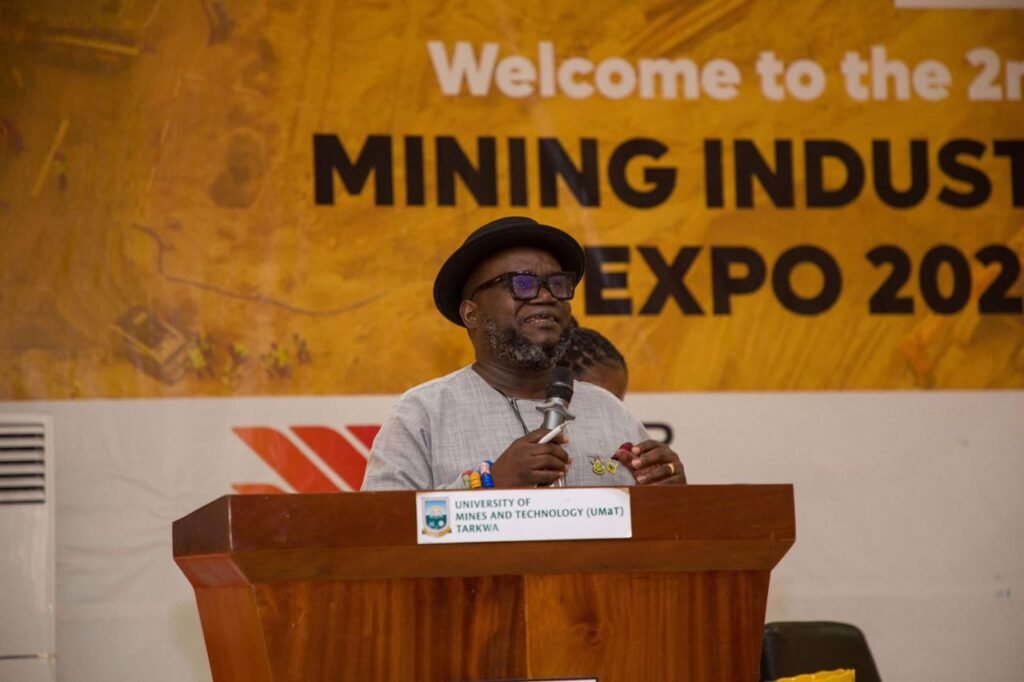
“This phenomenon is a short-term phenomenon. You don’t take decisions that are long-term in nature just based on the phenomenon. Eating on a constant and continual basis is better than eating one large meal once.”
Ing. Kenneth Ashigbey
The proposed “fair share” model centers on a transition from the current fixed-rate and levy-heavy system to a more dynamic, sliding-scale royalty regime.
By replacing the Growth and Sustainability Levy (GSL) with a sliding royalty scale ranging between four and eight per cent, the Chamber suggests a fiscal environment that responds to market volatility.
This structure ensures that the State’s revenue increases automatically as gold prices rise while providing the necessary “downward” relief to keep mines viable when prices dip toward the $1,900 per ounce threshold.
This counter-cyclical approach aims to prevent the “Esau mentality” of trading future industrial stability for immediate, one-time cash injections.
Sustainable Fiscal Regimes and Investor Confidence
A transition to a sliding-scale royalty system offers a “sweet spot” that balances national revenue mobilization with the preservation of investor confidence.
In the extractive industry, capital-intensive projects rely on long-term fiscal predictability to remain bankable.
By implementing a regime that “slides both up and down,” Ghana can avoid the reputational risk of being perceived as a high-tax jurisdiction during price booms.
Ashigbey noted that the Chamber is “all open to fair taxation,” provided the measures do not place “excessive pressure on large-scale operators” that are already significant contributors to the national purse.
This stability encourages further exploration and reinvestment, ensuring the industry remains a “constant and continual” source of revenue.
Direct Development for Mining Communities

Central to the Chamber’s proposal is the introduction of an additional one per cent levy on net profits, specifically earmarked for a dedicated community development fund.
This mechanism ensures that the people living in the shadows of the mines see “tangible benefits” when gold prices “hit the roof.”
Currently, mining communities often struggle to see the direct correlation between high global commodity prices and local infrastructure.
Ashigbey argues that these residents “should be able to point to the fact that when prices hit the roof, we were able to do this project and do that project,” thereby fostering a more inclusive social license to operate.
Broadening the Tax Base through Regulation

The path to a truly broad windfall share also requires the formalization of the small-scale mining sector, which now rivals large-scale production in volume.
Ashigbey emphasized the need to “bring them into the pool” of the national tax and regulatory framework. Integrating these operators would significantly widen the national revenue base without further straining the formal sector.
If the regulatory percentages are set correctly, small-scale miners have shown a willingness to contribute, potentially doubling the government’s revenue streams through volume-based royalties rather than just price-based spikes.
This holistic approach ensures that the “gold boom” benefits the state through expanded output and a more inclusive taxpayer base.
READ ALSO: Global Lithium Dynamics Strengthen Ewoyaa Lithium Project Value