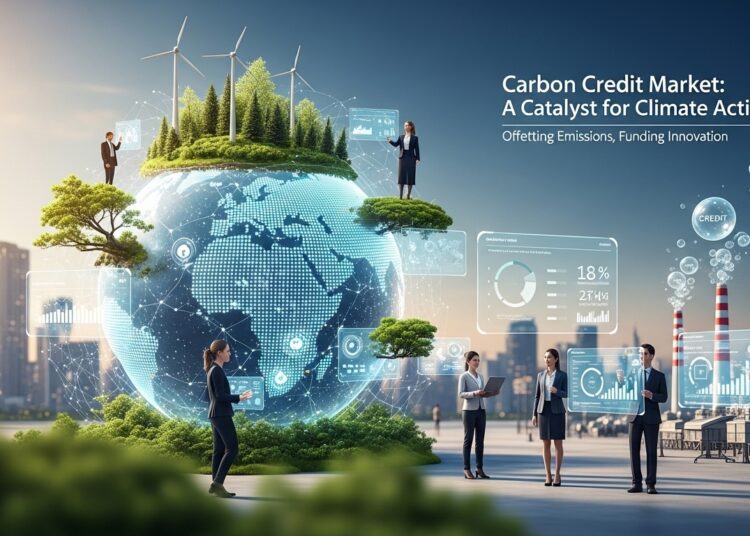
As Parliament resumes sittings for the Second Session of the Ninth Parliament of the Fourth Republic, climate policy and environmental sustainability are expected to take centre stage, with government preparing to introduce regulations to establish a carbon credit market in Ghana.
The proposed move was disclosed by the Majority Leader and Leader of Government Business, Hon. Mahama Ayariga, who indicated that the initiative forms part of a broader legislative agenda aimed at strengthening Ghana’s response to climate change while positioning the country to benefit from emerging global carbon markets.
Mr Ayariga underscored the importance of climate-related legislation in the coming session, noting that environmental concerns will feature prominently in discussions on the floor of the House.
“In fact, one of the regulations that will be working on these regulations to establish a carbon credit market,” Mr Ayariga said, highlighting the advanced stage of preparations within government.
He explained that the proposed regulations are intended to establish transparent rules to govern how carbon credits are generated, traded and monitored.
He stressed that the absence of clear rules has long limited Ghana’s participation in global carbon trading mechanisms, despite the country’s vast potential in areas such as forestry, renewable energy, sustainable agriculture and waste management.
Addressing Climate Change Through Market-Based Solutions

The Majority Leader emphasised that the establishment of a carbon credit market is closely linked to Ghana’s climate change commitments and its obligations under international environmental agreements.
He noted that carbon markets have become an increasingly important tool for countries seeking to reduce greenhouse gas emissions while mobilising climate finance.
“So we’re not going to establish clear revelations governing carbon credit market. We know how significant that is in terms of dealing with the problem of climate change.”
Majority Leader and Member of Parliament for Bawku Central, Hon. Mahama Ayariga
Carbon credits are generated when projects reduce, avoid or remove carbon dioxide and other greenhouse gas emissions. These credits can then be sold to governments or companies seeking to offset their emissions, creating a financial incentive for climate-friendly investments.
For Ghana, a functional carbon credit market could unlock new revenue streams for both public and private sector actors, while encouraging environmentally sustainable practices across key sectors of the economy.
Climate Change to Dominate Parliamentary Discussions

Mr Ayariga indicated that the carbon credit regulations will form part of a wider set of climate-focused discussions during the current parliamentary session. “So this meeting, there will be a lot of talk of climate change as well,” he said.
Ghana has in recent years experienced increasing climate-related challenges, including flooding, coastal erosion, unpredictable rainfall patterns and rising temperatures. These impacts have heightened calls for stronger climate policies and sustainable development strategies.
As Parliament resumes, stakeholders across the environmental, energy and financial sectors are expected to closely monitor the introduction of the carbon credit regulations.
Civil society organisations, environmental groups and private sector players have long advocated for a clear legal framework to guide carbon trading activities in the country.
Once laid before Parliament, the proposed regulations will be subjected to scrutiny, debate and possible amendments before approval. If passed, the framework would mark a significant milestone in Ghana’s climate policy landscape.
With global attention increasingly focused on climate action and carbon markets, government officials believe the initiative could enhance Ghana’s international standing while contributing meaningfully to the fight against climate change.
As legislative work begins in earnest, the establishment of a carbon credit market is poised to become one of the defining policy initiatives of the Second Session of the Ninth Parliament, reflecting Ghana’s growing commitment to sustainable development and environmental responsibility.
READ ALSO: GSA Aligns 2026 Roadmap with MoTAI’s Strategic Planning