Parliament resumes sittings today, marking the start of the Second Session of the Ninth Parliament of the Fourth Republic, with a heavy legislative agenda expected from the Ministry of Energy and Green Transition.
Several bills aimed at restructuring Ghana’s energy governance framework, strengthening regulation and expanding private sector participation are set to be laid before the House in the coming weeks.
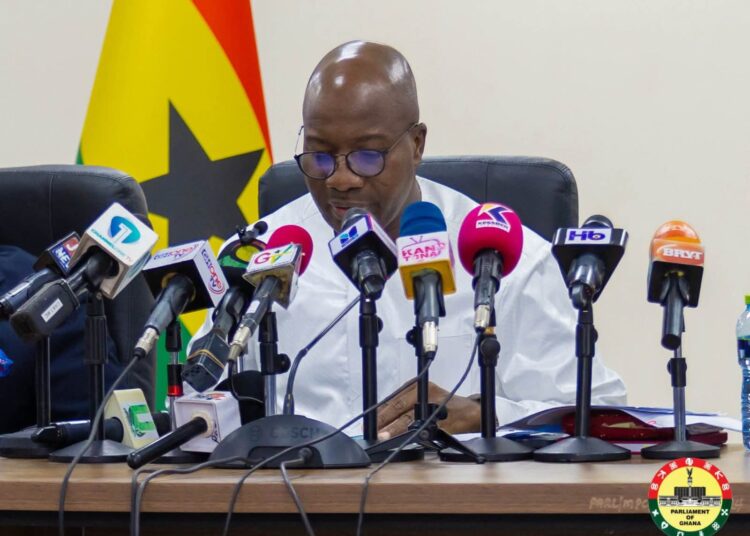
Ahead of the resumption, the Majority Leader and Leader of Government Business, Hon. Mahama Ayariga, who is also the Member of Parliament for Bawku Central, outlined key proposals that will dominate parliamentary business as lawmakers return from recess.
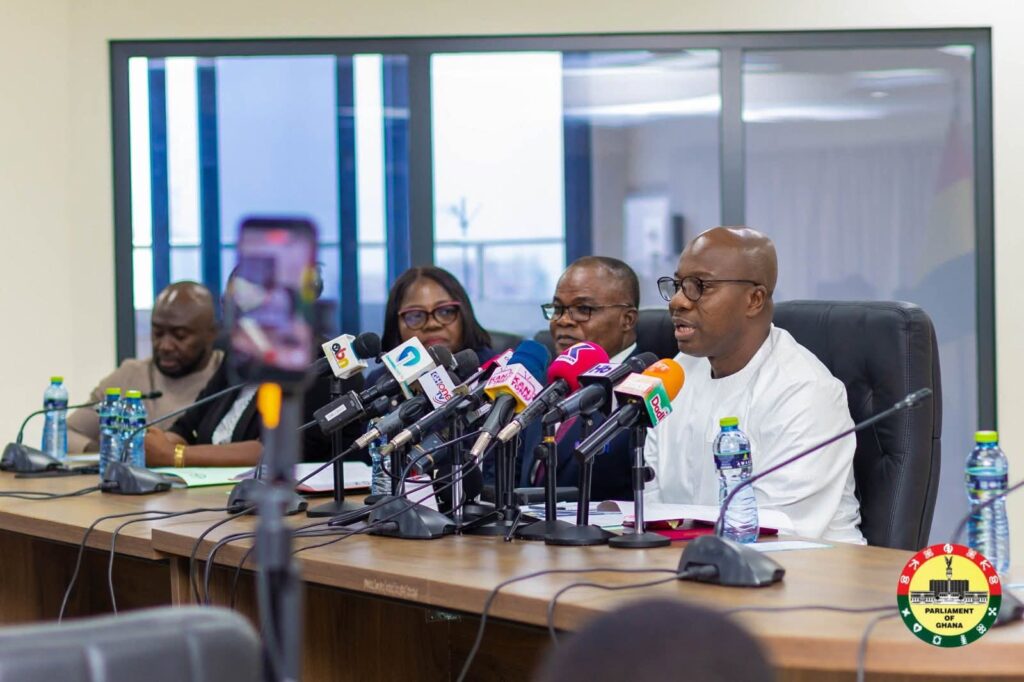
“The Ministry of Energy and Green Transition is to bring a bill to enact a new National Petroleum Authority Act,” he told journalists, indicating that the proposed legislation would redefine the mandate and operational structure of the petroleum regulator.
According to Mr Ayariga, the Ministry of Energy and Green Transition intends to overhaul the existing legal framework governing downstream petroleum regulation.
Renegotiated Power Purchase Agreements to Come Before House
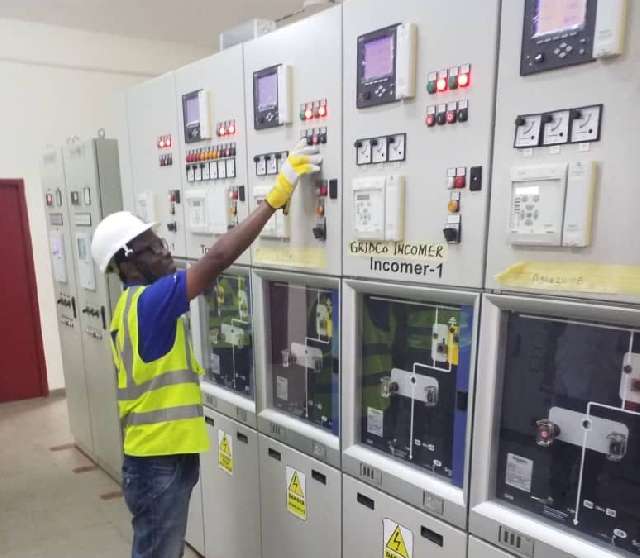
Another key area expected to engage lawmakers is the renegotiation of several power purchase agreements with Independent Power Producers (IPPs). These agreements have been central to Ghana’s power sector challenges, including excess capacity and payment arrears.
“As you will recall, there is a program to involve the private sector in electricity distribution,” he noted, adding that such initiatives would require parliamentary approval before implementation.
The review of these agreements is widely seen as critical to restoring financial sustainability in the electricity sector and reducing the burden of capacity charges on the state.
As Parliament resumes, lawmakers will also be asked to consider a nuclear power cooperation bill, reflecting Ghana’s long-term energy diversification strategy.
The proposed legislation is expected to provide the legal backing for cooperation agreements and frameworks related to nuclear energy development. “The nuclear power cooperation bill will also come,” the Majority Leader confirmed.
Ghana has for years explored the potential of nuclear energy as a stable baseload power source, and the introduction of this bill signals renewed momentum in that direction.
In line with the country’s green transition agenda, a bill to establish a Renewable Energy Authority is also expected before Parliament. “There is a proposal to establish a renewable energy authority, so the bill to establish that will also be here,” Mr Ayariga said.
Stakeholders in the renewable energy space have long advocated for a dedicated authority to coordinate policy, licensing and investment, particularly as Ghana seeks to increase the share of renewables in its energy mix.
Proposed Merger of PURC and Energy Commission

One of the more far-reaching proposals likely to spark debate when Parliament resumes is a bill to merge the Public Utilities Regulatory Commission (PURC) and the Energy Commission (EC).
“There’s a new proposal to merge PURC and EC to establish the Ghana Energy Regulatory Commission, so a bill to that effect will come,” Mr Ayariga disclosed.
If approved, the merger would significantly reshape energy regulation in Ghana, potentially consolidating tariff-setting, licensing and technical oversight under a single institution.
The Majority Leader also hinted at pending disclosures concerning the West Africa Gas Pipeline, although he noted that those matters were not yet ready for presentation to Parliament.
The West Africa Gas Pipeline has faced operational and supply challenges in recent years, with implications for power generation and fuel costs.
In addition to petroleum sector reforms, Parliament will also consider a bill to establish a Ghana Bankering Services Agency. While details of the proposed agency are yet to be fully disclosed, the Majority Leader suggested it forms part of broader reforms within the energy value chain.
A Busy Session Ahead

As Parliament resumes, the breadth of energy-related legislation expected before the House underscores the government’s push to reset Ghana’s energy sector through legal and institutional reforms.
With issues ranging from petroleum regulation and power distribution to nuclear and renewable energy, the Second Session of the Ninth Parliament is shaping up to be a decisive period for the country’s energy future.
Lawmakers are expected to subject the proposed bills to intense scrutiny, as the outcomes will have long-term implications for consumers, investors and the broader economy.
READ ALSO: China, Uruguay Ink Agreements Across Diverse Sectors