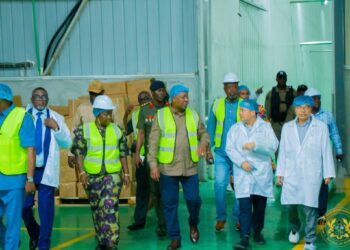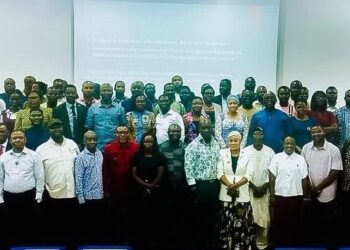
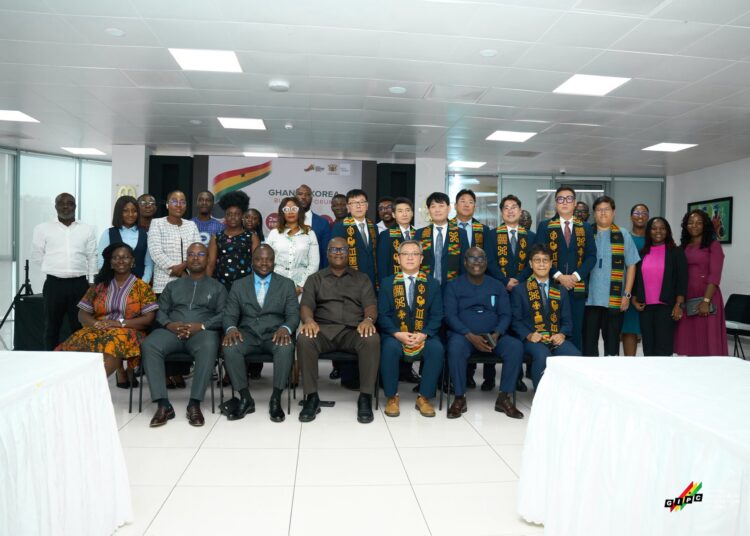
The Ghana Investment Promotion Centre (GIPC) has hosted and pitched 24-Hour Economy to a high-level South Korean business delegation at the Ghana-Korea Business Forum held in Accra.
The forum served as a strategic platform to deepen bilateral trade and showcase Ghana’s evolving economic landscape under the Mahama administration. Central to the discussions were the government’s flagship 24-Hour Economy and the Big Push Agenda, which GIPC officials identified as the primary drivers for future foreign direct investment (FDI).
In his welcoming address, CEO of GIPC, Simon Madjie, emphasized that Ghana has entered a new era of investment predictability. He noted that recent regulatory reforms have been designed to provide consistency for international partners, positioning Ghana as the most stable entry point for the African Continental Free Trade Area (AfCFTA).
“Ghana is open for business and we encourage participants to explore opportunities within key growth areas, including the 24-Hour Economy and the Big Push Agenda. Our ongoing regulatory reforms have significantly enhanced predictability and consistency within Ghana’s investment landscape, ensuring that your capital is both protected and productive”
Simon Madjie, CEO of GIPC
Mr. Madjie urged the Korean investors to move beyond traditional trade and explore deep-seated partnerships in manufacturing and industrial value addition.
Parliamentary Support
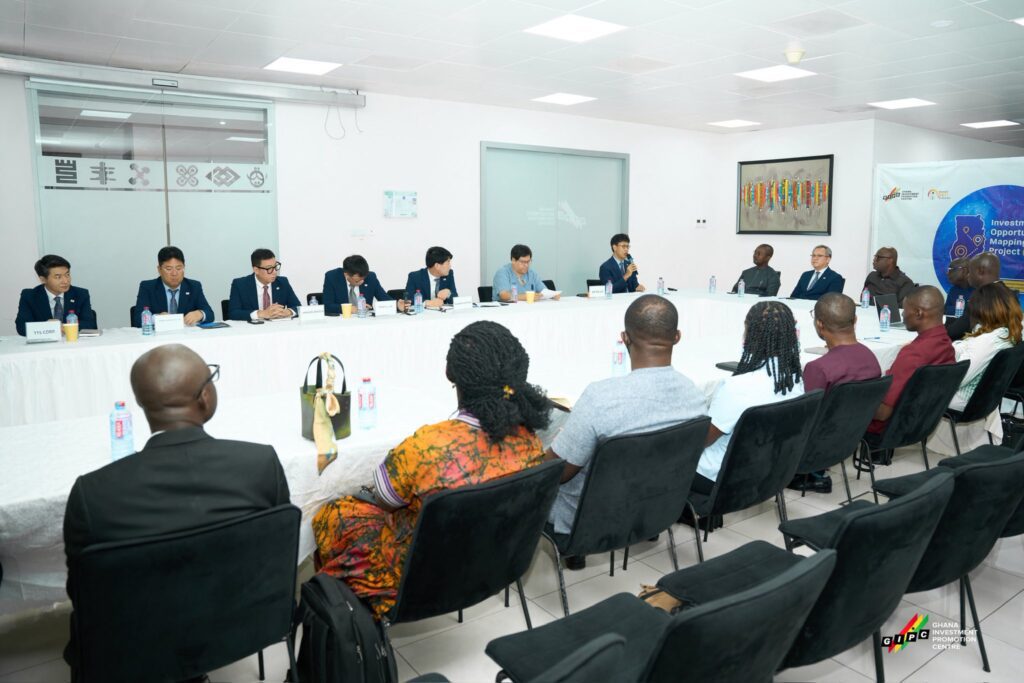
The forum received strong backing from the legislative arm of government. Hon. Alexander Roosevelt Hottordze, Chairman of the Parliamentary Select Committee on Trade, Industry and Tourism, and Hon. Othniel Ekow Kwainoe, MP for Ekumfi, both underscored the National Assembly’s commitment to creating an enabling legal environment.
They highlighted that the current political climate is uniquely tuned toward private-sector participation, with the Big Push infrastructure drive providing the necessary backbone for industrial scaling.
The lawmakers expressed optimism that the visit by the Korean delegation was timely, coinciding with Ghana’s transition toward a self-reliant, export-driven economy.
They noted that the synergy between Korean technological expertise and Ghana’s natural resource wealth could create a “win-win” model for sustainable development, particularly as the Ministry of Trade, Agribusiness & Industry (MoTAI) streamlines its industrial roadmaps.
A Sustainable Cooperation Model
Leading the Korean delegation, Mr. Choi affirmed the long-standing ties between Seoul and Accra but called for a shift toward more “practical and sustainable,” cooperation.
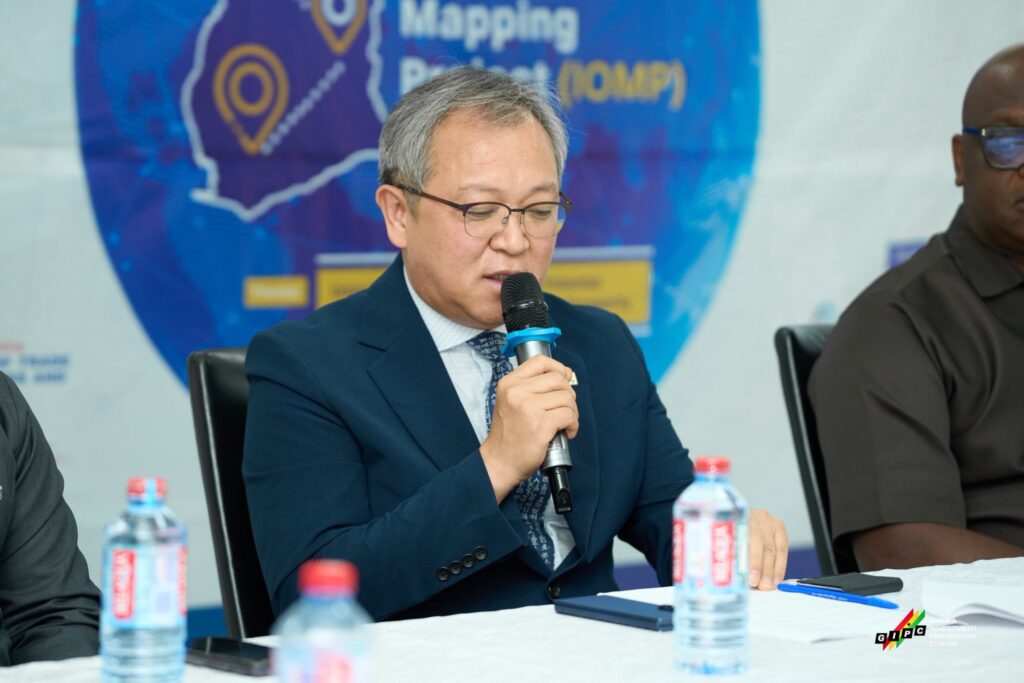
He emphasized that for investments to be durable, they must be accompanied by robust human capital development. Korea’s interest, he noted, extends particularly into the realms of education and skills development, aiming to equip the Ghanaian workforce with the technical proficiency required for advanced manufacturing and high-tech agricultural processing.
“We seek a practical, sustainable cooperation model. Bilateral collaboration is vital, particularly in education and skills development, to ensure that the industrial growth we envision is supported by a highly skilled talent pool. Korea remains committed to being a partner in Ghana’s journey toward economic transformation”
Mr. Choi, Leader of the South Korean Business Delegation
Supporting this vision, Kwame Kesse-Agyepong, Head of Investment Promotion and Business Development at GIPC, delivered a detailed presentation on the ease of doing business in Ghana. He pointed to the country’s strategic location and its growing middle-income market as key incentives for Korean firms looking to establish a regional hub.
He specifically flagged infrastructure, agriculture, and tourism as the most lucrative entries for Korean capital.
The forum concluded with a highly interactive Business-to-Business (B2B) session, following an insightful presentation by the Ghana Free Zones Authority (GFZA). This session allowed local entrepreneurs to engage directly with Korean investors to explore joint ventures and equity partnerships.
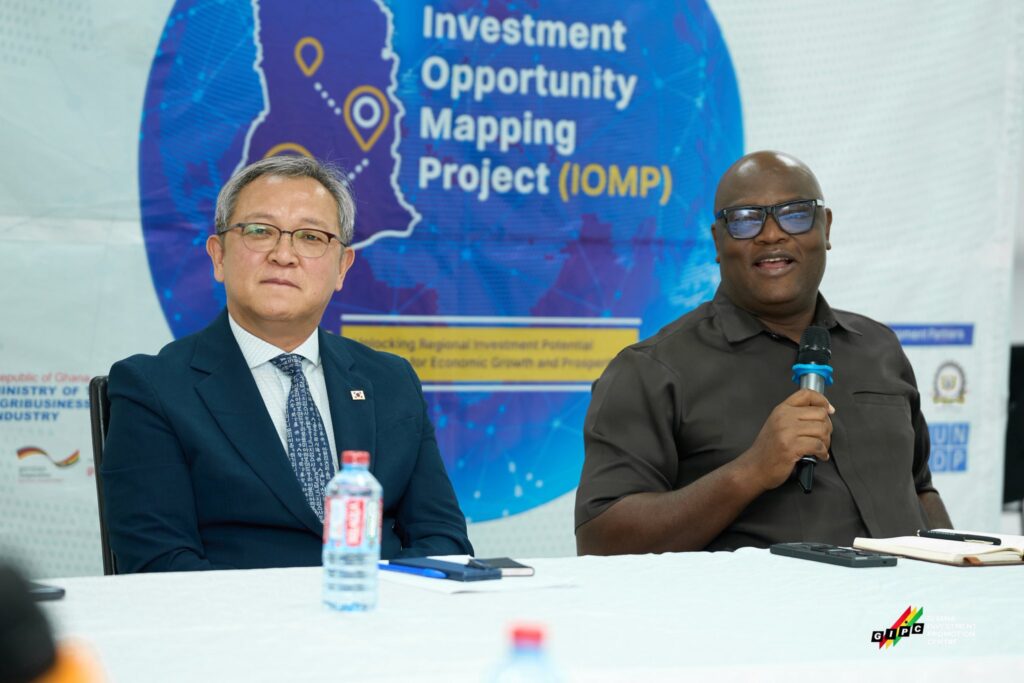
The GFZA highlighted the various tax incentives and specialized enclaves available to investors who choose to produce within Ghana’s industrial zones, further aligning with the World Association of Investment Promotion Agencies (WAIPA) standards.
By integrating the 24-Hour Economy into these investment pitches, the GIPC aims to maximize the utilization of industrial assets and create sustainable jobs. The focus remains on shifting Ghana from a primary commodity exporter to a sophisticated manufacturing hub, leveraging the “skilled talent pool,” identified during the technical presentations.
READ ALSO: China, Uruguay Ink Agreements Across Diverse Sectors