President Bola Ahmed Tinubu has reiterated his administration’s commitment to transforming Nigeria’s energy sector through decisive reforms, sustained implementation of the Petroleum Industry Act (PIA), and investor-friendly policies aimed at boosting production, transparency and long-term growth.
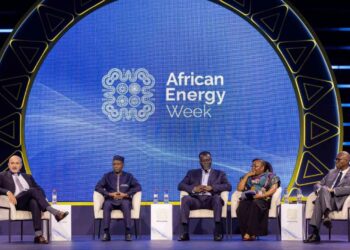
The President made this known at the official opening of the 9th Nigeria International Energy Summit (NIES) 2026 in Abuja. He was represented at the event by Vice President Kashim Shettima.
Addressing participants drawn from across Africa and the global energy industry, President Tinubu said his government inherited an energy sector “rich in potential but constrained by inefficiencies and prolonged underinvestment,” requiring bold and deliberate actions to restore investor confidence and unlock growth.
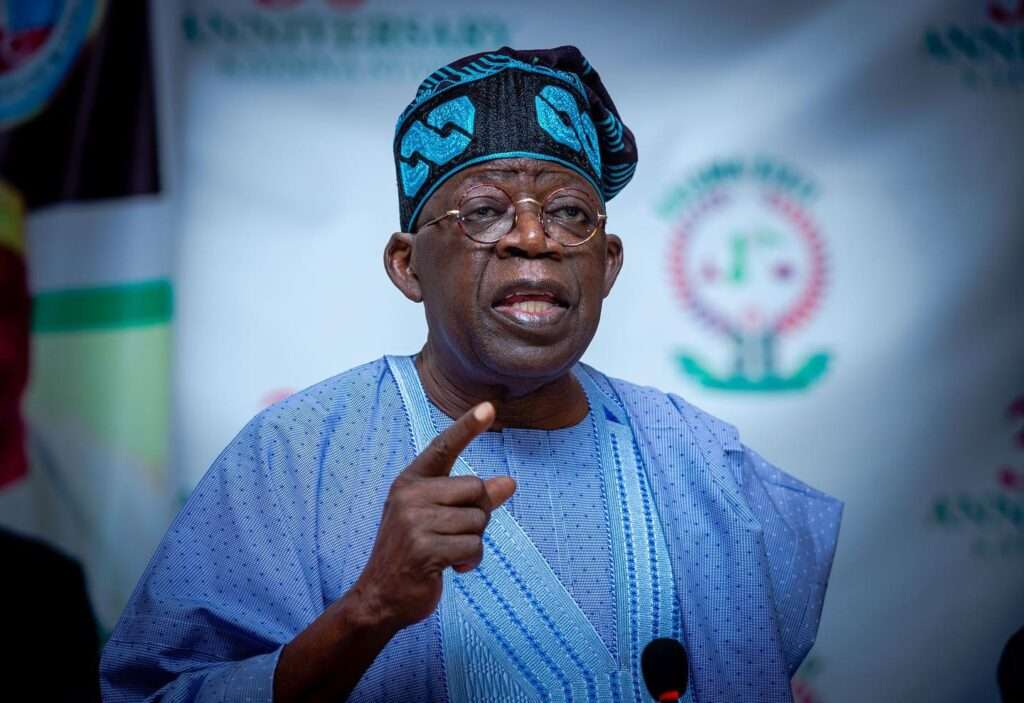
“The consistent implementation of the PIA has strengthened regulation, improved transparency and enhanced investor confidence.”
President Bola Ahmed Tinubu
He noted that regulatory clarity, improved transparency and predictable fiscal terms have strengthened investor confidence in the sector.
He disclosed that Nigeria has introduced fully digital and competitive upstream licensing rounds, adding that approval has been granted for the commencement of the 2025 licensing round to unlock new oil and gas opportunities.
Industry observers see the move as part of broader efforts to modernise Nigeria’s upstream petroleum governance and attract capital at a time of intense global competition for energy investment.
Upstream Activity Rebounds Strongly
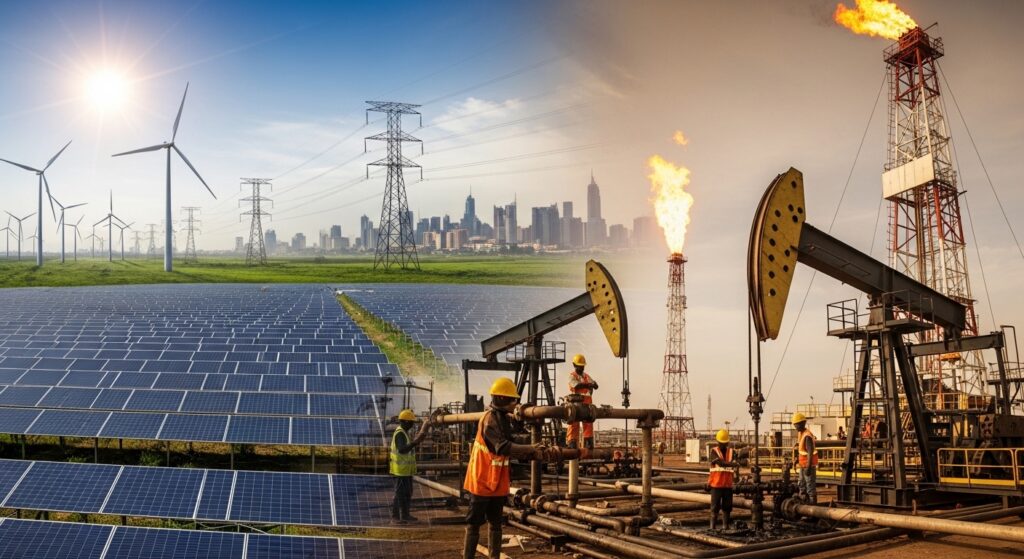
President Tinubu highlighted a significant rebound in upstream activity, pointing to a sharp rise in rig counts and new investment commitments. According to him, active rigs increased from eight in 2021 to 69 by late 2025, reflecting renewed confidence among operators.
He further revealed that more than US$8 billion in Final Investment Decisions have been recorded in recent years, underpinned by reforms and targeted incentives.
To further stimulate capital inflows, the President referenced the Executive Order on Oil and Gas Investment, which is expected to unlock up to US$10 billion in new investments.
He also cited the Upstream Cost Efficiency Incentives Order, offering tax credits of up to 20 per cent to operators who achieve cost reductions.
Nigeria’s crude oil production has also shown signs of recovery. President Tinubu said output has improved to about 1.6 million barrels per day, supported by the Project One Million Barrels Per Day initiative.
The programme targets crude production of 2.5 million barrels per day by 2027, a goal the government believes is achievable with sustained reforms, security improvements and infrastructure investments.
Nigeria “Investment Ready”
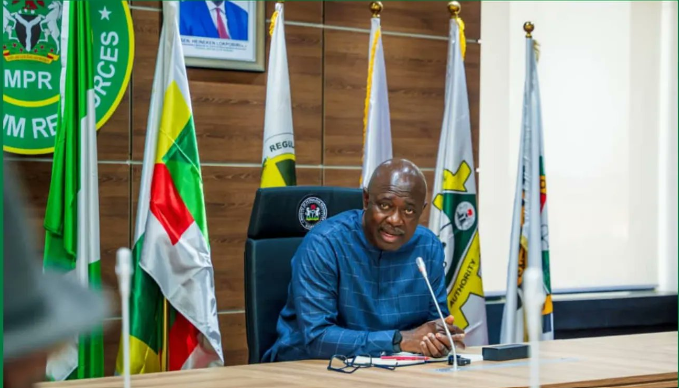
In his remarks, Minister of State for Petroleum Resources (Oil), Senator Heineken Lokpobiri, described the summit as more than a conference, calling it “a clear call to action to end energy poverty in Africa.”
He said Nigeria is now firmly “investment-ready,” citing rising production levels, increased rig activity and major investment commitments.
The Minister referenced Shell’s US$5 billion Bonga North project and TotalEnergies’ US$550 million Ubeta project as evidence of renewed investor confidence.
He also pointed to asset divestments to indigenous companies, which he said have boosted output, strengthened local ownership and enhanced domestic capacity.
Senator Lokpobiri stressed the need for Africa to retain more hydrocarbon value within the continent and urged strong support for the African Energy Bank, headquartered in Nigeria. He noted that global realities favour an energy mix, adding that “no country is abandoning oil and gas.”
Natural Gas Central to Energy Transition
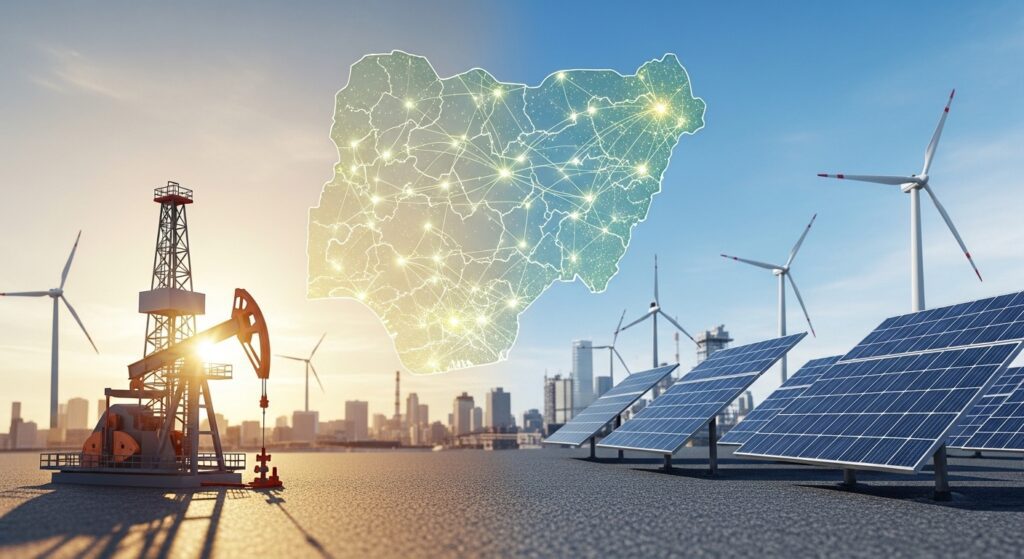
Minister of State for Petroleum Resources (Gas), Rt. Hon. Ekperikpe Ekpo, underscored the central role of natural gas in Nigeria’s energy strategy, describing it as the backbone of a just, inclusive and pragmatic transition.
He said Nigeria’s approach leverages its abundant gas resources to power industries, expand energy access and create jobs, while reducing emissions.
According to him, average daily gas production rose to between 7.5 and 7.6 billion standard cubic feet per day in 2025, with domestic supply exceeding 2 BSCFD for the first time. He also noted a decline in gas flaring, reflecting progress in environmental management.
Nigeria, he said, remains committed to scaling gas production to 10 BSCFD by 2030, positioning gas as a cornerstone of energy security and prosperity under the Renewed Hope Agenda.
Nigeria’s Expanding Global Energy Role
Earlier, Permanent Secretary of the Ministry of Petroleum Resources, Mrs. Patience N. Oyekunle, described the summit’s theme, “Energy for Peace and Prosperity: Securing Our Shared Future,” as timely and strategic.
She said the presence of African leaders, industry executives and development partners underscored Nigeria’s growing influence in regional and global energy discussions, while highlighting the importance of cross-border collaboration.
Also speaking, Group Chief Executive Officer of the Nigerian National Petroleum Company Limited (NNPCL), Mr. Bayo Ojulari, said energy has become “the lifeblood of global peace, security and human development,” positioning Nigeria at the centre of Africa’s evolving energy landscape.
The summit drew high-level participation, including the Presidents of The Gambia and Equatorial Guinea, senior lawmakers, industry leaders and international energy organisations, reinforcing Nigeria’s ambition to lead Africa’s energy future.