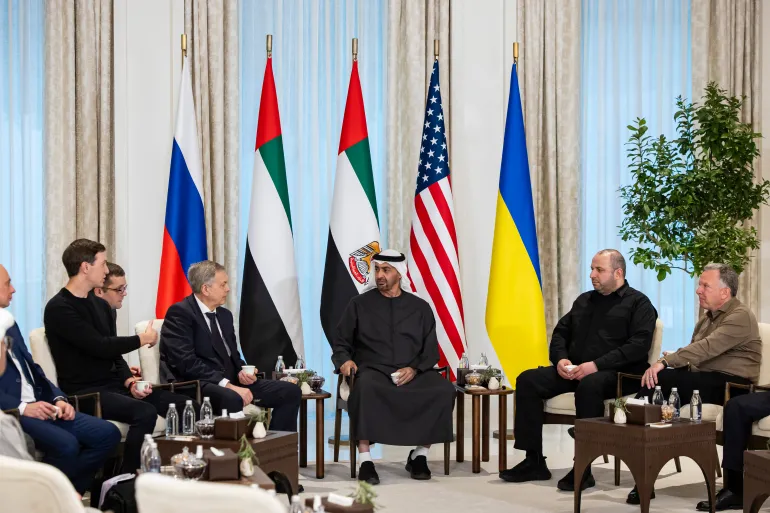
Envoys from Russia and Ukraine met in Abu Dhabi today for second round of US-brokered talks on ending the almost four-year war.
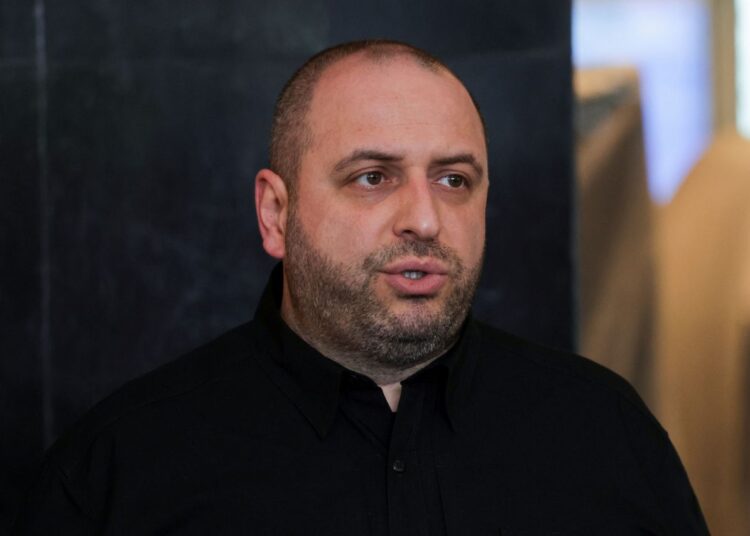
Rustem Umerov, Ukraine’s National Security and Defense Council Chief, who was present at the meeting, disclosed on social media that the delegations from Moscow and Kyiv were joined in the United Arab Emirates by US officials.
Umerov said that the planned two-day negotiations in Abu Dhabi started with all three delegations present, after which negotiators were to break into groups according to topics and then meet as a full group again at the end.
According to the White House, the American team was due to include special envoy Steve Witkoff and President Donald Trump’s son-in-law, Jared Kushner, who also attended last month’s meeting.

The first round of meetings was held in the UAE last month, marking the first direct public negotiations between Moscow and Kyiv on a plan proposed by the Trump administration to end the conflict – Europe’s worst since World War II.
Last month’s discussions in the Emirati capital, part of a US push to end the fighting, yielded some progress but no breakthrough on key issues, officials said.
Kremlin Spokesman Dmitry Peskov wouldn’t offer any details on the Abu Dhabi talks and said that Moscow wasn’t planning any comment on their results.
He said that “the doors for a peaceful settlement are open,” but noted that Moscow will press its military action until Kyiv meets its demands.
The main sticking point is the long-term fate of territory in eastern Ukraine, large parts of which Russia has occupied. Security guarantees for Ukraine against future Russian attacks have also been an obstacle.Moscow is demanding that Kyiv pull its troops out of swaths of the Donbas, including heavily fortified cities that sit atop vast natural resources, as a condition of any deal.
It also wants international recognition for the land it has unilaterally annexed in eastern Ukraine.Kyiv said the conflict should be frozen along the current front lines and has rejected a one-sided pullback of forces.
Outrage Over Russian Attacks On Ukraine’s Energy
The Abu Dhabi talks were held amid Ukrainian outrage over major Russian attacks on its energy system, which have occurred each winter since Russia launched its all-out invasion of its neighbor on Feb. 24 2022.
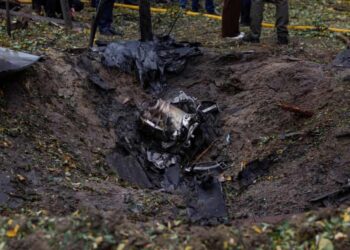
A huge Russian bombardment overnight from Monday to Tuesday included hundreds of drones and a record 32 ballistic missiles, wounding at least 10 people.
This came despite Ukraine’s understanding that Russian President Vladimir Putin had told Trump that he would temporarily halt strikes on Ukraine’s power grid.
Ukrainian civilians are struggling with one of the coldest winters in years, which saw temperatures around minus 20 degrees Celsius (minus 4 Fahrenheit).
Peskov said that Russia is hitting Ukraine’s energy facilities because its armed forces believe the targets are associated with Kyiv’s military effort.
There has been a lack of clarity about how long Putin had promised to observe a pause on power grid attacks. Trump said yesterday at the White House that Putin had agreed to halt strikes for a week, through Feb. 1, and that the Russian leader had kept his word.
However, Zelenskyy said that “barely four days have passed of the week Russia was asked to hold off,” before Ukraine was hit with fresh attacks, suggesting the Ukrainian leader wasn’t fully aware of the terms of the Trump-Putin agreement.
Today, more than 200 repair crews were at work in Kyiv to restore power, the Ukrainian Energy Ministry said, adding that staff were exhausted and would be rotated. More than 1,100 apartment buildings in the capital were still without heating, Zelenskyy said.
The Institute for the Study of War, a Washington think tank, said the developments were part of Moscow’s negotiating strategy.
“The Kremlin will likely attempt to portray its adherence to this short-term energy strikes moratorium as a significant concession to gain leverage in the upcoming peace talks, even though the Kremlin used these few days to stockpile missiles for a larger strike package.”
Institute for the Study of War
Zelenskyy has been pushing his Western backers to boost their own weapons supplies and heap economic and political pressure on the Kremlin to halt the invasion.
READ ALSO: Lebanon Accuses Israel Of Committing Environmental Crime