The New START treaty, the last nuclear arms control treaty between Russia and US, expires today, Thursday, February 5, 2026, marking the end of more than half a century of limits on Washington and Moscow’s strategic nuclear weapons.
START stands for Strategic Arms Reduction Treaty. It was a 10-year agreement signed in 2010 by then-US President Barack Obama and Dmitry Medvedev, a close ally of Vladimir Putin who served a single term as Russia’s President from 2008 to 2012. It came into effect in 2011.
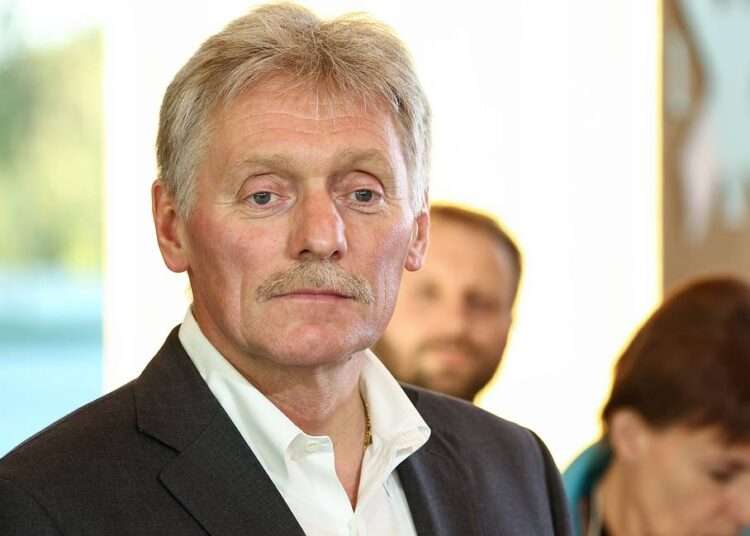
Kremlin Spokesperson, Dmitry Peskov told reporters, “Today the day will end, and it [the treaty] will cease to have any effect.”

Peskov, who said the matter had come up in a call between Russian President Vladimir Putin and Chinese President Xi Jinping a day earlier, stated, “The agreement is coming to an end,” adding, “We view this negatively and express our regret.”
Arms control experts had previously said their assumption was that it expired at the end of Wednesday.
Russia had suggested both sides voluntarily extend the terms of the agreement for one year to provide time to discuss a successor treaty, a proposal which it said US President Donald Trump had never formally answered.
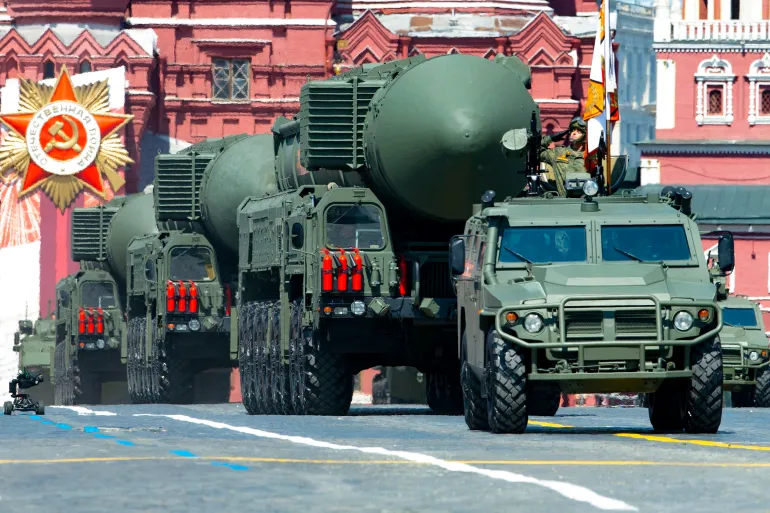
The Kremlin Spokesman asserted that Russia will continue to be a responsible nuclear power, despite the expiry of the last nuclear arms control treaty between Moscow and Washington, which experts say risks ushering in a new global arms race.
“What happens next depends on how events unfold. In any case, the Russian Federation will maintain its responsible and attentive approach to the issue of strategic stability in the field of nuclear weapons and, of course, as always, will be guided first and foremost by its national interests.”
Dmitry Peskov
New START, first signed in Prague in 2010 by then Presidents Barack Obama and Dmitry Medvedev, limited each side’s nuclear arsenal to 1,550 deployed strategic warheads; a reduction of nearly 30 percent from the previous limit set in 2002.

Deployed weapons or warheads are those in active service and available for rapid use as opposed to those in storage or awaiting dismantlement.
It also allowed each side to conduct on-site inspections of the other’s nuclear arsenal, although these were suspended during the COVID-19 pandemic and have not resumed since.
The White House said this week that Trump would decide the way forward on nuclear arms control, which he would “clarify on his own timeline.”
China Expresses Regret Over New START Treaty Expiry

China’s Ministry of Foreign Affairs joined a growing international chorus expressing regret over the treaty’s expiry.
Chinese Foreign Ministry Spokesperson, Lin Jian said today that China regrets the expiration of the New START treaty, “as the treaty is of great significance to maintaining global strategic stability.”
“The international community is generally concerned that the expiration of the treaty will have a negative impact on the international nuclear arms control system and the global nuclear order.”
Lin Jian
Trump has said that he wants a better deal that will also bring in China. However, Beijing refuses to negotiate with the other two countries because it has only a fraction of their warhead numbers – an estimated 600, compared with about 4,000 each for Russia and the US.
Lin reiterated this point, adding that China would not be joining the bilateral arms‑reduction talks.
“China’s nuclear forces are not on the same level as those of the United States and Russia, and China will not participate in disarmament negotiations at this stage.”
Lin Jian
Russia and the US together control more than 80 percent of the world’s nuclear warheads. However, according to the Stockholm International Peace Research Institute (SIPRI), China’s nuclear arsenal is growing faster than any country’s, by about 100 new warheads a year since 2023.
SIPRI says that China is estimated to have at least 600 nuclear warheads, well below the 800 each at which Russia and the US were capped under New START.
READ ALSO: US, Iran To Hold Talks In Oman