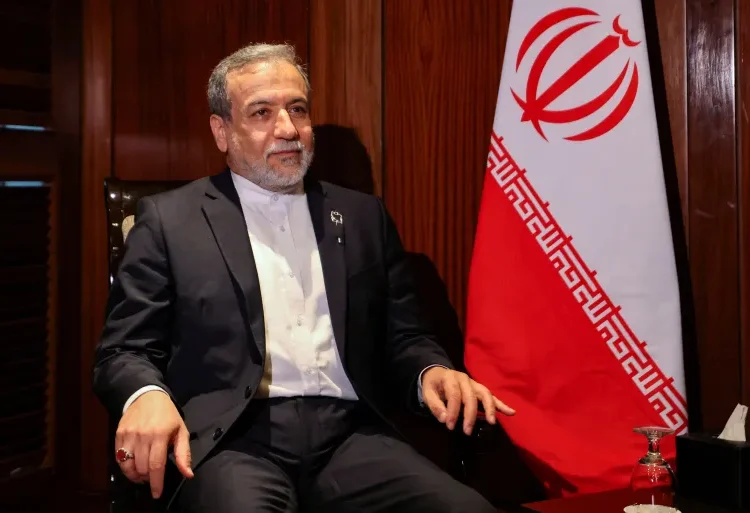
In a bid to move away from escalating tensions and a possible US attack, US and Iranian officials will hold indirect talks in Oman tomorrow to discuss Tehran’s nuclear programme.
The meeting is expected to be attended by US Special Envoy Witkoff and Iran’s Foreign Minister Abbas Araghchi.
Speaking before the talks, US Secretary of State, Marco Rubio said that Iran’s ballistic missile capability as well as the nuclear programme must also be on the agenda for progress to be made, something Iran has already ruled out.
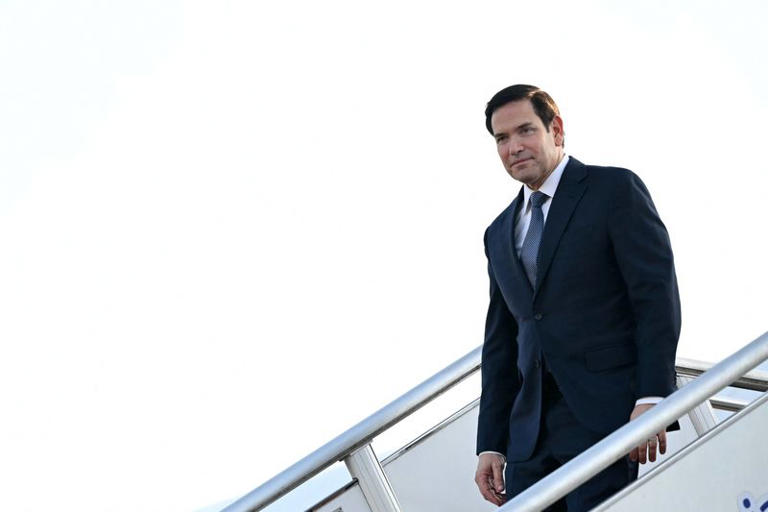
“I think in order for talks to actually lead to something meaningful, they will have to include certain things. That includes the range of their ballistic missiles … the nuclear programme.
“They’ve expressed an interest in meeting and talking. If they change their mind, we’re fine with that, too. We prefer to meet and talk. I’m not sure you can reach a deal with these guys, but we’re going to try to find out.”
Marco Rubio
The meeting scheduled for tomorrow will not be the first time that the Gulf nation of Oman has hosted indirect talks between the US and Iran. Oman, as well as Italy, hosted the previous round of the talks last year, which reached five rounds before Israel attacked Iran.
In June last year, US and Iranian officials gathered in the Omani capital to discuss a nuclear agreement, but the process stalled as Israel launched attacks on Iran. The US later briefly joined the war, bombing several Iranian nuclear sites.
In previous talks, Iran has ruled out discussions on its missiles, referring to the weapons as a tool of self-defence to which every country has a right.
Still, two sources have told a news agency that Qatar, Egypt and Turkiye have proposed a framework for an agreement for Friday’s meeting, outlining that Iran would commit to zero enrichment of uranium for three years.
Following the three-year period, Tehran would agree to limit enrichment of uranium to below 1.5 percent.
The stakes are high and the gaps between Tehran and Washington remain significant. The US wants Iran to limit its ballistic missile capability that keeps Israel and US military bases in the region within reach. Iran says these missiles are part of the country’s defence capability, pointing to Israel’s attacks in June that killed more than 1,000 people in Iran.
Washington wants Iran to stop supporting non-state allies across the region, a demand supported by Israel and some Arab governments. Iran rejects the argument that supporting what it calls the “axis of resistance” is destabilising.
Then there is Iran’s strategic space programme tasked with achieving self-sufficiency in satellite design and communication.
The US, Israel and other Western governments have voiced concern about this and the increasing cooperation between Iran and Russia. Tehran insists that the talks must be fair and must include lifting the sanctions, which have devastated its economy.
Egypt Addresses Efforts To Curb Escalation Between US, Iran

Meanwhile, Egypt’s Foreign Ministry said that “intense communications” have taken place between its Foreign Minister and his Qatari, Iranian and Omani counterparts as well as US special envoy Witkoff to push for negotiations ahead of tomorrow’s meeting.
The ministry said in a statement that the communications have addressed the efforts to reduce the escalation and “contain the rising tensions in the region, and the developments of the planned meeting between the United States and Iran in the sister Sultanate of Oman.”
“In this context, Minister [Badr] Abdelatty stressed the utmost importance for the United States and Iran to reach a peaceful and coherent settlement that addresses the concerns of all parties on the basis of mutual respect and common benefit, and that contributes to avoiding the ghost of war in the region, emphasising the importance of overcoming any differences during this exact stage to ensure the maintenance of regional security.”
Egypt’s Foreign Ministry
The statement added that Abdelatty “expressed hope” that the meeting would reduce tensions and push for “diplomatic and political solutions.”
READ ALSO: Mahama Hails Historic Education Reset to Ghanaians in Zambia