
The Chief Executive Officer of the Ghana Integrated Aluminium Development Corporation (GIADEC), Reindorf Twumasi Ankrah, has cautioned that the Volta Aluminium Company (VALCO) faces an uncertain future unless decisive steps are taken to attract private capital into the struggling state-owned smelter.
Without such intervention, he warned, the company risks complete shutdown and further job losses. Speaking to the media, Mr Twumasi Ankrah urged the public to look beyond surface appearances and political narratives surrounding VALCO.
“VALCO looks impressive from the outside, but the real question is whether it is productive in reality,” he said, stressing that the government’s current strategy is about saving the company rather than divesting it.
According to the GIADEC CEO, plans to bring in a strategic partner are often misunderstood as an attempt to sell VALCO. He dismissed such claims, explaining that the initiative is a rescue effort rooted in long-standing policy discussions.
He called on the public to confront the economic realities threatening the smelter’s survival rather than framing the issue in partisan terms.
He revealed that after assuming office on March 2, 2025, a review of documents showed that attempts to revive VALCO date back to at least 2019.
As part of those efforts, global consulting firm KPMG was commissioned to conduct a comprehensive audit and recommend options to restore the smelter’s viability.
Production Decline and High Power Costs
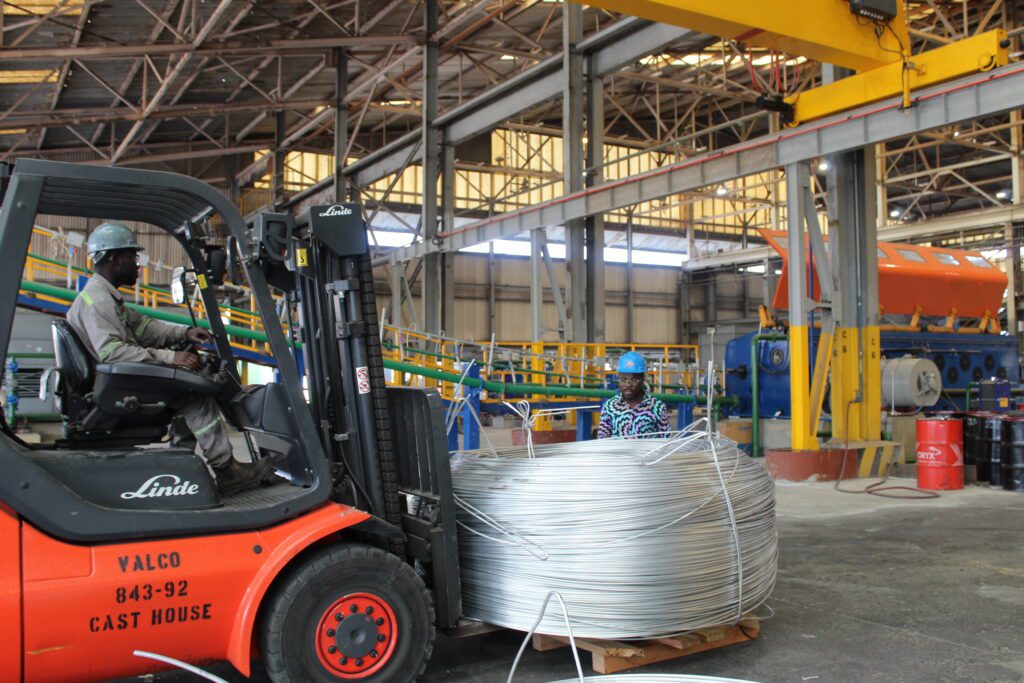
Originally designed to produce 200,000 metric tonnes of aluminium annually, VALCO’s current output has fallen sharply to about 35,000 metric tonnes.
Despite this decline, the smelter continues to consume approximately 90 megawatts of electricity, making operations financially unsustainable.
Mr Twumasi Ankrah noted that this imbalance between output and energy consumption has placed a heavy burden on the company’s finances. The situation, he said, underscores “the urgent need for capital injection and modernisation if VALCO is to regain competitiveness.”
Tracing the smelter’s history, the GIADEC CEO explained that VALCO was established following negotiations in 1964 and commissioned in 1967 as a privately owned enterprise by Kaiser and Reynolds, with power supplied from the Akosombo Dam.
The Government of Ghana acquired a stake in 2004 after Kaiser filed for bankruptcy in the United States, while Reynolds exited a few years later, leaving the state as sole owner by 2008.
“From the period the government took over full ownership and management, the performance trajectory declined sharply,” he said, referencing findings from the KPMG audit. By 2022, VALCO had shut down operations entirely, with workers sent home, further weakening the smelter’s prospects.
By January 2025, VALCO’s total liabilities had ballooned to about US$450 million, owed to institutions including GRIDCo, the Ghana Revenue Authority and the Tema Development Corporation.
With creditors mounting pressure and the state unable to inject fresh capital, authorities decided to keep the plant closed to prevent further financial losses.
Mr Twumasi Ankrah said repeated shutdowns only compound the challenge, as restarting operations requires significant capital while efficiency continues to deteriorate.
Renewed Investor Search Under Stricter Conditions

He explained that the pursuit of a strategic partner follows recommendations made by KPMG and approved by successive governments, with initial approvals granted as far back as May 2022.
Earlier attempts to attract investors failed due to unresolved power supply challenges and disagreements over aluminium stock management.
Learning from those setbacks, the current administration has restarted the process under stricter conditions, requiring potential partners to present clear plans for power generation and stock retention.
A 12-member inter-ministerial committee has since reviewed submitted proposals, with recommendations approved by the GIADEC board and forwarded to the sector minister for Cabinet consideration.
Looking ahead, Mr Twumasi Ankrah said the proposed partnership aims not only to restore VALCO’s former capacity but to expand output to at least 300,000 metric tonnes within 36 months. Achieving this would require retrofitting all six production lines, many of which are over 60 years old.
The estimated investment required is about US$600 million, an amount the government cannot afford. While some investors argue it would be cheaper to build a new smelter elsewhere, a consortium has expressed interest in partnering with the state, citing local content requirements and the strategic importance of co-ownership.
Jobs at Stake if Action Delays Persist

The human cost of inaction, Mr Twumasi Ankrah warned, could be severe. VALCO’s workforce has already declined from about 1,800 employees in the 1990s to around 650 today, with more job losses likely if the turnaround plan stalls.
He disclosed that President John Dramani Mahama has been clear that the state lacks the financial capacity to revive VALCO alone see, making private sector participation unavoidable.
“If nothing is done immediately, VALCO will have to shut down completely, and everyone will go home.”
Reindorf Twumasi Ankrah, CEO of GIADEC
Reiterating that the strategic partnership represents policy continuity rather than a shift, the GIADEC CEO described it as the only realistic path to safeguarding jobs, preserving a strategic industrial asset and restoring VALCO’s role in Ghana’s industrial development.
READ ALSO: OSP Probes Alleged Vote Buying in NPP, NDC Primaries