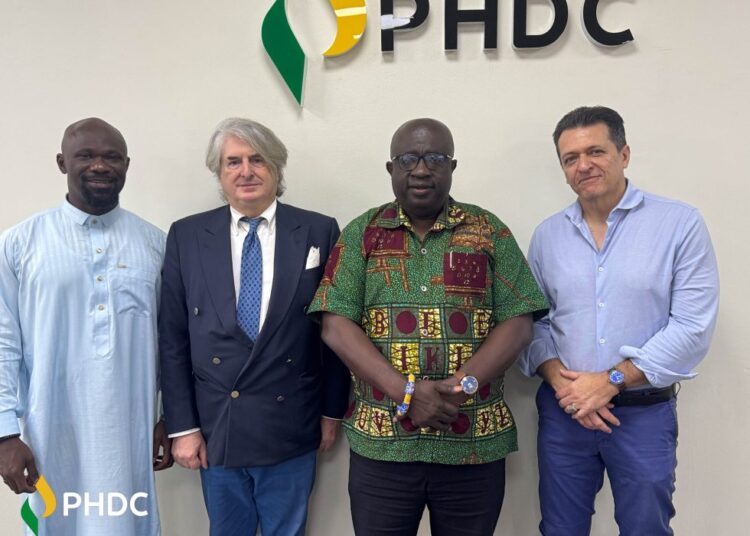
Discussions between the Petroleum Hub Development Corporation (PHDC) and representatives of Phase One investors, the TCP-UIC Consortium, have entered a decisive phase as both sides work towards finalising agreements and commencing preliminary groundwork for Ghana’s ambitious Petroleum Hub project.
Chief Executive Officer of the PHDC, Dr Toni Aubynn, underscored the importance of power generation to the broader vision of the Petroleum Hub, noting that energy availability is foundational to attracting and sustaining heavy industrial activity.
“This is an exciting development,” Dr Aubynn said, stressing that power production remains a critical component of advancing the Petroleum Hub.
He explained that without dependable electricity, the hub’s refining, petrochemical and logistics ambitions would be difficult to realise.
However, he was quick to add that discussions around power infrastructure must align with national interests.
According to him, “the ownership structure of the power plant project would be of considerable interest to the Government of Ghana,” pointing out that further consultations with the Ministry of Energy and Green Transition would be required to resolve outstanding issues.
The engagement, held as part of ongoing stakeholder consultations, reflects renewed momentum around the project, particularly in securing reliable power infrastructure, which has been identified as a critical enabler for the hub’s successful development.
Management of the PHDC described the talks as constructive and forward-looking, signalling progress after months of preparatory work.
New Partner Proposed for Mega Power Plant
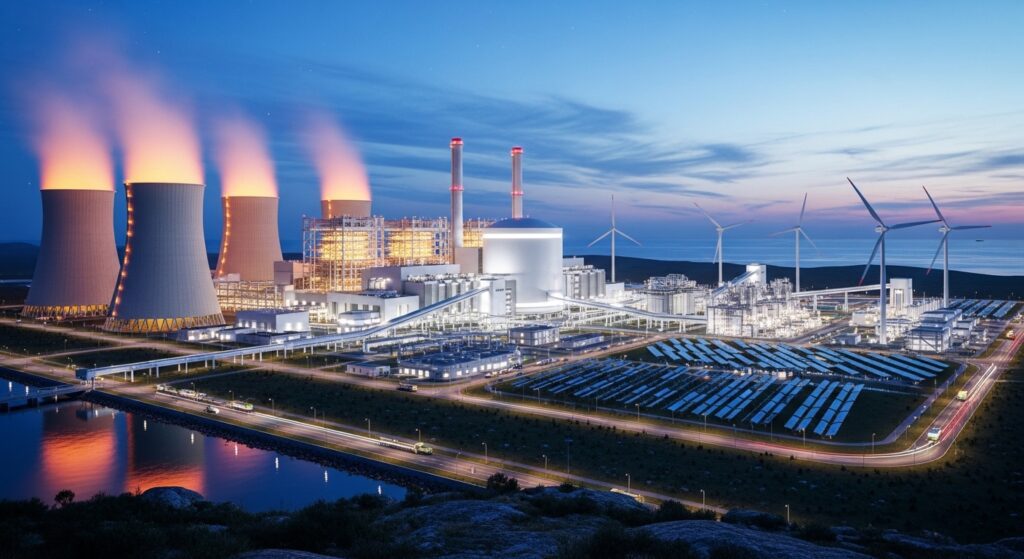
The meeting also created space for exploratory discussions on the possible introduction of a new strategic partner to develop a dedicated power plant at the hub.
The TCP-UIC Consortium, which includes Touchstone Capital Group Holdings Ltd., UIC Energy Ghana Ltd., China Wuhan Engineering Co. Ltd., and China Construction Third Engineering Bureau Co. Ltd., presented the option of bringing in China Railway Construction Corporation Limited (CRCC).
CRCC is said to be interested in constructing a 1.2-gigawatt power plant in Ghana, with a proposal to site the facility within the Petroleum Hub enclave.
If realised, the plant would rank among the largest single power projects in the country, significantly boosting installed generation capacity.
Consortium representatives expressed confidence that the proposed plant could be completed within six months, a timeline they believe would ensure timely power supply for the hub while also supporting Ghana’s wider electricity needs.
Government Oversight and Stakeholder Engagement

Dr Aubynn emphasised that while the proposal holds promise, due process remains essential. He noted that the PHDC would play a facilitative role to ensure that all relevant government institutions are aligned.
“The PHDC, consistent with its core mandate, would facilitate engagements with the ministry and other relevant stakeholders to ensure the successful development of the power plant at the hub.”
Dr Toni Aubynn, Chief Executive Officer of PHDC
This, he explained, would help address policy, regulatory and ownership considerations before any final commitments are made.
Energy analysts say such caution is expected, given the strategic nature of power assets and their implications for national energy security, tariffs and long-term planning.
Dr Aubynn disclosed that PHDC is actively engaging sister agencies to create synergies that could reduce costs and speed up implementation.
He revealed that formal discussions have already been held with the Ghana National Petroleum Corporation (GNPC), the Tema Oil Refinery, and BOST Energies.
According to him, these engagements are aimed at aligning infrastructure development, feedstock supply and operational planning across the energy value chain.
Such collaboration, industry observers note, could strengthen the hub’s competitiveness and ensure that Ghana maximises value from its petroleum and energy assets.
Petroleum Hub Seen as Catalyst for Growth

The Petroleum Hub project, planned for the Jomoro enclave in the Western Region, is envisioned as a multi-billion-dollar integrated complex comprising refineries, petrochemical plants, storage facilities and associated infrastructure.
Government officials have consistently described it as a potential game-changer for Ghana’s industrialisation drive, job creation and export earnings.
Reliable and affordable power is widely regarded as one of the project’s most critical success factors. The prospect of a dedicated 1.2GW power plant located at the hub is therefore seen as a strategic move that could de-risk investments and attract additional partners.
While no final agreement has yet been announced, both PHDC and the TCP-UIC Consortium appear committed to advancing discussions in the coming weeks.
Further consultations with the Ministry of Energy and Green Transition are expected to shape the final structure of the power project and determine the role of prospective partners such as CRCC.
For now, the latest talks signal tangible progress as the Petroleum Hub moves from concept to execution, with power infrastructure firmly at the centre of its development strategy.