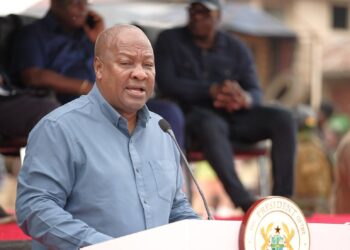

The Parliament of Ghana has officially passed the 24-Hour Economy Authority Bill, a legislative cornerstone of President John Dramani Mahama’s “round-the-clock” productivity agenda. While the government maintains the Bill will formalize the transition to a shift-based economy and create millions of jobs, think tank IMANI Africa has issued a stark warning.
In its latest policy brief, IMANI argued that the creation of a new corporate body to oversee the program represents a “logistics of lag” and administrative bloat that could stall the very transformation it seeks to accelerate.
“The approach of ‘building a new road for every new car’ is fundamentally flawed. This path does not necessarily translate into success; rather, it often leads to a ‘logistics of lag.’ It will take months, if not years, to house, staff, and operationalize this new Authority”
IMANI Africa
The passage of the 24-Hour Economy Authority Bill, on February 9, 2026, provides the legal mandate for a centralized Authority to coordinate eight strategic pillars, including Make 24, Grow 24, and Connect 24. However, IMANI contended that duplicating the existing functions of established ministries and district assemblies for the policy implementation is wrong.

IMANI’s analysis suggested that the government is repeating the mistakes of the past, specifically citing the “ghost of zonal authorities” like the Coastal and Northern Development Authorities. These bodies, according to the brief, created a “Super Ministry” effect that bypassed local governance without delivering on ground-level results.
The think tank argued that instead of creating a new bureaucracy in Accra, the government should focus on the “evolution over invention” model. They pointed to the successful transition of the Ministry of Communications into the Ministry for Communications, Digital Technology, and Innovation as a blueprint for how existing institutions can adapt to new policy focuses without inflating public expenditure.
Overlapping Mandates and Red Tape
Despite this not being the first time IMANI Africa has raised concerns about the 24-hour economy initiative, a central concern highlighted in the brief was the potential for institutional friction.
The pillars of the 24-hour economy – such as agribusiness and transport – already fall under the mandates of existing ministries. IMANI warned that the new Authority risks becoming a layer of red tape that creates “friction rather than synergy” by attempting to coordinate sectors that already have established leadership.

The Minority in Parliament, led by Ranking Member Hon. Kojo Oppong Nkrumah, echoed these sentiments during the debate, describing the Authority as an unnecessary duplication. Despite these objections, the Majority Leader, Hon. Mahama Ayariga, defended the Bill, stating that a central control mechanism is vital for a policy that is inter-sectoral in nature.
Yes, IMANI’s most significant criticism focused on what they call the “decentralization deficit.” The think tank argued that the 24-hour economy cannot succeed through a centralized board in the capital. Instead, it requires the empowerment of District Assemblies to provide the night-time security, street lighting, and localized infrastructure necessary for businesses to operate safely after dark.
“If a local assembly is not part of the planning and oversight, they have little incentive – or power – to ensure completion once the contractors from Accra stop showing up”
IMANI Africa
The success of the 24-hour vision, according to the policy think tank, will not be measured by the establishment of a new corporate office, but by the practical ability of a factory in a remote district to run a third shift because the local infrastructure supports it.

As the Bill moves toward presidential assent, the debate remains centered on whether Ghana needs new authorities or simply better systems. For IMANI, the message is clear: the 24-hour economy is a bold vision currently being weighed down by an old, centralized governance playbook.
READ ALSO: State Purchasing Galamsey Gold Through GoldBod – Analyst