
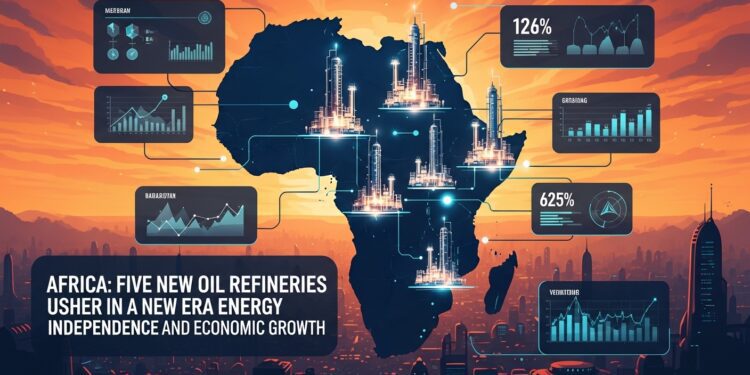
Africa could add at least five new oil refineries to its energy infrastructure from 2026 onward as governments and private investors intensify efforts to strengthen energy security and reduce dependence on imported fuel.
This projection is contained in the State of African Energy 2026 report published by the African Energy Chamber, a pan-African energy think tank, and obtained by Energy in Africa.
“In the short to medium term, a limited number of refinery projects are expected to be set up, as scarce funding and competitive imports stifle greenfield development.”
State of African Energy 2026 Report
According to the report, the continent is steadily ramping up its refining capacity as part of a broader push toward energy optimization, industrial growth and domestic value creation.
While challenges remain, particularly around financing and competition from imported refined products, Africa’s refinery pipeline signals a structural shift in the oil and gas sector.
Refining Seen as Critical to Energy Independence
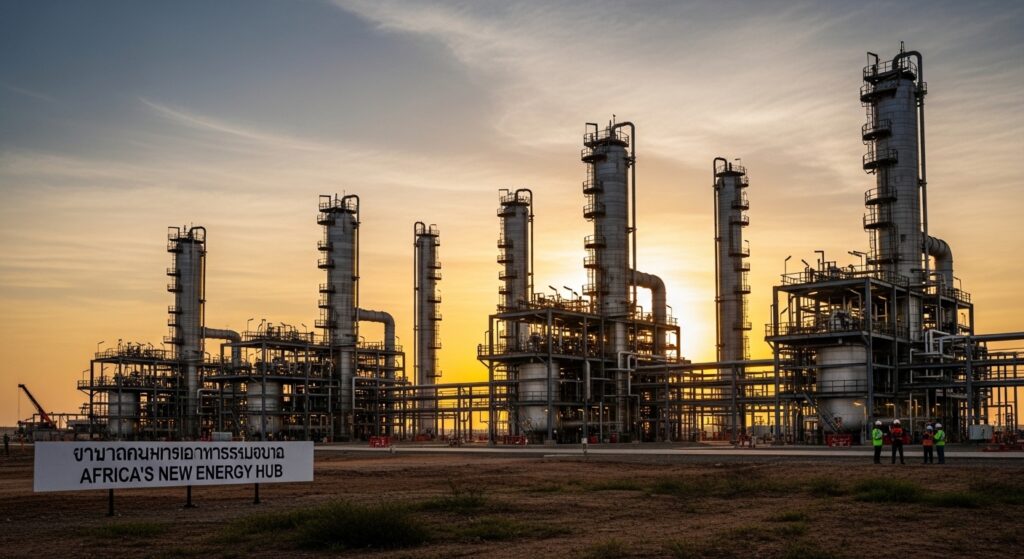
For decades, Africa has exported the bulk of its crude oil only to re-import refined petroleum products at higher costs.
The African Energy Chamber estimates that about half of the hydrocarbons produced on the continent end up in Europe or North America, reinforcing fuel import dependence and contributing to energy poverty.
Against this backdrop, refining is increasingly viewed as a strategic tool for boosting energy security, supporting domestic industries and retaining more value within African economies.
Governments and private operators are therefore revisiting refinery projects that were previously stalled or deemed uneconomical.
The report stressed that refinery development must be justified by strong economic fundamentals or backed by state support.
“For a refinery project to be viable, it either needs to be economically attractive or receive significant state support, justified based on domestic refined product supply security, and or dovetail into the narrative of supporting the domestic economy.”
State of African Energy 2026 Report
Dangote Refinery Sets the Pace

Nigeria’s 650,000-barrel-per-day Dangote Petroleum Refinery remains the most prominent example of Africa’s refining ambitions.
Completed in 2023 and owned by industrialist Aliko Dangote, the facility is the world’s largest single-train refinery and processes crude oil into petrol, diesel, jet fuel, kerosene and other products.
The Dangote refinery has reshaped regional fuel supply dynamics and demonstrated that large-scale refining is possible on the continent despite long-standing challenges.
However, the African Energy Chamber emphasized that Dangote is not alone, as multiple refinery projects are now underway across Africa.
Cabinda Refinery Moves Angola Closer to Energy Security
In Southern Africa, Angola’s Cabinda refinery represents a significant step toward reducing the country’s heavy reliance on fuel imports.
Angola produces about one million barrels of crude oil per day but exports nearly 80 percent of it, leaving the domestic market dependent on imported refined products.
The Cabinda refinery, a greenfield project with a planned capacity of 60,000 barrels per day across two phases, completed its first phase in September 2025 at a cost exceeding $400 million. The second phase, currently underway, will add another 30,000 barrels per day.
Once fully operational, the refinery is expected to produce aviation fuel, kerosene, heavy fuel oil and naphtha, supporting Angola’s energy security goals.
Uganda and Mozambique Advance Long-Delayed Projects
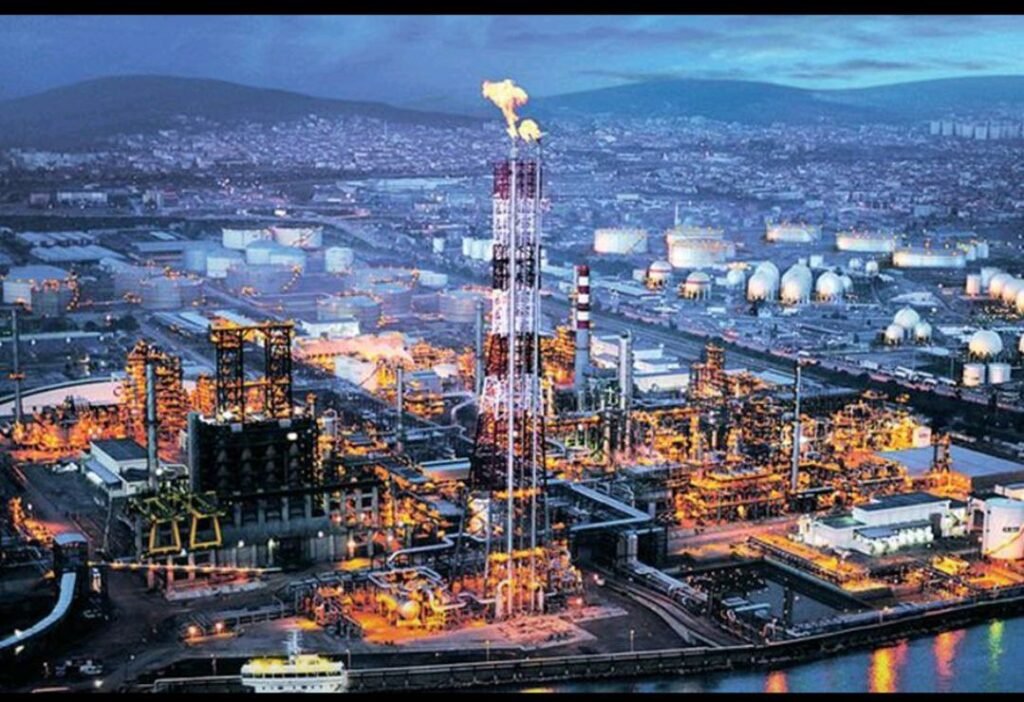
East Africa features prominently in the refinery pipeline. Uganda’s long-delayed Hoima refinery finally reached a breakthrough in March 2025 after the government signed a construction agreement with a UAE investment firm.
Located in Kabaale, the 60,000-barrel-per-day refinery is valued at about $4 billion and is expected to commence operations by 2028.
According to the report, the project will be managed by Emirati firm Alpha MBM, with the Ugandan government retaining a 40 percent stake.
Mozambique is also advancing plans for a major refinery. In May 2025, the government signed an agreement with Nigerian energy company Aiteo to build a 200,000-barrel-per-day state-backed refinery, including a pipeline to supply neighboring Zambia. The African Energy Chamber places the project’s completion timeline around 2030.
Nigeria and Djibouti Target Mega Refining Capacity
Nigeria is set to add another major refinery through the 200,000-barrel-per-day BUA refinery being developed by billionaire Abdul Samad Rabiu in Akwa Ibom State.
Construction has been ongoing for over five years, with completion projected around 2030. Once operational, the facility is expected to compete with Dangote in supplying refined products across West Africa.
Djibouti also features as a potential refining hub. The report identifies a proposed 300,000-barrel-per-day refinery, backed by a $12.7 billion agreement with Saudi Arabia’s Ajyal Refinery.
While the African Energy Chamber classifies the timeline as speculative, the project could become one of Africa’s largest refineries and create over 10,000 jobs.
Despite funding constraints and competitive imports, the report concludes that Africa’s growing refinery pipeline reflects a strategic pivot toward domestic energy processing.
As the continent seeks to industrialize and reduce exposure to external fuel markets, expanding Africa refining capacity is increasingly seen as a necessity rather than an option.
READ ALSO: Somalia Inks Military Agreement With Saudi Arabia