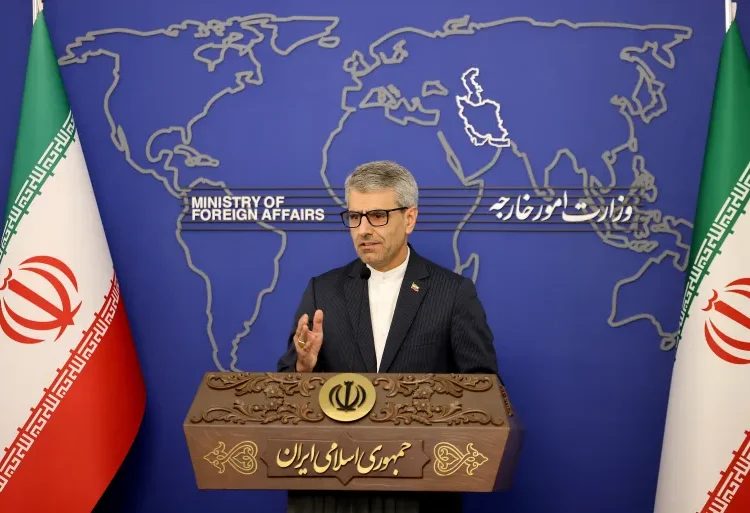
Esmaeil Baghaei, Spokesperson for Iran’s Ministry of Foreign Affairs, has urged the US to resist Israeli pressure over Tehran’s nuclear issue.
His statement at a news briefing comes in the wake of talks held in the country between Tehran and Washington over the former’s nuclear programme.
Oman hosted talks on Iran’s nuclear programme last week aimed at avoiding a conflict between Tehran and Washington, amid surging tensions and a growing United States military build-up in the region.
It was an outcome of concerted diplomatic efforts in the region to avert a conflict. A second round of talks has been confirmed, but a date has not been announced.
Regarding the negotiations with the US, Baghaei said that Washington “must act independently, free from the destructive pressures being exerted that harm the region and American interests.”

He urged the US to resist Israeli pressure over the nuclear issue, claiming that “one of the United States’ problems in the region is its subservience to the demands of the Zionist entity, which is the primary factor destabilising security in the region.”
“Israel has turned our nuclear programme into an artificial crisis and is trying to raise unfounded fears about a nuclear bomb that does not exist in Iran.”
Esmaeil Baghaei
Speaking on the progress of the talks to date, Baghaei stated that after the collapse of the diplomatic process last year, it was “unrealistic to expect detailed discussions in the very first meeting.”
Iran and the US held five rounds of talks last year on curbing Tehran’s nuclear programme, with the process stalling largely owing to disputes over uranium enrichment.
Washington then joined Israeli strikes on Iran in June, targeting the Natanz, Fordow and Isfahan nuclear facilities with bunker-buster hits. Since those strikes, Tehran has said it has halted enrichment activity. It has always maintained that its nuclear programme is solely for peaceful purposes.
“The Muscat meeting itself was brief, lasting about half a day, and from our perspective was mainly aimed at assessing the other side’s seriousness and exploring how the process might proceed.”
Esmaeil Baghaei
The focus, he said, had been on general principles, and Iran’s “core positions” were clear – “securing the Iranian people’s interests based on international law and the Nuclear Non-Proliferation Treaty, including the right to peaceful use of nuclear energy.”
He added that European countries had “missed past opportunities to play a constructive role and failed to act independently or positively in diplomatic processes, choosing instead to follow others and making serious miscalculations.”
He said recent moves by the European Union to designate Iran’s Islamic Revolutionary Guard Corps as a terrorist organisation were “both illegal and a strategic mistake”.
“Rather than persisting in such actions and media rhetoric, they should reflect on how to restore Europe’s role in regional and international affairs.”
Esmaeil Baghaei
Iranian state media reported today that Iranian Foreign Minister, Abbas Araghchi had held a series of phone calls with his counterparts in Turkiye, Egypt and Saudi Arabia to brief them on the latest developments in the negotiations with Washington in Muscat.
The date of the next round of talks has yet to be announced, although Trump has said they will be held this week.
Secretary of Iran’s Supreme National Security Council In Iran
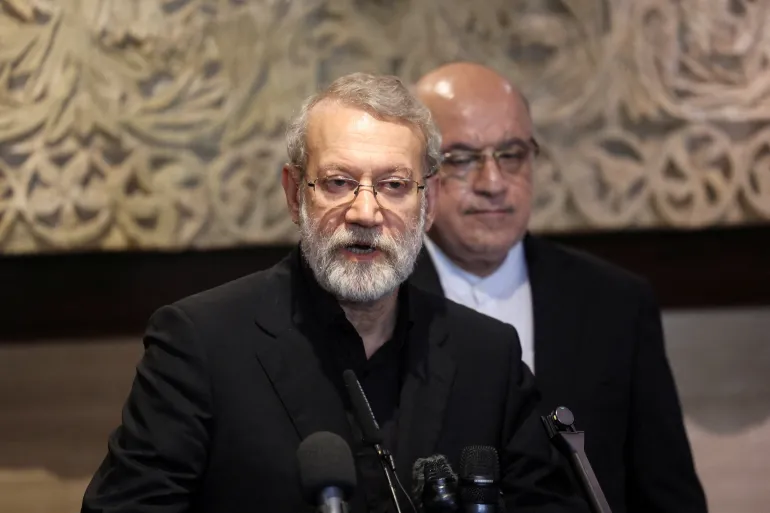
Meanwhile, Ali Larijani, Secretary of Iran’s Supreme National Security Council, has arrived in Oman in the wake of talks held in the country between Tehran and Washington over the former’s nuclear programme.
Larijani, a close adviser to Iran’s Supreme Leader Ayatollah Ali Khamenei, is due to meet Omani Foreign Minister Badr al-Busaidi, the chief intermediary in the talks, as well as Oman’s Sultan Haitham bin Tariq Al Said.
Iranian news agency said “discussions over the latest regional and international developments” were on the agenda for Larijani’s visit, “as well as ways to strengthen bilateral cooperation between Iran and Oman.”
Baghaei stated that Larijani’s visit was part of regional consultations in line with Tehran’s policy of strengthening relations with neighbouring countries, and had been planned in advance. He added that Larijani would visit Qatar after his trip to Oman.
READ ALSO: UNRWA Appeals for Urgent Funding Amid Deepening Crisis