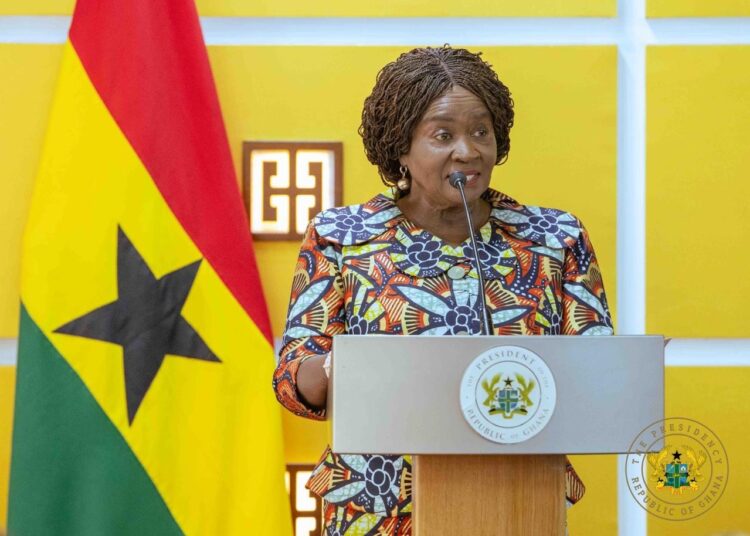
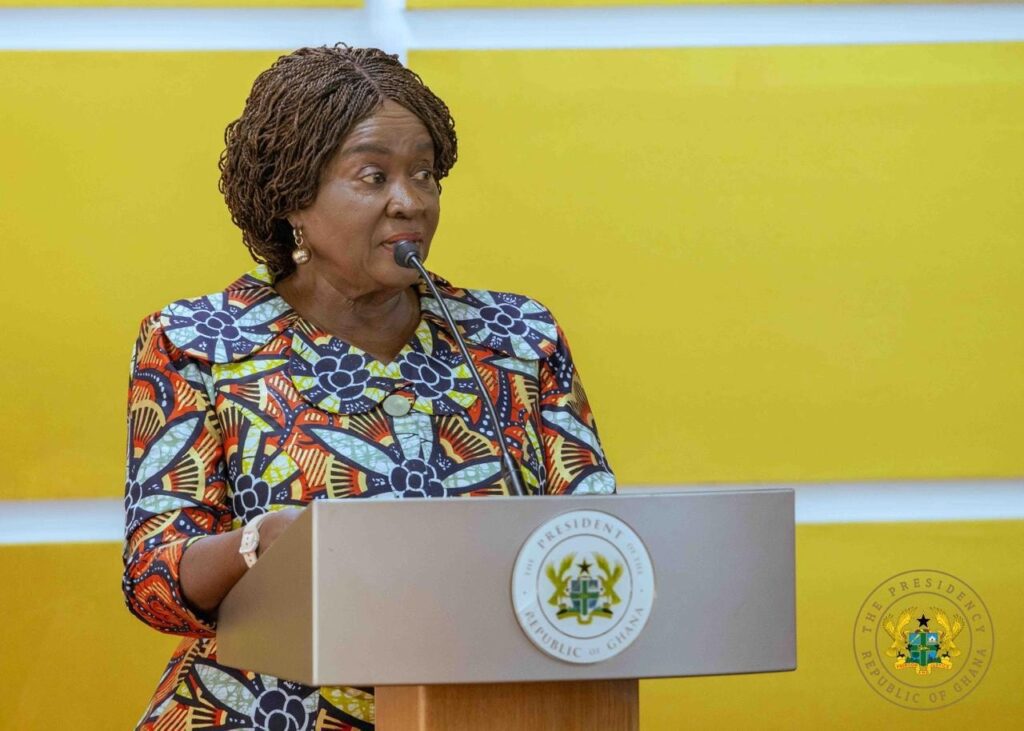
Vice President Professor Jane Naana Opoku Agyemang has pledged the full commitment of the Presidential Advisory Group on the Economy to helping Ghana move beyond short term crisis management toward what she described as durable success.
Speaking on behalf of the advisory body at its formal engagement, she expressed gratitude to President John Dramani Mahama for the foresight behind the creation of the group at a time when the economy is showing early signs of renewed confidence after a period of acute strain.
“After a period of acute strain, visibility is returning, and confidence is gradually rebuilding, even as we continue to navigate global and domestic challenges. This moment must be used not only to recover, but to reset our economic direction.”
Vice President Professor Jane Naana Opoku Agyemang
She noted that while Ghana continues to navigate both global and domestic challenges, the moment demands deliberate thinking and disciplined choices that go beyond emergency responses.
Professor Opoku Agyemang explained that the mandate of the Presidential Advisory Group on the Economy is both clear and demanding. The group is expected to provide independent, rigorous, and practical advice to support government decision-making.
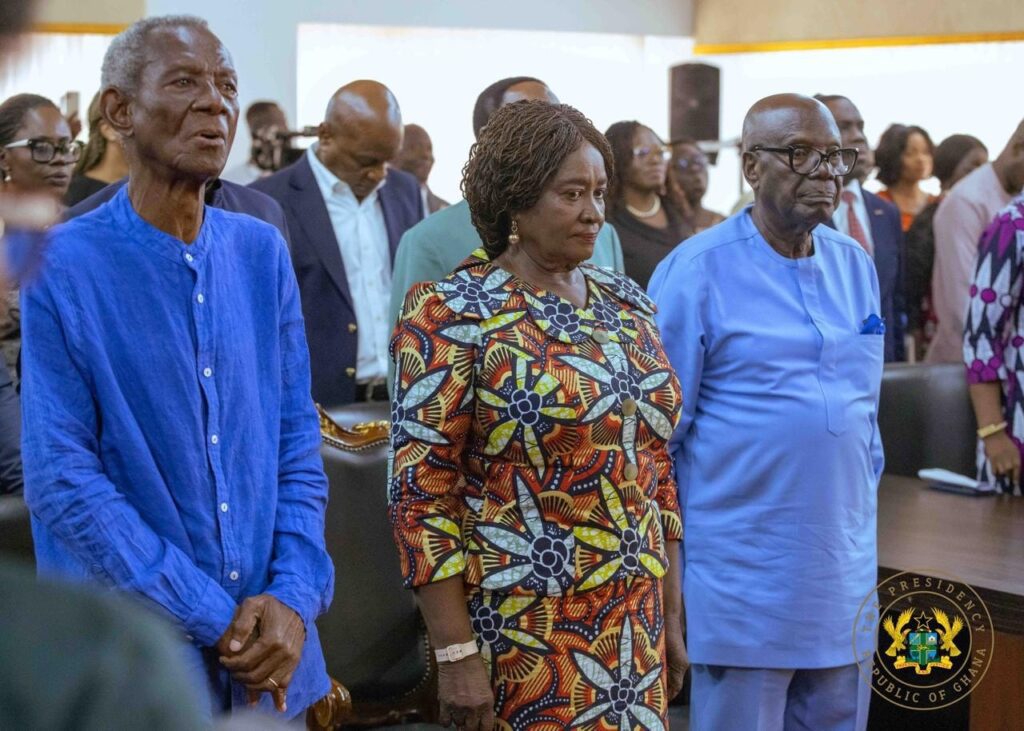
In her remarks, she emphasised that the advisory body is not designed to replace existing institutions but to complement them by offering insight, testing assumptions, and proposing solutions informed by global best practices and grounded in Ghana’s specific realities.
She said the advisory group would foster dialogue, intellectual honesty, and collective responsibility in its work, while engaging across sectors of the economy. Its ultimate objective, she stressed, is to help Ghana transition from a posture of constant crisis management to a state of durable economic success that can withstand future shocks.
Redefining What the Economy Means to Citizens
Drawing from her background as an academic, the Vice President offered a reflective perspective on how the advisory group intends to approach its work. She challenged members to continuously reflect on what the term economy should mean to ordinary Ghanaians, arguing that it must not remain an abstract concept disconnected from daily life.
In her words, the economy should translate into stability for the teacher in the classroom and the nurse on night duty. It should mean fair prices and reliable markets for the farmer, predictable costs and access to credit for the trader and small business owner, and stable incomes alongside affordable housing and transport for workers.
For young people, especially women, it should represent real opportunities and access to skills, while for labourers and the elderly it should ensure security, dignity, and decent care. Professor Opoku Agyemang noted that these everyday realities must shape how policies are designed and assessed.
She said the task before the advisory group is to help conceptualise the kind of support that makes the economy feel less distant and more like an everyday possibility where effort is rewarded, risks are shared, and honest work is recognised.
Linking Policy to Daily Realities
The Vice President underscored that economic policy cannot be separated from the concrete conditions of people’s lives. She pointed to basic but critical elements such as safe water, reliable electricity, and dignified work as indicators of whether economic transformation is truly taking root.
According to her, when these essentials are absent or unreliable, growth figures and policy reforms fail to resonate with citizens. She stressed that a people-centred understanding of the economy is essential if Ghana is to rebuild trust between policy makers and the public.
By keeping the lived experiences of citizens at the forefront, the advisory group aims to ensure that economic decisions translate into tangible improvements rather than remaining confined to reports and projections.
Economic Transformation as a National Project
Professor Opoku Agyemang described economic transformation as a national project that requires discipline, trust, and shared responsibility. She said government alone cannot deliver lasting change without the active participation of the private sector, organised labour, civil society, and development partners.
In her view, durable success depends on alignment across these actors and a shared commitment to long term national goals. She noted that the advisory group intends to engage broadly, listening to different perspectives and incorporating them into its recommendations.
This inclusive approach, she said, would help ensure that advice provided to the President is balanced, realistic, and responsive to the needs of various segments of society.
A Commitment to Practical and Honest Leadership
Throughout her remarks, the Vice President reiterated the group’s pledge to offer leadership that is independent, thorough, and practical. She emphasised that the credibility of the advisory group rests on its ability to speak frankly, base its guidance on evidence, and prioritise the national interest over narrow considerations.
She also highlighted the diversity within the advisory body, noting that members come from different professional backgrounds and bring varied perspectives shaped by experience across disciplines.
This diversity, she said, strengthens the group’s capacity to interrogate complex issues and propose solutions that are both innovative and grounded. In closing, Professor Opoku Agyemang thanked President Mahama for the trust placed in the advisory group and assured him of their determination to uphold that confidence.
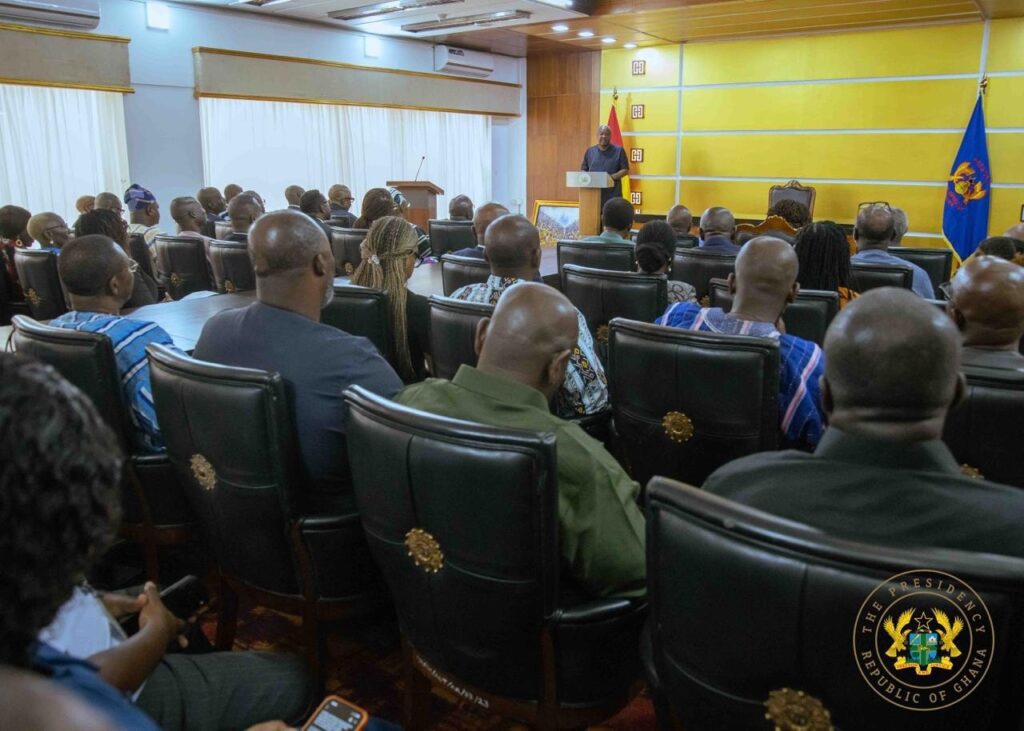
She said the members are fully aware of the weight of responsibility that comes with advising on economic policy at a critical juncture in Ghana’s development.
She expressed optimism that with sustained discipline, intellectual honesty, and collaboration, the work of the Presidential Advisory Group on the Economy can help lay the foundation for an economy that delivers stability, opportunity, and dignity for all citizens.
The pledge, she concluded, is one of unwavering service to a shared national mission of recovery, resilience, and long-term prosperity.
READ ALSO: GIPC Strengthens Regulatory Systems For World Bank Rankings